Inquiry
Form loading...

Why Choose Anodized Powder Coat for Global Buyers?

Global buyers are rethinking how metal surfaces perform in demanding environments. Anodized Powder Coat combines the visual depth associated with anodized aluminum and the protective flexibility of powder coating. It can create a satin bronze frame, a deep black panel, or a metallic silver finish with consistent coverage. Yet the result depends heavily on pretreatment, alloy quality, film thickness, and curing control.

The global powder coatings market is projected to expand steadily through the decade, according to Grand View Research’s industry analysis. The Powder Coating Institute also identifies architectural, automotive, and general industrial applications as major demand areas. These trends matter to international purchasers. They are not buying color alone. They are evaluating corrosion resistance, batch consistency, maintenance needs, and supplier documentation. A finish that looks excellent under showroom lighting may behave differently near coastal salt, strong sunlight, or repeated handling.

Anodized Powder Coat can support longer service expectations and lower solvent emissions than many conventional liquid systems. The U.S. Environmental Protection Agency has recognized powder coating as a low-VOC finishing technology, although actual environmental performance depends on the complete production process. That distinction is important. The coating is not magic. Poor surface preparation can still cause adhesion failure, edge exposure, or premature fading. Buyers should request salt-spray results, adhesion testing, color-control records, and compliance documents relevant to the destination market. A single attractive sample proves little. Reliable sourcing comes from repeatable testing, transparent specifications, and honest discussion of limitations.
Why Choose Anodized Powder Coat for Global Buyers?

What Is Anodized Powder Coating?

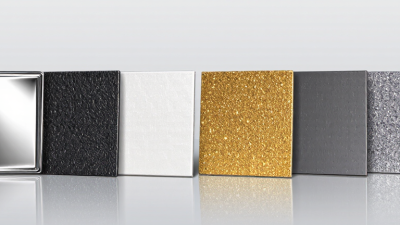
An anodized powder coat is a decorative and protective finish applied over aluminum or steel. It is not true anodizing. True anodizing creates an electrochemical oxide layer. Powder coating uses charged dry particles, then heat melts and cures them into a film. Special pigments and metallic effects can imitate bronze, champagne, titanium, or brushed aluminum. The result offers a consistent architectural appearance and hides minor surface differences better than many liquid finishes.

In production, surface preparation matters as much as color selection. Aluminum is cleaned, chemically treated, dried, and coated under controlled conditions. Correct film thickness improves coverage and durability. Excess thickness can soften details or alter the metallic effect. Cure temperature and time must match the powder chemistry. A qualified applicator checks adhesion, gloss, color variation, and coating thickness. Cross-hatch testing and weathering data provide useful evidence, but one test cannot predict every climate.

For global buyers, request a physical sample, technical data sheet, safety data sheet, and batch-control records. Compare samples in daylight and shadow. Small shifts become obvious across long curtain-wall sections. I have found that monitor colors often mislead purchasing teams. A sample may look perfect, yet reveal uneven sparkle at corners. That weakness deserves discussion, not concealment. Specify the substrate, pretreatment, target gloss, tolerance, inspection method, and expected exposure before approving production. Also ask how touch-ups will appear after installation.
How Anodized Powder Coating Works

Why Choose Anodized Powder Coat for Global Buyers?

How Anodized Powder Coating Works

Anodized powder coating is often misunderstood. It is not simply anodizing in powder form. An aluminum part may receive an electrochemical oxide layer first, then a powder coat for color, texture, and added protection. In other specifications, “anodized” describes only the metallic appearance. Confirm this detail before purchasing.

During application, operators clean and chemically pretreat the aluminum. The powder particles receive an electrostatic charge and attach to the grounded surface. The coated part then enters an oven, commonly near 180–200°C. Heat melts the particles and cross-links the resin into a continuous film. Small details matter, especially edge coverage and grounding.

The U.S. EPA’s AP-42 surface-coating guidance identifies powder coating as avoiding solvent evaporation during application. This supports its low-VOC profile, although curing still requires energy. AAMA 2604 and AAMA 2605 provide recognized performance benchmarks for architectural coatings, including weathering and color retention. The higher specification is not automatically better for every project.

A practical inspection should check film thickness, adhesion, color variation, and exposed edges. A perfect showroom panel can still fail after poor pretreatment. That is the uncomfortable part. Global buyers should request test records, cure data, and the exact coating specification before comparing prices.

Key Benefits for International Buyers

For international buyers, an anodized-look powder coat can simplify finish selection across different markets. It offers a metallic appearance without requiring a separate anodizing line. That matters when a project combines aluminum doors, panels, and outdoor equipment. A controlled powder process can produce consistent coverage on visible edges and broad surfaces. However, “anodized” is not always technically anodizing. Buyers should confirm the exact process, coating thickness, gloss range, and approved color sample.

Export projects also benefit from practical protection. A properly cured coating helps resist moisture, UV exposure, light abrasion, and routine handling. Performance still depends on pretreatment, substrate quality, film thickness, and curing records. Ask for batch identification, inspection reports, and test methods before production. In my experience, small sample panels reveal problems earlier than digital color charts. Samples matter. A warm bronze may look neutral indoors but appear darker beside natural stone. Buyers should review samples under daylight, warehouse lighting, and installation conditions.

Powder coating can support predictable packing and shipment planning. Finished components need suitable separators, dry storage, and protection from rubbing during transit. Clear specifications reduce disputes between fabricators, installers, and import teams. Lead times may change with custom colors or limited raw materials. This is easy to underestimate. No finish is maintenance-free. Harsh coastal or industrial environments require a suitable specification. A realistic purchase decision balances appearance, test evidence, local climate, replacement needs, and the cost of correcting a mismatch after delivery.

Performance, Appearance, and Product Longevity

Why Choose Anodized Powder Coat for Global Buyers?

Anodized powder coat finishes combine a metallic appearance with the protective performance of a cured powder layer. They suit aluminum doors, window frames, façades, and outdoor equipment. The surface can resemble brushed bronze, champagne, or dark anodized aluminum. It looks refined.

From practical inspections, surface preparation often determines long-term performance. Clean aluminum, suitable pretreatment, and controlled film thickness help reduce peeling, staining, and uneven color. Proper curing matters too. A finish that looks excellent in the showroom may fail early if the coating was undercured or applied over contamination. This is easy to overlook.

Appearance remains stable when buyers specify gloss, texture, and color tolerance before production. Requesting a physical sample helps reveal metallic variation under daylight and indoor lighting. Small differences can appear across production batches. That is normal, but it should be managed.

Powder coating also offers useful resistance against moisture, abrasion, and routine handling. In coastal or high-humidity locations, buyers should confirm the pretreatment system and test results, rather than trusting the finish name alone. Mild soap and water are usually safer than harsh cleaners. Do not assume every anodized-looking finish performs identically. Product longevity depends on design, installation, drainage, cleaning habits, and local exposure. The coating helps, but it cannot correct poor detailing. Some expectations need rethinking.

Why Choose Anodized Powder Coat for Global Buyers?

Performance, Appearance, and Product Longevity

Evaluation Dimension Anodized Aluminum Anodized-Effect Powder Coat Practical Buyer Benefit
Typical coating thickness Approximately 5–25 μm, depending on anodizing class and application. Typically about 60–120 μm for architectural powder-coating systems. The powder system provides a thicker protective film and greater visual coverage of minor surface variations.
Corrosion resistance Good resistance because the oxide layer is integral to the aluminum surface; performance depends strongly on alloy, sealing, and environment. Good to very good when pretreatment, film thickness, curing, and edge coverage are properly controlled. Suitable for many indoor, residential, commercial, and moderate outdoor applications.
UV and color retention Excellent color stability for many natural or anodized finishes; dark colors may experience greater heat absorption. High durability is available with exterior-grade polyester powder; exact retention depends on resin, pigment, exposure, and formulation. Buyers can select a wood, metallic, or anodized visual effect while specifying an exterior-grade coating system.
Appearance options Natural metallic appearance with limited color range and possible batch-to-batch shade variation. Broad color range, including satin, matte, metallic, textured, and anodized-look finishes. More flexibility for matching architectural specifications and regional design preferences.
Surface uniformity Highlights the aluminum substrate; extrusion lines, alloy differences, and surface preparation can remain visible. Can provide a more uniform visual layer, although substrate preparation remains important. Helps achieve consistent appearance across larger production batches when process controls are standardized.
Scratch and abrasion behavior Hard oxide surface offers good abrasion resistance, but damage exposes the underlying aluminum and is difficult to repair invisibly. Good resistance with a correctly cured system; deep scratches can expose the substrate and may require touch-up or recoating. Both systems require suitable packaging, handling, and installation practices to prevent surface damage.
Repairability Local repairs are difficult to blend because the finish is integrated with the metal surface. Touch-up products and localized refinishing are generally more practical, although color matching may still vary. Can reduce maintenance complexity during installation and service work.
Environmental considerations Anodizing uses an electrolytic process and liquid chemistry; wastewater treatment and process control are essential. Powder coating is a dry-finishing process and typically produces minimal solvent emissions; overspray recovery may reduce material waste. May support lower-VOC finishing strategies, subject to the selected pretreatment and production process.
Typical service-life expectation Can provide long service life when the alloy, anodizing class, sealing, and exposure conditions are appropriate. Can provide long outdoor service when an exterior-grade system is correctly pretreated, applied, cured, and maintained. Longevity depends more on specification and process control than on finish name alone.
Global specification flexibility Well suited to projects requiring an authentic metallic aluminum surface. Well suited to projects requiring broader color control, repeatability, and decorative anodized-style effects. Supports adaptation to different climate zones, design standards, and project approval requirements.

Note: Values are representative industry ranges and performance descriptions. Actual results depend on aluminum alloy, pretreatment, coating chemistry, film thickness, curing conditions, installation, cleaning, and local weather exposure. Project specifications should be verified against the applicable regional coating and architectural standards.

How to Evaluate Suppliers and Coating Quality

Anodized-look powder coating appeals to global buyers because it combines metallic depth with scalable production. The U.S. Environmental Protection Agency reports powder-coating transfer efficiency can exceed 95%, reducing overspray waste. However, appearance alone is not proof of durability. A sample may look excellent under showroom lights and fail at a coastal site.

Supplier evaluation should begin with process evidence. Request batch records, powder lot numbers, pretreatment chemistry, curing temperatures, and oven calibration logs. Ask for coating thickness readings from corners, edges, and flat areas. A reliable supplier should provide adhesion results under ISO 2409, impact testing under ASTM D2794, and corrosion data using ASTM B117. Salt-spray performance is useful, but it does not fully represent outdoor exposure. That limitation matters.

Check whether the supplier follows architectural coating classifications such as AAMA 2604 or AAMA 2605, when the project requires them. The 2024 global powder-coatings market analysis from Grand View Research valued the sector at more than 13 billion U.S. dollars in 2023, showing strong industrial adoption. Yet market growth does not guarantee every factory has disciplined controls. Inspect production samples personally, especially metallic panels. Look for color shift, pinholes, edge coverage, and texture variation. Request accelerated weathering data, not only a warranty statement. I would also compare three production batches, because one perfect panel proves little. Supplier confidence should survive inconvenient questions.

Why Choose Anodized Powder Coat for Global Buyers?

A practical supplier-evaluation model for balancing coating quality, process control, documentation, and international delivery reliability.

Coating quality should be verified through measurable controls such as dry-film thickness, cross-hatch adhesion, color and gloss consistency, pretreatment records, batch traceability, and documented inspection results. Buyers can align these checks with applicable methods such as ISO 2360, ISO 2409, ASTM D3359, and ASTM D2244. The percentages represent a buyer-defined evaluation framework rather than company or market-share data.