Best 3D Printer Metal Materials for Industrial Applications?
The rise of additive manufacturing has transformed industrial production. Central to this evolution is the choice of 3D printer metal material. These materials determine the capabilities and performance of metal 3D printing systems. Selecting the right material can significantly impact the final product's mechanical properties and surface finish.
Materials like titanium, aluminum, and stainless steel have become staples in industrial applications. Each metal offers unique advantages. For example, titanium is known for its strength-to-weight ratio. However, its higher cost and specific processing requirements pose challenges. While aluminum is lighter and more affordable, achieving precision can sometimes be tricky. Understanding these nuances is essential for success in various industries.
Innovation in 3D printer metal materials continues to grow, providing new options for manufacturers. However, not all materials are suitable for every application. Careful evaluation of material properties, production needs, and project goals is necessary. By embracing both the strengths and limitations of each 3D printer metal material, companies can optimize their production processes and achieve better results. Understanding these elements allows for more informed decision-making in choosing the right materials for specific applications.

Overview of Metal Materials Used in 3D Printing for Industry
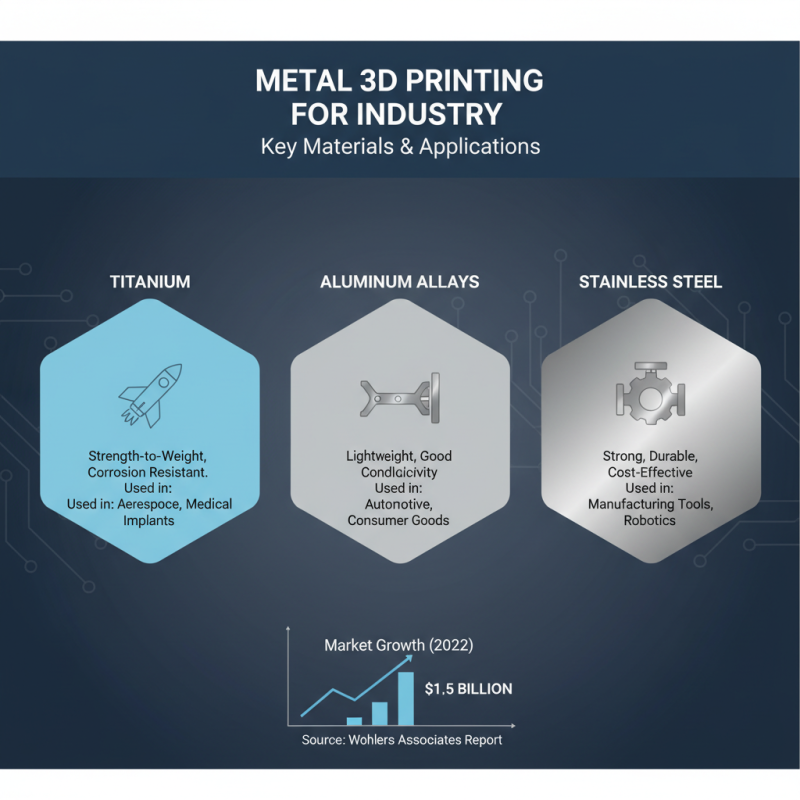
In industrial applications, selecting the right metal materials for 3D printing is crucial. Additive manufacturing allows for complex geometries using various metals such as titanium, aluminum, and stainless steel. According to a 2022 report by Wohlers Associates, the metal 3D printing market reached approximately $1.5 billion, reflecting a rise in industrial adoption. Titanium, valued for its strength-to-weight ratio and corrosion resistance, is often used in aerospace components. Aluminum alloys offer lighter alternatives, which can be beneficial for automotive applications.
When choosing materials, consider your project's specific requirements. Each metal has unique properties influencing durability and weight. For instance, stainless steel is highly versatile and resistant to wear, making it ideal for functional prototypes. However, surface finishing post-print can complicate manufacturing, requiring careful planning.
Tips: Always evaluate the mechanical properties you need. Think about your application—some metals may not perform as expected. Conduct small-scale tests before full-scale production. It helps to identify issues early. Ultimately, understanding the characteristics of each metal material will improve efficiency and reduce waste in manufacturing processes.
Properties and Characteristics of Common Metal 3D Printing Materials
When it comes to metal 3D printing, selecting the right materials is crucial. Common options include stainless steel, titanium, and aluminum. Each material showcases unique properties that fit specific industrial applications. Stainless steel is known for its corrosion resistance and strength. It’s widely used in aerospace and automotive industries. However, it can be heavier than alternatives.
Titanium, on the other hand, is renowned for its high strength-to-weight ratio. Ideal for lightweight structures, it finds applications in medical devices and aerospace components. Yet, titanium’s high cost can limit its widespread use. Aluminum is lightweight and offers good thermal conductivity, making it popular in automotive parts. Unfortunately, its strength is lower compared to stainless steel and titanium.
Beyond these common materials, challenges exist. The printing process can lead to defects, affecting the final product's reliability. Variations in temperature and material quality during printing can create concerns. Maintaining consistency is a significant hurdle in achieving desired properties. Even the most established methods have room for improvement. The balance between performance, cost, and material limitations remains a key focus in industrial applications.
Best 3D Printer Metal Materials for Industrial Applications
Comparative Analysis of Metal Alloys for 3D Printing Applications
When considering metal alloys for 3D printing, it's essential to evaluate their properties. Stainless steel, for instance, offers excellent corrosion resistance. This makes it ideal for both structural and functional applications. Its strength allows for the creation of durable parts, but the printing process can be challenging due to warping.
Aluminum alloys are another popular choice. They are lightweight and facilitate fast print times. These alloys excel in aerospace applications due to their high strength-to-weight ratio. However, achieving a perfect finish can be tough. Some layers may not bond well, leading to imperfections in the final product.
Titanium alloys stand out for their exceptional mechanical properties and biocompatibility. They are widely used in medical implants and aerospace components. Nevertheless, the cost associated with titanium can be a barrier for some projects. Each material has its strengths and weaknesses, and understanding these nuances is key to successful applications in industrial 3D printing.
Best 3D Printer Metal Materials for Industrial Applications
| Material |
Density (g/cm³) |
Tensile Strength (MPa) |
Elongation (%) |
Melting Point (°C) |
| Stainless Steel |
8.0 |
520 |
50 |
1400 |
| Titanium Alloy |
4.5 |
900 |
15 |
1660 |
| Aluminum Alloy |
2.7 |
310 |
12 |
660 |
| Nickel Alloy |
8.9 |
700 |
30 |
1400 |
| Cobalt Chrome Alloy |
8.5 |
900 |
10 |
1300 |
Applications of Metal 3D Printing in Various Industrial Sectors
Metal 3D printing has transformed various industrial sectors. In aerospace, for example, it improves lightweight structures and complex geometries. Engineers can create intricate parts that were impossible with traditional methods. This allows for better fuel efficiency in aircraft. Each component is designed for performance.
In healthcare, custom implants can be made to match individual patients. This precision leads to better outcomes and shorter recovery times. Additionally, the automotive industry benefits from rapid prototyping. It allows for quick iterations in design and testing. Manufacturers can innovate faster, but it also raises questions about quality assurance.
Despite these advancements, challenges remain. Metal 3D printing can be costly, and not every organization can afford it. Skill gaps pose another issue, as trained professionals are still rare. Companies must invest in training and equipment. Balancing cost and innovation will be vital as the industry evolves.
Future Trends in Metal Materials for 3D Printing Technology
The future of metal materials in 3D printing holds exciting possibilities. Technologies are evolving to create stronger, lighter metals. These advancements will enhance the industrial landscape significantly.
New alloys are emerging. They are designed specifically for 3D printing, allowing for precise and intricate designs. These unique combinations can improve thermal resistance and durability. However, understanding these materials requires ongoing education. Not all available options are suitable for every application.
Tips: Experimentation is key. Don’t hesitate to test different materials to see what fits your needs. Document your findings; learn from what works and what doesn't. Stay updated with research to make informed choices.
The industry is also focusing on sustainability. Recycling metal powders is becoming more common. This reduces waste and cuts costs. Innovations in this area need to be tracked, as they may reshape practices in the future. Embracing these trends will be essential for staying competitive.