Top 10 Metal Materials for 3D Printers in China?
The landscape of 3D printing in China has rapidly evolved, particularly with metal materials. As industries push for innovative solutions, the demand for high-quality 3D printer metal material has surged. Various sectors, from aerospace to healthcare, rely on these materials for their precision and strength.
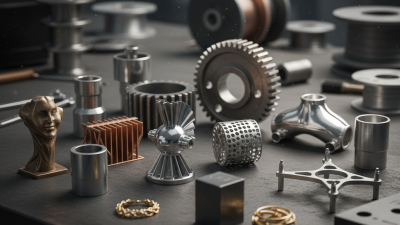
Exploring the top 10 metal materials for 3D printers in China reveals a mix of well-established options and emerging favorites. Each material has unique properties, but few are universally perfect. Stainless steel, titanium, and aluminum dominate the market, yet they each present challenges in terms of cost and printability.
Investing in the right 3D printer metal material is crucial. Manufacturers must balance performance with the specific needs of their applications. Understanding the characteristics of each material allows for better decision-making, yet one must remain cautious. Solutions may not always address all challenges efficiently. The interplay of quality, reliability, and cost continues to shape this dynamic market.
Top 10 Metal Materials for 3D Printing in China
The rise of 3D printing in China has greatly influenced the selection of metal materials. Recent industry reports reveal that the demand for titanium alloys, stainless steel, and aluminum continues to grow. These materials are favored for their mechanical properties and versatility in various applications. In 2022, the market for metal 3D printing materials in China reached approximately $1.6 billion, highlighting significant growth potential.
Titanium alloys are prized for their strength-to-weight ratio and corrosion resistance. These properties make them ideal for aerospace and medical applications. However, their high cost can be a barrier for some manufacturers. Stainless steel offers better affordability while maintaining good strength and weldability, which makes it suitable for diverse industrial uses. Aluminum, known for its lightweight characteristics, is increasingly utilized in automotive and consumer goods.
Despite advancements, challenges remain in the adoption of these metal materials. Achieving consistent quality in 3D printed parts is crucial yet often difficult. Variability in powder characteristics and printer performance can lead to defects. As the industry matures, ongoing research and development will be essential for enhancing the reliability of metal 3D printing in China.
Overview of 3D Printing Technologies in China
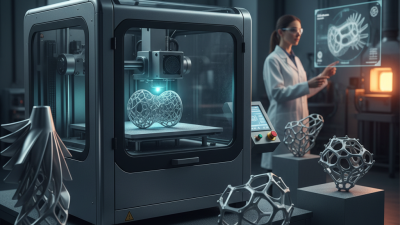
China has rapidly advanced in the field of 3D printing technologies. The country's investment in research and development is substantial. Various sectors, including aerospace and automotive, have embraced these innovations. Metal 3D printing is particularly noteworthy. It allows for complex geometries and lightweight structures, critical for modern engineering.
However, challenges remain. The quality of printed metal parts can vary widely. Material selection is vital to achieving desired properties. Some machines struggle with consistency and reliability. This uncertainty can deter businesses from fully adopting these technologies. Engineers often need to validate their designs rigorously. Each step must be carefully monitored to ensure success.
Despite these hurdles, China's position as a leader in 3D printing continues to grow. Colleges and companies collaborate closely. Their collective effort propels the industry forward. The integration of AI and automation is also a game-changer. As technologies improve, the future looks promising for metal 3D printing in China.
Key Properties of Metal Materials for 3D Printing
When selecting metal materials for 3D printing, several key properties play a crucial role. First, strength is essential. High tensile strength enables printed parts to endure significant stresses without failing. For industries like aerospace and automotive, this quality is non-negotiable.
Another important property is thermal conductivity. Some metals dissipate heat effectively, which can enhance the performance of 3D printed components under high-temperature conditions. The ability to withstand heat without deforming is vital for certain applications. However, not all metal powders exhibit this characteristic, so careful selection is necessary.
Ductility is also worth mentioning. It determines how much a material can deform before breaking. This property can lead to better performance in mechanical parts. However, finding the right balance between ductility and strength is often a challenge for engineers. They frequently must test various combinations of alloys to achieve the desired results. Thus, choosing the best metal material requires careful consideration of multiple properties. It’s an iterative process that demands expertise and experimentation.
Top 10 Metal Materials for 3D Printing in China
This chart displays the popularity index of the top 10 metal materials used for 3D printing in China. The values indicate how favored these materials are in the 3D printing industry, ranging from aluminum being the most popular to cobalt-chrome being the least popular among the choices listed.
Comparative Analysis of Popular Metal Materials
In recent years, the use of metal materials in 3D printing has surged, especially in China. A comparative analysis of popular metal materials reveals key insights into their properties and applications.
Stainless steel is notable for its strength and corrosion resistance. It is often utilized in automotive and aerospace sectors. Titanium alloys, while more expensive, offer superior strength-to-weight ratios. These materials are ideal for medical implants and high-performance components.
Another material, aluminum, provides good thermal conductivity and lightweight characteristics. This can enhance the performance of various machines. However, it can be challenging to print due to its tendency to warp.
Copper stands out for electrical applications due to its excellent conductivity. This requires careful consideration in the printing process to avoid defects.
Tip: When selecting a metal for your project, consider the end-use applications. Understanding how each material behaves during and after printing is crucial. There is no one-size-fits-all answer.
While many metals deliver impressive results, some pose printing challenges. For instance, nickel alloys can lead to unpredictable outcomes if not managed properly. Thus, experimentation may be needed.
Tip: Always conduct trial runs with different settings. Adjusting temperature and print speed can lead to better results. Keep detailed notes on each test for future reference.
Applications of Metal 3D Printing in Various Industries
Metal 3D printing is revolutionizing various industries in China. This technology offers unique benefits, including rapid prototyping and complex geometries that traditional techniques cannot provide. Industries such as aerospace, automotive, and healthcare are leading adopters. In aerospace, for instance, metal 3D printing reduces weight and improves fuel efficiency. It is estimated that this could lower fuel costs by up to 30% over the lifetime of an aircraft.
In the automotive sector, the demand for customized components is rising. 3D printing enables manufacturers to produce lightweight, strong parts at scale. A report noted that the automotive industry's adoption of metal 3D printing could grow by over 25% annually. Medical applications are equally significant. Customized implants tailored to patients' anatomy enhance surgical outcomes. According to industry analysis, the market for medical 3D printing is projected to reach $2 billion by 2026.
Challenges remain in achieving consistent quality. Variations in metal powders can affect print integrity. Additionally, not all parts are suitable for 3D printing, requiring evaluation of economic viability. Continuous research and innovation are essential to address these issues. Despite obstacles, the future of metal 3D printing in China shows great promise across diverse sectors.
Conclusion
This article provides a comprehensive overview of the top 10 metal materials for 3D printers in China, examining their key properties, applications, and future trends. As 3D printing technology continues to advance, the selection of 3D printer metal material has become crucial across various industries such as aerospace, automotive, and healthcare.
The comparative analysis showcased in the article highlights the strengths and weaknesses of popular metal materials, enabling manufacturers to make informed choices that suit their specific needs. Moreover, the discussion on future trends emphasizes innovations in metal alloys and manufacturing processes that promise to enhance the capabilities and efficiency of metal 3D printing in China. Overall, the insights provided serve as a valuable resource for stakeholders looking to leverage metal 3D printing technologies effectively.