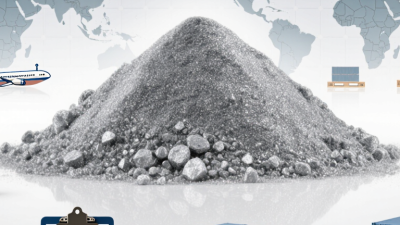
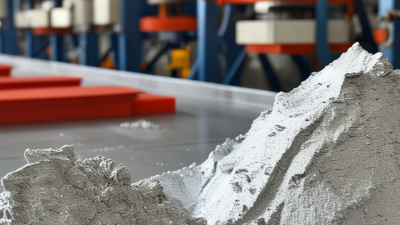
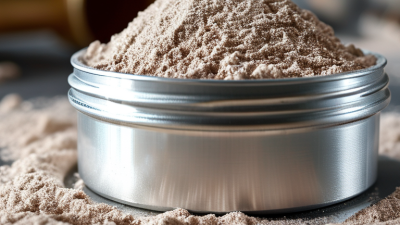
Aluminum Powder is not one uniform material. Buyers encounter atomized, flake, spherical, granulated, and other forms, each shaped for different manufacturing needs. Particle size, purity, morphology, and surface treatment can change flow, packing, appearance, and performance. Small details matter. A fine sample may pour differently from a coarser batch, even when both share a similar product label.
For this overview, fictional materials specialist Dr. Maya Chen offers an illustrative, editorially written reminder: “Choose by verified specification, not by product name alone.” This is not a sourced quotation from a real expert. It reflects a practical purchasing principle: request a current technical data sheet, compare test methods, and confirm batch consistency before placing an order. The ten types below help global buyers build a useful shortlist. They do not replace supplier qualification or application testing.
A clear specification should address the intended process, target particle range, packaging, and quality documentation. Ask how the supplier measures particle size; different methods can produce different results. Also confirm storage and handling guidance, since fine metal powders require careful management. Some categories overlap. That can make comparison frustrating, and a product name may conceal meaningful differences. Treat that as a reason to ask better questions, not to assume equivalence. Good sourcing is precise, documented, and grounded in the needs of the finished product.
Top 10 Types of Aluminum Powder for Global Buyers
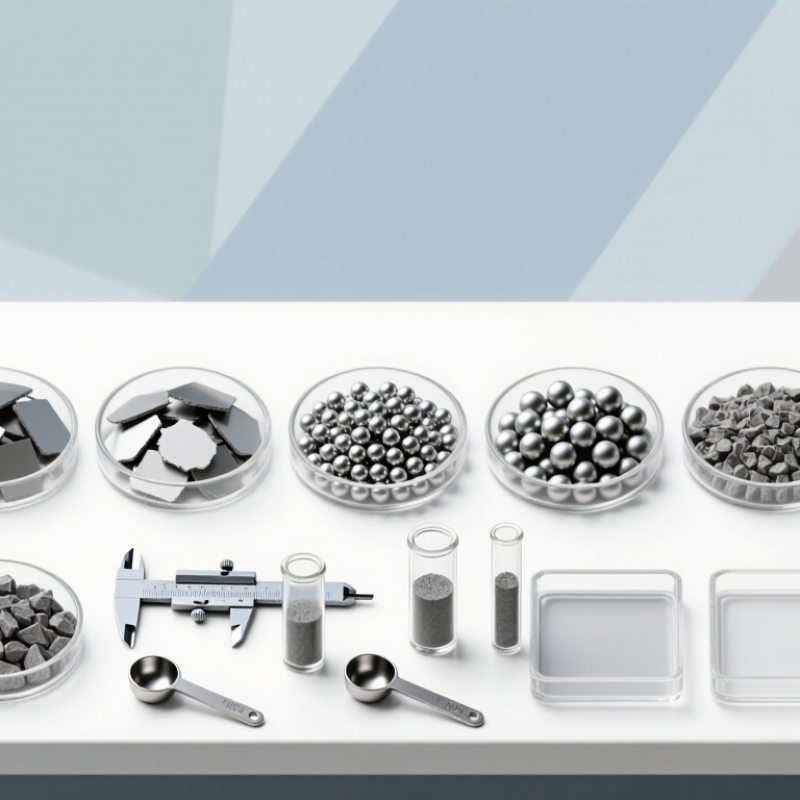
Aluminum powder is classified in several overlapping ways, so one label rarely tells the whole story. By shape, buyers may encounter spherical, near-spherical, irregular, flaky, or granulated powders. Spherical particles often flow smoothly, while flakes provide broad, thin surfaces. Irregular particles can pack differently. Details matter.
Particle size adds another layer: fine, medium, and coarse are useful shorthand, not universal specifications. A sieve range or laser-diffraction report gives clearer information. Check the D50 value and the full size distribution; two powders with the same D50 may behave differently. Production method also shapes performance. Atomization can produce rounded particles, while mechanical milling commonly creates irregular or flake forms. Some products are further classified by purity or surface treatment. These categories can overlap, and supplier terminology is not always consistent.
Tips: Match the powder’s shape and size to your process, then verify with a representative sample. Ask for the test method, size distribution, and safety data sheet. Fine aluminum dust requires careful, controlled handling. Even experienced buyers can overlook how storage and humidity affect flow.
| No. | Type | Form and Typical Particle Size | Common Production Method | Typical Applications | Buyer Considerations |
|---|---|---|---|---|---|
| 1 | Spherical gas-atomized powder | Mostly spherical particles; commonly supplied in size cuts from about 15–150 µm. | Molten aluminum is broken into droplets by a high-pressure inert gas stream and rapidly solidified. | Metal additive manufacturing, powder metallurgy, and some thermal-spray applications. | Check particle-size distribution, flowability, oxygen content, and the size range required by the equipment. |
| 2 | Air-atomized powder | Usually irregular or partly spherical particles; available in a range of sizes, often tens to hundreds of micrometres. | Molten aluminum is dispersed by an air stream; the resulting particles solidify during flight. | Selected metallurgical, chemical, and industrial applications where the specified grade is suitable. | Confirm the atomizing atmosphere and oxide level, since surface condition can affect performance and handling. |
| 3 | Water-atomized powder | Typically irregular particles; particle sizes vary by process and subsequent classification. | High-pressure water jets break up a molten aluminum stream, followed by collection, drying, and screening. | Powder metallurgy and other applications that can accommodate the powder’s morphology and surface characteristics. | Request data on moisture, oxygen content, particle shape, and the supplier’s drying and storage controls. |
| 4 | Flake aluminum powder | Thin, plate-like particles; lateral dimensions and thickness depend on milling and classification. | Aluminum particles are mechanically milled, often with a lubricant or process aid, then classified. | Metallic-effect coatings, printing inks, and selected construction or chemical products. | Check flake size, surface treatment, leafing behavior where relevant, and compatibility with the formulation. |
| 5 | Granular or coarse powder | Relatively large particles, commonly in size cuts above about 150 µm; shape depends on production route. | Produced by atomization or another powder-making process, then separated by screening. | Applications requiring larger feed particles, including selected metallurgical and industrial processes. | Specify the full sieve range and maximum particle size rather than relying on a general “coarse” description. |
| 6 | Fine aluminum powder | A common fine-powder cut is approximately 10–45 µm, though commercial specifications vary. | Made by atomization or milling and then classified to the required size distribution. | Coatings, powder metallurgy, and other applications requiring relatively small particles. | Review the complete particle-size distribution, including the fine-particle fraction and test method. |
| 7 | Medium-size aluminum powder | A representative size cut is approximately 45–150 µm. | Usually produced by atomization followed by screening or air classification. | General industrial and metallurgical uses where a moderate particle size is specified. | Match particle shape and size range to the process; “medium” is not a universal grade designation. |
| 8 | Ultrafine aluminum powder | Often defined commercially as having particles below about 10 µm; definitions differ by specification. | May be produced by specialized atomization, mechanical processing, or other controlled methods. | Specialty chemical, research, and other applications designed for very high surface area. | Fine aluminum dust can present serious fire and explosion hazards. Confirm the safety data and handling requirements. |
| 9 | Aluminum powder for additive manufacturing | Typically spherical, with commonly specified cuts such as 15–45 µm or 20–63 µm, depending on the process. | Generally produced by inert-gas atomization and carefully classified for powder-bed or other additive processes. | Laser powder-bed fusion and other metal additive manufacturing processes that use aluminum alloys. | Check alloy composition, sphericity, satellites, flow, oxygen level, and compatibility with the machine’s feed system. |
| 10 | Aluminum alloy powder | May be spherical, irregular, or flake-shaped; available across fine, medium, and coarse size ranges. | Commonly made by atomizing a molten aluminum alloy, followed by screening or classification. | Powder metallurgy, additive manufacturing, and other uses requiring a defined alloy composition. | Verify the alloy designation and chemical analysis, as well as particle form and size; alloy powders are not interchangeable. |
Note: Particle-size ranges shown are representative examples, not universal standards. Product specifications, test methods, and suitable applications vary by grade and supplier. Aluminum powder is combustible; consult the applicable safety data and follow appropriate storage, dust-control, and handling procedures.