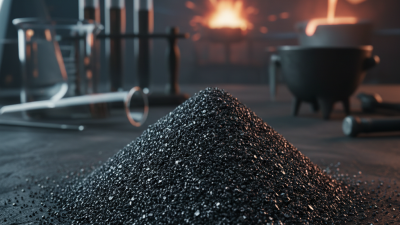
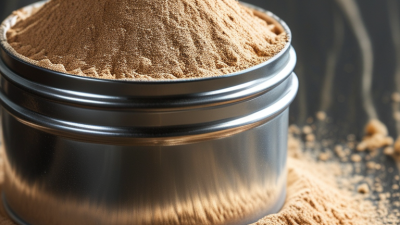
China’s aluminum powder industry serves diverse applications, including additive manufacturing, coatings, thermal materials, and laboratory research. This guide examines China’s top 10 Aluminum Metal Powder manufacturers through practical and verifiable criteria. These criteria include powder purity, particle-size distribution, morphology, production consistency, testing capability, and customer support.
Numbers alone can mislead.
A manufacturer may offer excellent specifications but limited customization. Another may provide responsive service but lack transparent batch documentation. Therefore, this overview considers evidence such as certificates, technical data sheets, sample testing, factory experience, and traceability records. Buyers should review the Certificate of Analysis, Safety Data Sheet, packaging condition, and applicable transport requirements before placing an order. Product performance can change with atomization methods, alloy composition, storage conditions, and surface treatment.
Details matter here.
The selected companies are discussed from a buyer’s perspective, not simply through promotional claims. Their strengths, possible limitations, and suitable application areas are considered carefully. However, market positions can change, and supplier information may require independent confirmation. A company’s large production capacity does not automatically guarantee stable quality for every grade. Likewise, a smaller specialist may deliver better technical communication for demanding projects.
This guide is intended to support informed supplier screening. It does not replace laboratory validation, regulatory review, or professional engineering advice. By comparing technical evidence with real purchasing needs, readers can create a more reliable shortlist of Chinese Aluminum Metal Powder manufacturers.
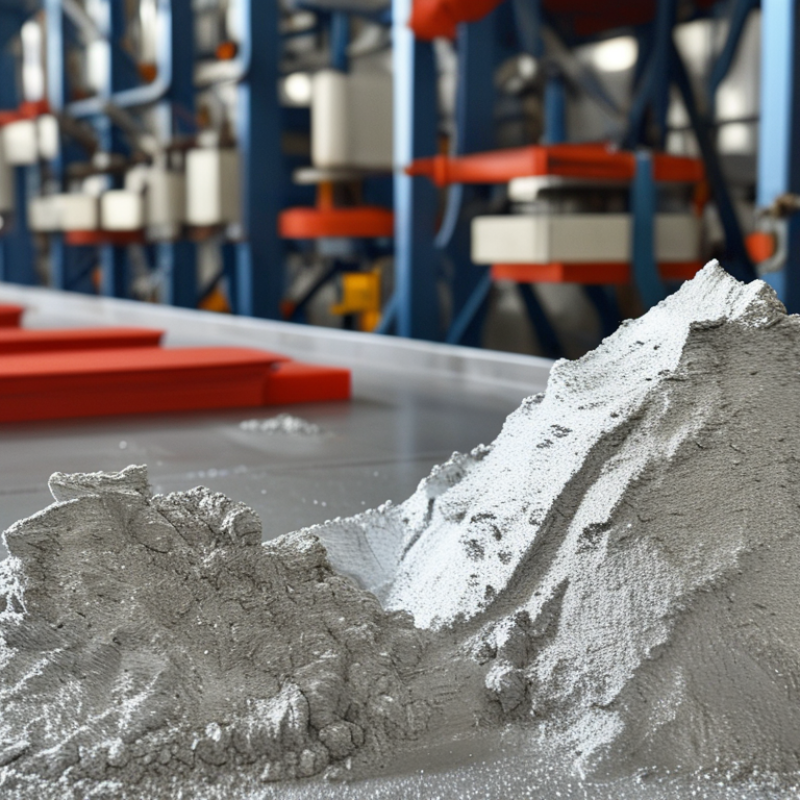
Aluminum metal powder is a finely divided form of aluminum produced through controlled atomization, milling, or other industrial processes. Each particle may be spherical, irregular, or flaky, depending on the manufacturing method. This shape affects flow, packing density, reflectivity, and melting behavior. It is not simply aluminum dust.
In practical applications, manufacturers use aluminum powder in additive manufacturing, coatings, pigments, thermal materials, and engineered components. A technician may inspect a sealed sample for particle-size distribution, moisture, oxide content, and apparent density. These measurements influence printing consistency and surface quality. Finer powder often provides smoother detail, but it may also require stricter handling controls. Small differences matter.
Reliable producers should provide batch records, safety data, testing results, and clear storage guidance. Experienced buyers also check whether the powder matches the intended equipment and process. A glossy appearance alone proves very little. I have seen product comparisons focus heavily on price while overlooking particle shape and packaging integrity. That approach can create unstable results. Aluminum powder reacts with air and moisture at its surface, so clean facilities and suitable containers are essential. Local regulations and workplace procedures must guide handling, transport, and disposal. Supplier rankings can be useful, but technical evidence remains more valuable than a polished brochure.
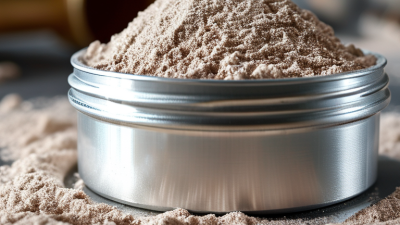
Choosing among Chinese aluminum metal powder manufacturers requires more than comparing prices. Start with production experience, technical capability, and documented quality systems. Ask for particle-size distribution, morphology, purity, surface treatment, and oxide-layer data. These details affect flowability, consistency, and final performance. A reliable supplier should provide batch-specific certificates, clear test methods, and traceable production records. General claims are not enough.
Request representative samples from several production batches. Compare them under the same laboratory conditions. Check whether the powder matches your application, equipment, and required specifications. Review factory audits, inspection procedures, packaging standards, and storage controls. Safe handling information and compliant transport documentation also matter. Communication is a practical test. Slow answers can signal weak internal coordination. Not always, but sometimes.
Tips: Ask for an independent laboratory report when results seem unclear. Confirm whether the quoted price includes testing, packaging, and delivery terms. Visit the facility if order volume justifies it. During an audit, observe cleanliness, moisture control, labeling, and worker training. A polished showroom proves little. Production records reveal more. No checklist is perfect. Even experienced buyers can overlook changes in raw-material sources, sampling frequency, or equipment maintenance. Record every promise in writing, then verify it against the delivered batch.
China’s top 10 aluminum metal powder manufacturers are often compared by consistency, testing capability, and production experience. A reliable supplier should provide particle-size data, chemical composition, moisture levels, and batch traceability. These details matter.
Manufacturers serving additive production, coatings, automotive parts, and industrial materials usually offer different powder shapes and size ranges. Spherical powder may support smoother flow, while flake powder suits selected coating applications. Buyers should examine sampling records, packaging quality, and delivery performance. A clean production area is important. However, no ranking is universally accepted. A supplier strong in fine powder may not be suitable for coarse industrial grades. That limitation deserves attention.
Tips: Request a recent certificate of analysis and compare it with an independent laboratory test. Check whether the container is sealed, labeled, and protected from moisture. Discuss storage conditions, workplace ventilation, employee training, and lawful transportation before ordering. Ask for a small trial batch first. It can reveal flow problems, contamination, or inconsistent color. My assessment would also include technical support after delivery, not only the quoted price. Some manufacturers communicate well during sampling but respond slowly after payment. That weakness should not be ignored. Safety documentation and responsible handling must remain part of every professional purchase decision.
China’s top 10 aluminum metal powder manufacturers are often compared by product consistency, technical support, and production control. A reliable supplier should provide clear particle-size data, chemical composition, moisture limits, and batch traceability. In factory trials, powder flow can matter as much as purity. Small differences may affect mixing, spraying, or compaction.
Product types commonly include atomized aluminum powder, spherical powder, flake powder, and customized grades. Atomized powder supports controlled blending and additive production. Flake powder offers strong coverage in coatings and decorative materials. Spherical grades may improve flow and packing behavior. Applications include powder metallurgy, conductive materials, industrial coatings, lightweight composites, and thermal processing. Each use requires different particle shapes and surface treatments.
Tips: Request a recent test report and a small sample before placing a large order. Check sieve data, tap density, oxidation control, packaging, and storage guidance. Ask whether the supplier can maintain the same specification across several batches. Certifications are useful, but they do not replace testing. No ranking is perfect. A manufacturer may excel in fine powder but perform poorly with custom grades. I would compare actual trial results, not only catalog claims. Also review safety documentation and transport requirements with qualified professionals.
| Profile | Primary Product Types | Typical Particle Size Range | Common Aluminum Grades or Forms | Main Applications | Industry Specialty | Typical Quality and Testing Focus |
|---|---|---|---|---|---|---|
| 01 | Atomized aluminum powder | Approximately 10–150 μm, depending on atomization and classification | Commercially pure aluminum and selected Al-Si or Al-Mg alloys | Additive manufacturing, thermal spray, powder metallurgy, conductive composites | Spherical powder production with controlled flowability and packing density | Particle-size distribution, morphology, apparent density, oxygen content, flow rate and chemical composition |
| 02 | Air-atomized aluminum powder | Commonly 20–200 μm | Aluminum powder for industrial blends and general powder processing | Refractory materials, chemical formulations, paints, coatings and powder metallurgy | Cost-effective bulk production and scalable industrial supply | Moisture, sieve residue, bulk density, active aluminum content and lot-to-lot consistency |
| 03 | Aluminum flake powder and pigment-grade powder | Approximately 5–75 μm, with particle shape controlled by milling | High-purity aluminum flakes and leafing or non-leafing grades | Metallic coatings, printing inks, decorative finishes, automotive and architectural paints | Reflectivity, brightness, hiding power and surface appearance | Particle morphology, color tone, gloss, residue, oil absorption and coating compatibility |
| 04 | Ultrafine aluminum powder | Submicron to approximately 10 μm, depending on the process | High-purity aluminum with tightly controlled fine-particle distribution | Conductive pastes, specialty coatings, energetic formulations and advanced composites | Fine-particle classification and controlled surface reactivity | Specific surface area, oxygen level, agglomeration, moisture and safe handling controls |
| 05 | Aluminum powder for additive manufacturing | Typically 15–63 μm for powder-bed fusion; broader ranges may be offered | Spherical Al-Si alloys and other aluminum alloy powders for 3D printing | Laser powder-bed fusion, prototyping, aerospace components and lightweight engineering parts | High sphericity, low satellite content and repeatable powder spreading | Sphericity, flowability, tap density, oxygen and nitrogen levels, internal porosity and PSD |
| 06 | Aluminum powder for powder metallurgy | Approximately 45–250 μm | Aluminum and aluminum alloy powders designed for compaction or sintering | Lightweight structural parts, automotive components, filters and wear-resistant materials | Compressibility, sinterability and control of green-part density | Flow rate, compressibility, apparent density, dimensional stability and alloy chemistry |
| 07 | Aluminum powder for thermal spray | Often 15–90 μm, depending on the spray system | Aluminum and aluminum-alloy powders suitable for coating deposition | Corrosion protection, dimensional restoration, electrical conductivity and wear-control coatings | Stable feeding, consistent melting behavior and coating adhesion | Flowability, particle-size distribution, coating porosity, bond strength and deposit uniformity |
| 08 | Aluminum powder for refractory and construction materials | Commonly 45–300 μm | Industrial aluminum powder with controlled active-metal content | Aerated concrete, refractory mixes, metallurgical additives and heat-resistant materials | Reaction-rate control, dispersion and compatibility with cementitious or refractory systems | Active aluminum, moisture, particle-size distribution, hydrogen-generation behavior and impurities |
| 09 | Aluminum powder for conductive materials | Approximately 1–45 μm | Fine aluminum powder and flake forms for conductive formulations | Conductive coatings, electromagnetic shielding, adhesives and composite materials | Balance of electrical performance, dispersion stability and oxidation control | Electrical resistivity, surface area, flake alignment, oxidation level and dispersion behavior |
| 10 | Customized aluminum alloy powder | Customer-defined ranges from fine powder to coarse granules | Al-Si, Al-Mg, Al-Cu and other application-specific aluminum alloy systems | Aerospace, automotive, electronics, research and specialized industrial formulations | Small-batch development, specification matching and application-oriented technical support | Chemical composition, PSD, morphology, density, surface condition, trace elements and batch certification |
Top-ten lists can help narrow your search, but they cannot replace technical verification. A suitable supplier should understand your process, not only offer a low quotation. Ask about particle size distribution, powder shape, purity, surface treatment, and batch consistency. These factors can affect flowability, mixing, sintering, coating quality, and storage stability.
Request a recent certificate of analysis, safety data sheet, and traceability record for each batch. Check whether the supplier uses calibrated testing equipment and documented quality procedures. A practical sample should match your actual production method, equipment, and target performance. Test it for moisture, oxidation, bulk density, and sieve residue. Small details matter. Also confirm packaging, labeling, storage conditions, and transport protection before placing a large order.
Reliable manufacturers should communicate realistic lead times and explain possible variation. They should answer technical questions clearly, without hiding behind broad claims. Factory audits, video inspections, and independent laboratory testing can strengthen your assessment. Price deserves attention, but an unusually cheap offer may reflect weaker controls or incomplete service. I have learned that supplier selection is rarely perfect; early assumptions can fail after scale-up. Keep written specifications, approval samples, and corrective-action records. That discipline makes comparison more objective and protects long-term production quality.