China Top 10 Bulk Aluminum Powder Manufacturers
China’s Bulk Aluminum Powder industry is expanding with demand from powder metallurgy, coatings, aerospace parts, and additive manufacturing. Yet purchasing decisions require more than production volume. Particle size, alloy composition, apparent density, flowability, surface treatment, packaging, and traceability can change final performance.
The U.S. Geological Survey reported global primary aluminum production at roughly 72 million metric tons in 2024. This figure shows the scale of the raw-material base, but it does not measure powder output. That distinction matters. Grand View Research also identifies automotive, aerospace, and industrial applications as major drivers of aluminum powder demand. However, market estimates differ because suppliers classify powders by alloy, application, and processing route.
Dr. Frank Petzoldt, a recognized powder-metallurgy specialist at Fraunhofer IFAM, has emphasized, “Powder quality is the key to reliable additive manufacturing.” The same principle applies to bulk purchasing. A low price means little when batches show inconsistent particle distributions or poor flow. Small differences become visible in a 500-kilogram order.
This guide reviews China’s top 10 Bulk Aluminum Powder manufacturers through a practical lens. It considers manufacturing capacity, quality systems, export experience, technical support, and product consistency. Certifications are useful evidence, not perfect proof. Factory claims also require careful verification.
No ranking is flawless. Supplier suitability depends on your alloy, particle range, end use, and compliance requirements. Buyers should request recent test reports, safety documentation, sample batches, and clear delivery terms before making a decision.
China’s Bulk Aluminum Powder Industry: 2024 Capacity, Output, and Market Demand
China’s bulk aluminum powder industry expanded alongside strong primary aluminum production in 2024. National Bureau of Statistics data placed China’s annual primary aluminum output above 43 million metric tons. However, aluminum powder capacity is not reported as one official category. Classifications differ across atomized, flake, and specialty grades. This makes supplier comparisons less precise than they appear.
Industry reports from the China Nonferrous Metals Industry Association indicate resilient demand from powder metallurgy, industrial coatings, thermal materials, and additive manufacturing. Demand is growing, but unevenly. Construction-related consumption remains sensitive to property investment. Meanwhile, automotive lightweighting and digitally controlled manufacturing support higher-value powder grades. Public market studies often estimate China accounts for a substantial share of Asian aluminum powder supply, yet their figures vary widely. That gap deserves caution, not confidence.
Tips:
Check annual capacity, verified output, particle-size distribution, moisture control, and batch traceability. Ask for third-party testing and documented quality systems. “Capacity” may mean installed equipment, not usable production. A practical audit should compare monthly shipments with electricity use, staffing, and warehouse records. This is imperfect evidence, but it exposes inflated claims. The United States Geological Survey’s Mineral Commodity Summaries 2024 also confirms China’s dominant position in global aluminum production, although it does not isolate powder output. For 2024 sourcing decisions, demand forecasts should therefore combine official aluminum statistics, customs data, and audited supplier records.
How the Top 10 Manufacturers Compare by Annual Capacity and Export Volume
China Top 10 Bulk Aluminum Powder Manufacturers
China’s top ten bulk aluminum powder manufacturers differ sharply in annual capacity and export volume. Public factory disclosures commonly show nameplate capacity ranging from 5,000 to over 30,000 metric tons per year. However, nameplate capacity is not actual output. Production may fall during maintenance, energy restrictions, or weaker construction demand.
Export volume offers a clearer comparison. The strongest exporters usually ship between 2,000 and 18,000 metric tons annually, depending on particle size, purity, and packaging options. Large plants often serve overseas buyers through containerized bulk bags, while smaller producers focus on drums and customized batches. This affects loading efficiency. It also changes the real cost per ton.
From practical supplier evaluations, buyers should compare three records: audited production figures, customs shipment history, and recent quality certificates. A factory with high capacity but limited export experience may create delays with documentation or moisture-controlled packing. That detail matters. Aluminum powder can react badly to poor storage conditions, especially in humid ports. I would also question unusually high export claims. Some figures combine related products or duplicate trading-company shipments. The comparison is therefore useful, but not perfect. Annual volume alone cannot prove stable quality, technical support, or reliable delivery. Conversations with production managers, inspection staff, and logistics teams often reveal more than a polished sales sheet.
Aluminum Powder Grades: Particle Size, Purity, and Typical Industry Standards
China Top 10 Bulk Aluminum Powder Manufacturers
Aluminum Powder Grades: Particle Size, Purity, and Typical Industry Standards
When comparing bulk aluminum powder manufacturers in China, grade selection deserves more attention than ranking. Particle size directly affects surface area, flow behavior, blending, and final product consistency. Coarser powders may suit general metallurgical processing, while finer grades are often selected for coatings, pigments, or specialized compounds. Exact ranges vary by process, so a specification such as D50, not only a mesh number, gives clearer control.
Purity commonly ranges from commercial-grade levels to 99.5% or higher. The correct value depends on the application and impurity limits. Iron, silicon, copper, and moisture can influence color, conductivity, and processing stability. Buyers should request a current certificate of analysis for each production lot. A certificate helps, but it is not the whole truth. Independent retesting remains sensible for large orders.
Typical quality programs may reference ISO 13320 for laser diffraction particle-size testing and ASTM E11 for sieve analysis. Other standards can apply to apparent density, flow rate, packaging, or chemical composition. Ask whether results come from calibrated equipment and whether sampling follows a documented procedure. During factory evaluation, inspect sealed packaging, batch labels, storage conditions, and traceability records. Small details matter. One overlooked measurement can create an expensive production problem.
Production Technologies, Quality Certifications, and Safety Compliance in China
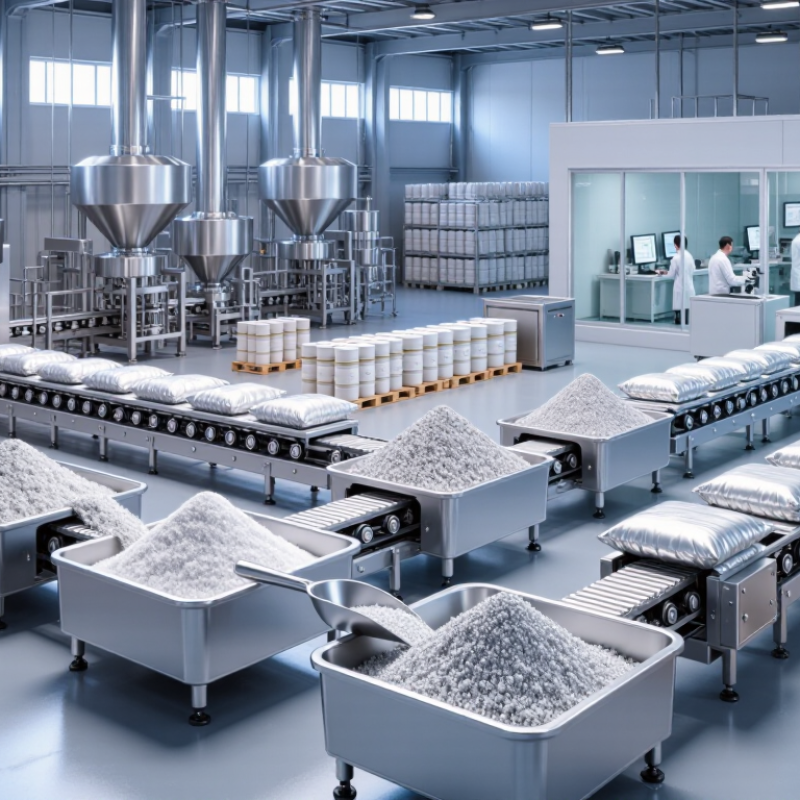
China’s top 10 bulk aluminum powder manufacturers should be judged by production control, not advertising claims. Many facilities use controlled atomization to create consistent particle shapes and sizes. Some add air classification, screening, or specialized milling for different industrial applications. Each process needs strict dust control and stable equipment settings. Small changes in temperature can affect flowability, purity, and surface performance.
Tips:
Request recent batch records, particle-size data, impurity limits, and a current Safety Data Sheet. Visit the production site when possible. Check whether testing uses calibrated instruments and recognized methods. ISO 9001 supports quality management, while ISO 14001 and ISO 45001 indicate environmental and occupational safety systems. These certificates still require verification. A certificate alone is not proof of reliable bulk supply.
Safety compliance must cover the full production chain. Facilities should control ignition sources, use suitable ventilation, ground equipment, and manage static electricity. Inert-gas protection may be necessary for certain operations. Workers need practical training, protective equipment, emergency drills, and clearly labeled containers. Batch traceability should connect raw materials, test results, packaging, and shipment records. In my experience, documentation often looks stronger than daily practice. A careful buyer should inspect both. Some manufacturers may also have gaps in supplier audits or transport procedures, so these points deserve direct questions before approval.
Applications, Pricing Factors, and Supplier Selection Criteria for Bulk Buyers
China Top 10 Bulk Aluminum Powder Manufacturers
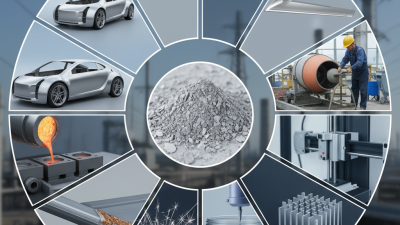
Bulk aluminum powder supports industrial coatings, lightweight materials, thermal products, and selected metallurgical processes. Buyers should match powder grade with the final application. Purity, particle size, shape, and surface treatment can change performance significantly. Fine powder may improve coverage, but it can also require stricter handling controls. Request a current technical data sheet and safety data sheet before testing.
Pricing depends on aluminum purity, particle distribution, production volume, packaging, testing, and delivery terms. Freight costs can shift quickly, especially for heavy shipments with specialized packaging. A low quotation may exclude inspection, export documentation, or protective storage. Confirm the minimum order quantity, lead time, payment terms, and replacement policy in writing. Suppliers should provide batch traceability and test results from recognized laboratories.
Tips:
Compare at least three written quotations using the same specification. Ask for a representative sample, not a specially prepared batch. Check whether the factory controls particle size consistently. Review packaging details, moisture protection, and warehouse conditions. Confirm legal transport and workplace requirements for your destination. No supplier is perfect. A small pilot order may reveal inconsistent flow, unexpected oxidation, or packaging weaknesses before a large purchase. One overlooked detail can become an expensive production delay.