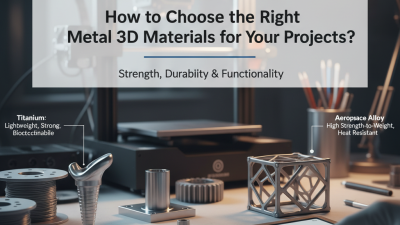
Choosing a metal for 3D printing is not simply a matter of comparing price per kilogram. It affects strength, heat resistance, corrosion behavior, surface finish, and production risk. This guide, “Top 10 3D Printer Metal Materials Buyers Need,” examines the practical differences between stainless steel, aluminum, titanium, nickel alloys, tool steel, copper, and other widely used options. Each material behaves differently inside the build chamber. Some powders flow smoothly. Others bridge, clump, or react badly to moisture. Small details matter.
Dr. Olaf Diegel, a professor of additive manufacturing and an experienced industry educator, has said, “Additive manufacturing is not about replacing traditional manufacturing; it is about doing things that traditional manufacturing cannot do.” That principle also applies to material selection. A lightweight aluminum part may suit an aerospace bracket, while a nickel alloy may better tolerate extreme heat. Titanium can deliver an impressive strength-to-weight ratio, but its cost and processing demands require careful justification. Copper conducts heat efficiently, yet its reflectivity can challenge certain laser systems.
No ranking is perfect. Application requirements change. Buyers should check powder morphology, particle-size distribution, oxygen content, alloy certification, batch traceability, and supplier consistency before ordering. Machine compatibility matters too. A material that performs well on one printer may produce weak or porous parts on another. Post-processing can also change the final result. Heat treatment, machining, polishing, and inspection all influence performance. The most reliable decision combines published data with test coupons, operator experience, and realistic production trials. That approach may feel slower, but it prevents expensive surprises.
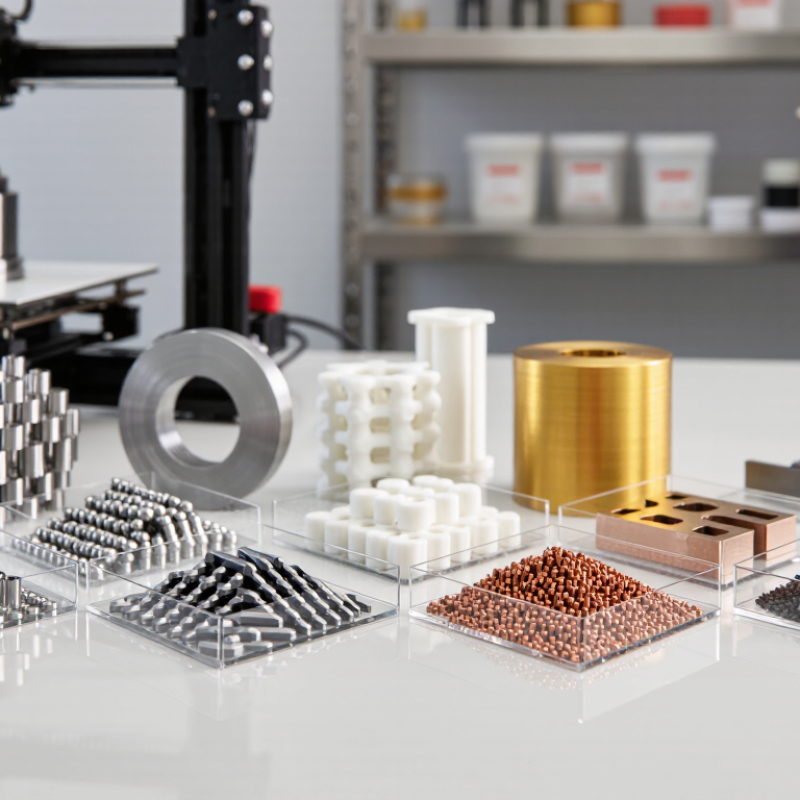
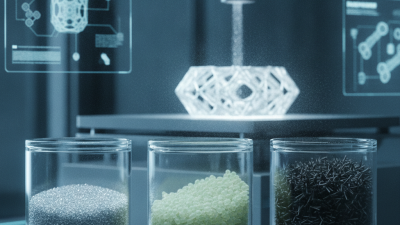
Metal additive manufacturing begins with feedstock, not the printer. Buyers commonly compare aluminum, stainless steel, tool steel, titanium, nickel alloys, copper, and cobalt alloys. Each material behaves differently during melting, cooling, and post-processing.
Powder requires careful attention to particle size, shape, flowability, moisture, and reuse history. A receiving inspection may include sieve analysis, microscopic checks, and a review of the powder certificate. Powder around 15–45 micrometers can suit some powder-bed processes, but the correct range depends on the equipment and application. Finer powder may improve detail. It can also create handling problems.
Wire is usually easier to store and handle than powder. Its diameter, surface condition, chemical composition, and feeding stability still matter. A spool that looks clean may produce unstable deposition if its diameter varies. That detail is easy to miss. I would not treat a supplier’s material name as sufficient evidence.
ASTM F42 terminology helps buyers discuss additive manufacturing with technical teams and suppliers. ISO/ASTM 52900 provides widely used vocabulary for processes, feedstock, and system descriptions. These terms reduce confusion between powder bed fusion, directed energy deposition, powder feedstock, and wire feedstock. They do not replace testing.
Ask for traceability, test methods, lot identification, and storage conditions. Confirm whether the certificate matches the actual delivery. Standards improve communication, but judgment remains necessary. Even experienced buyers can overlook contamination, humidity exposure, or an unsuitable particle distribution.
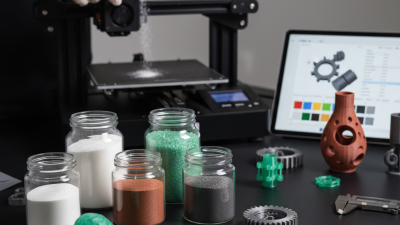
For metal additive manufacturing, ferrous materials remain practical choices for demanding parts. Two widely considered options are 316L stainless steel and 17-4 PH stainless steel.
316L stainless steel 316L typically delivers 500–700 MPa tensile strength, depending on powder quality, printing direction, and heat treatment. Its strong corrosion resistance suits fluid channels, brackets, medical tooling, and coastal equipment. It also offers good ductility, which can reduce cracking during production. However, its lower strength may limit thin load-bearing components. Check the actual test certificate. Do not rely only on a material label.
17-4 PH stainless steel 17-4 PH is selected when higher mechanical strength matters. Properly processed parts can reach at least 1,000 MPa tensile strength after aging treatment. This makes the alloy useful for compact fixtures, shafts, structural connectors, and components exposed to repeated loads. The trade-off is more demanding post-processing. Aging temperature, cooling conditions, and build orientation can change final performance. Small geometric features may also distort during stress relief.
Buyers should compare more than headline strength. Ask for density, elongation, hardness, surface roughness, and fatigue data from representative builds. Inspect internal channels with computed tomography when failure would be costly. A missed pore can matter more than a impressive specification. Material selection is rarely perfect on the first attempt. Test the real geometry, not just a standard coupon.
Tool steels deserve careful attention when buyers select metal powders for demanding 3D-printed tooling. Maraging 300 can reach approximately 1,900 MPa tensile strength after proper aging. Its low-carbon structure supports relatively easy machining before heat treatment. This helps when printed channels or mounting features need precise finishing.
The material is useful for molds, inserts, and tooling exposed to repeated mechanical loads. However, strength does not appear automatically after printing. Stress relief, aging temperature, build orientation, and density strongly influence final performance. Small pores can become serious crack starters. A polished surface also cannot repair weak internal bonding.
H13 offers a different balance. After suitable heat treatment, it commonly reaches 48–52 HRC. Its hot-work performance suits dies, cores, and components facing repeated heating and cooling. Thermal fatigue resistance matters here, not hardness alone. Cooling-channel design can improve temperature control, but thin walls may distort during printing or finishing.
Buyers should request tensile data, hardness results, density measurements, and heat-treatment records. Ask whether the figures come from printed test bars or finished components. That distinction matters. Actual results vary with powder quality, laser settings, orientation, and post-processing. I would avoid choosing Maraging 300 only for its impressive strength. H13 may perform better where thermal cycling dominates. The wrong assumption is expensive.
| Buyer-Relevant Dimension | Maraging 300 | H13 Tool Steel |
|---|---|---|
| 1. Material Classification | Age-hardening ultra-high-strength steel designed to achieve its final properties through solution treatment and aging. | Hot-work chromium-molybdenum-vanadium tool steel designed for elevated-temperature tooling and repeated thermal cycling. |
| 2. Typical Chemical Composition | Approximately 18% nickel, 8–9% cobalt, 4.5–5% molybdenum, and 0.6–0.8% titanium, with low carbon content. | Approximately 0.35–0.40% carbon, 4.8–5.5% chromium, 1.0–1.5% molybdenum, and 0.8–1.2% vanadium. |
| 3. Typical Maximum Tensile Strength | Approximately 1,850–1,950 MPa after recommended aging treatment; the often-quoted value is about 1,900 MPa. | Typically about 1,400–1,700 MPa after hardening and tempering, depending on hardness, section size, and processing conditions. |
| 4. Typical Final Hardness | Approximately 50–55 HRC after aging; hardness depends strongly on the aging temperature and time. | Approximately 48–52 HRC for many tooling applications after quenching and tempering; higher hardness may be possible with reduced toughness. |
| 5. Density | Approximately 8.0 g/cm³ at room temperature. | Approximately 7.75 g/cm³ at room temperature. |
| 6. As-Printed Condition | Generally printable in a relatively soft, machinable condition before aging, which supports post-machining of critical features. | May exhibit residual stress, anisotropy, and cracking sensitivity in the as-built condition, particularly when thermal control is insufficient. |
| 7. Recommended Heat Treatment | Common practice includes solution treatment at approximately 815°C, air cooling, followed by aging near 480°C for several hours. Exact cycles must follow the powder specification. | Common practice includes austenitizing near 1,020–1,050°C, air or gas quenching, and double tempering commonly between 540–650°C. The exact cycle depends on the target hardness. |
| 8. Build-Plate or Preheating Considerations | A heated build plate and controlled chamber environment are commonly used; build-plate temperatures around 150–200°C are frequently applied for powder-bed fusion. | Higher substrate or chamber temperatures are commonly used to reduce thermal gradients; approximately 200–300°C is a frequently used starting range, subject to machine qualification. |
| 9. Suitable Applications | Injection-molding inserts, high-strength tooling components, aerospace fixtures, lightweight structural parts, and components requiring high strength with good machinability before aging. | Die-casting dies, extrusion tooling, forging dies, injection-molding components, conformal-cooling inserts, and tools exposed to repeated heating and cooling. |
| 10. Main Buying Considerations | Choose when very high tensile strength, predictable age hardening, and easier post-machining are priorities. Verify aging response, dimensional change, and corrosion protection requirements. | Choose when hot-strength, thermal-fatigue resistance, and tool-life performance are priorities. Verify preheating capability, cracking control, heat-treatment support, and achievable surface hardness. |
| Technical note: Values shown are typical engineering ranges rather than guaranteed specifications. Actual results depend on powder chemistry, particle-size distribution, laser or electron-beam parameters, build orientation, machine design, heat treatment, section thickness, and testing standards. | ||
For buyers comparing the top 10 3D printer metal materials, Ti-6Al-4V deserves close attention. Its density is only 4.43 g/cm³, according to ASM Handbook data. That low mass suits aerospace brackets, medical components, and lightweight tooling. ASTM F3001 emphasizes chemistry, mechanical properties, and powder-bed fusion controls for this alloy. In practice, powder oxygen levels and heat treatment can change fatigue performance. A lighter part is not automatically a safer part. I once underestimated support removal time, especially around thin lattice structures.
Inconel 718 offers high strength at elevated temperatures, with a density near 8.19 g/cm³. It fits combustion hardware, heat-resistant fixtures, and demanding industrial parts. CoCr, commonly near 8.3 g/cm³, provides strong wear and corrosion resistance. It is useful for dental and orthopedic applications when surface quality matters. The 2024 Wohlers Report valued the global additive manufacturing industry at about 20 billion dollars in 2023. That growth increases material choices, but it also exposes inconsistent powder documentation. Buyers should request batch certificates, particle-size distribution, and recycled-powder limits.
Tips: Compare density, fatigue data, and post-processing costs together. Ask for test coupons from the same machine and parameter set. Check oxygen, nitrogen, and moisture controls. Do not rely on tensile strength alone. Build orientation matters. So does operator experience. One overlooked variable can quietly weaken an expensive part.
When buyers compare 3D printer metal materials, weight and heat flow often shape the decision. AlSi10Mg offers a density of about 2.67 g/cm³, making it useful for lightweight housings, brackets, and aerospace-style prototypes. Its silicon content improves casting-like flow during laser powder bed fusion. Magnesium supports lower weight, but thin walls can still warp under uneven thermal loads. Careful support design matters.
Copper is different. It conducts electricity and heat extremely well, which suits cooling channels, busbars, induction parts, and thermal exchangers. However, its high reflectivity can reduce energy absorption during printing. Process settings must match the machine, powder quality, and layer thickness. Small pores may weaken electrical performance, even when the surface looks clean. That is easy to overlook.
Nickel alloys bring strength, corrosion resistance, and stability at elevated temperatures. They fit demanding components near engines, chemical equipment, and hot fluid systems. Nickel is heavier than aluminum, yet its durability can justify the extra mass. Buyers should review tensile data, fatigue results, density, and post-processing requirements together. Testing only one printed sample is not enough. I have seen attractive geometries fail because internal channels trapped powder or lacked inspection access. CT scanning, heat treatment, and dimensional checks can reveal problems that visual inspection misses. Material choice is rarely perfect. It is a trade-off between weight, conductivity, strength, cost, and manufacturing control.