2026 Top Trends in 3D Printing Powder for Innovative Manufacturing Solutions?
The world of 3D printing is rapidly evolving. Innovations in 3D printing powder are at the forefront of this transformation. These materials have revolutionized manufacturing, enabling more efficient and sustainable processes. As industries seek to enhance production capabilities, understanding these trends becomes crucial.
In 2026, several key trends in 3D printing powder are emerging. New materials are being developed to improve durability and flexibility. For instance, researchers are focusing on biodegradable options that reduce environmental impact. This shift reflects a broader commitment to sustainability in manufacturing.
However, challenges remain. The performance of certain powders can vary significantly. Quality control is essential to ensure reliability. Manufacturers must carefully evaluate the properties and compatibility of these powders with existing technologies. The success of innovative solutions depends on overcoming these obstacles. The future of 3D printing powder holds great promise, yet it requires both caution and creativity to navigate.

Emerging Materials in 3D Printing Powders for 2026
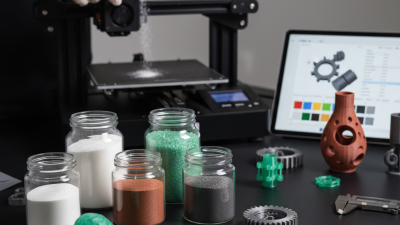
As we look ahead to 2026, the realm of 3D printing powders is evolving rapidly. Emerging materials are reshaping the landscape of innovative manufacturing solutions. These powders are designed to meet specific performance needs. For example, bio-based powders are gaining traction, potentially reducing environmental impacts. Their biodegradability presents a significant advancement.
Metal powders continue to evolve as well. New alloys are being developed to enhance strength and thermal stability. These materials allow for the creation of complex geometries that were once unimaginable. Advances in particle size control also help in achieving higher resolution and better surface finish. However, the challenges of consistent quality and cost remain areas for reflection.
Furthermore, the potential of composite powders is significant. These materials blend polymers with ceramics or metals, offering unique properties. They can enhance durability while maintaining lightweight characteristics. Yet, the processing of these composites can be tricky, requiring research and development. Ensuring compatibility between materials is crucial for successful outcomes. Innovative solutions are vital for driving this industry forward.
2026 Top Trends in 3D Printing Powder for Innovative Manufacturing Solutions
Advancements in Powder Production Techniques for Enhanced Quality
Advancements in powder production techniques are transforming the 3D printing landscape. The global 3D printing powder market is expected to reach $800 million by 2026, reflecting an annual growth rate of 25%. Innovations in material synthesis and processing are crucial to this growth. New methods enhance the flowability and particle size distribution of powders, essential for creating precise and high-quality prints.
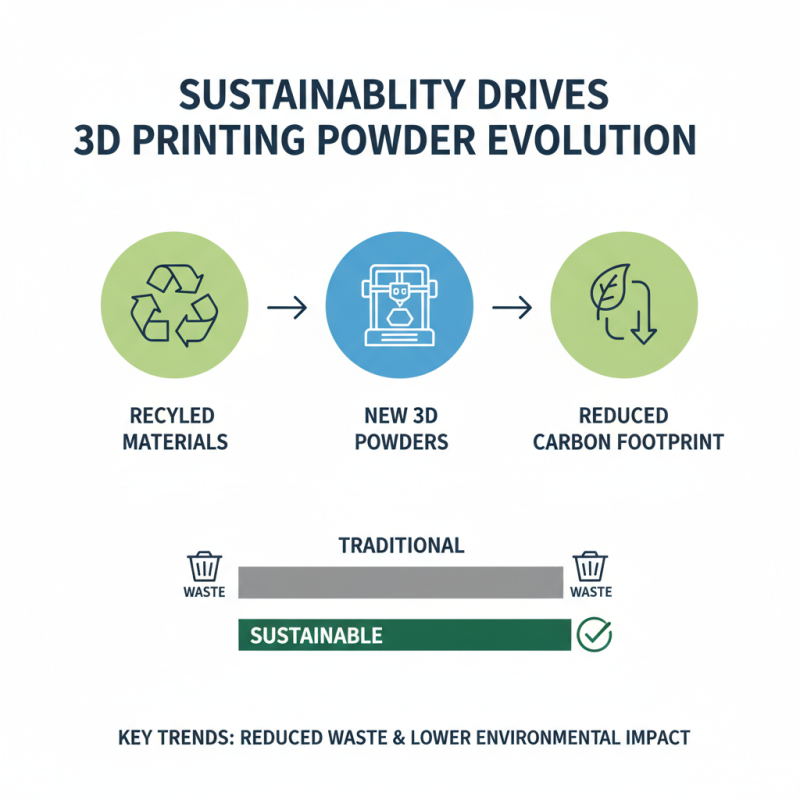
Recent studies indicate that employing advanced atomization techniques can reduce particle size variance by up to 30%. This uniformity improves packing density, leading to better mechanical properties in printed parts. The development of eco-friendly powders derived from recycled materials shows promise, aiming to support sustainable manufacturing practices. While these advancements are significant, challenges remain in scaling up production to meet rising demand and ensuring quality control consistently.
Researchers are exploring novel binder systems that could expand the range of usable materials in powder bed fusion technologies. However, discrepancies in material performance still arise, necessitating further refinement. Continued collaboration among industry leaders and academic institutions will be vital for overcoming these hurdles and unlocking the full potential of 3D printing powders.
Industry Applications Driving Demand for 3D Printing Powders
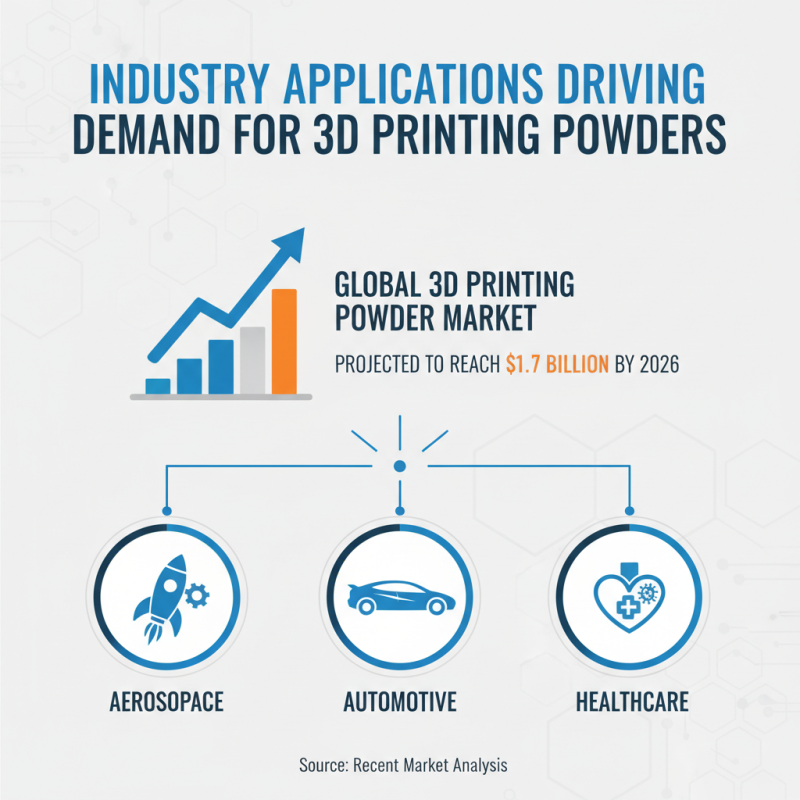
The demand for 3D printing powders is rapidly increasing across various industries. According to a recent market analysis, the global 3D printing powder market is projected to reach $1.7 billion by 2026. This growth is largely driven by sectors like aerospace, automotive, and healthcare, which are continuously seeking innovative manufacturing solutions.
In aerospace, lightweight and durable materials are crucial. Additive manufacturing with advanced powders helps create complex geometries that reduce weight and enhance performance. For instance, titanium alloys are increasingly used for components that need to withstand extreme conditions. This trend highlights how specific material properties meet industry needs.
Healthcare is another area experiencing significant advancements. Customized implants and prosthetics are becoming more mainstream due to 3D printing technologies. The ability to produce patient-specific solutions drives higher efficiency and better outcomes in medical procedures. However, challenges remain in material consistency and regulatory approval, prompting an ongoing need for research and refinement in powder manufacturing processes.
Future Challenges and Opportunities in 3D Printing Powder Innovation
The landscape of 3D printing powder is rapidly evolving. Enhanced materials are creating exciting possibilities for various industries. However, significant challenges remain. The need for consistent quality in powder production is crucial. Variations can lead to inconsistencies in the final product, which can jeopardize manufacturing processes.
The innovation in 3D printing powder often outpaces existing regulations. This gap raises concerns regarding safety and environmental impact. As manufacturers push boundaries, they must also consider sustainability. Using recycled materials in powder production could be a promising direction. Yet, recycling processes are not always efficient. There’s room for improvement and exploration here.
Knowledge sharing among industry professionals is vital. Collaboration may foster innovative solutions to these challenges. For instance, advancements in powder bed fusion technologies could highlight new opportunities. As the industry navigates through these complexities, the focus must remain on quality and sustainability. Balancing innovation with responsibility will be the key to success in the 3D printing powder market.