Inquiry
Form loading...

How to Choose the Best Metal Material for 3D Printing?

Choosing a 3d Printer Metal Material starts with the part, not the printer’s dropdown menu. A thin aerospace bracket, a dental component, and a hot-running engine fixture ask very different questions of an alloy. Will the part face heat, corrosion, cyclic stress, or repeated cleaning? What tolerances and surface finish must it hold? These details narrow the field before price or printability takes over.

The Wohlers Report 2024 estimated that the global additive manufacturing industry generated $20.035 billion in revenue in 2023, an 11.1% increase from 2022. That growth reflects wider adoption, but it does not mean every metal process or alloy suits every job. Stainless steel may offer useful corrosion resistance; titanium alloys can provide high strength at low weight; nickel-based alloys can tolerate demanding temperatures. Each choice brings trade-offs in cost, post-processing, and qualification. The powder datasheet is only part of the story.

Dr. Brent Stucker, an additive manufacturing researcher and industry expert, offers a useful principle, paraphrased here: “Choose the material for the application, not just the machine.” That distinction matters. A printer’s compatibility list cannot prove that a finished part will meet its service requirements. Examine the alloy specification, process data, and test evidence together. Ask how the component will be built, heat-treated, inspected, and used. Small details matter. A rough internal channel or a poorly supported overhang can change the result. And material selection is not always neat; real projects often involve compromises that deserve another review.
How to Choose the Best Metal Material for 3D Printing?

Define Service Loads, Temperature, and Corrosion Needs Before Choosing an Alloy

Before choosing an alloy, write down the real service loads: peak force, repeated cycles, impact, and acceptable deflection. A part that survives one static pull may still crack after thousands of cycles. ASTM F3184-16 specifies room-temperature minimum tensile and yield strengths of 485 MPa and 170 MPa for powder-bed-fused 316L stainless steel. Treat these as specification limits, not guaranteed performance for every build; orientation, heat treatment, and porosity matter.

Temperature changes the decision. Record both steady operating temperature and short-term peaks, then check strength and dimensional stability at those conditions. The ASM Handbook, Volume 1, reports a thermal expansion coefficient of roughly 16–18 µm/m·°C for austenitic stainless steels near room temperature. A thin bracket fixed between warmer components can therefore shift more than expected. Small details matter. I would also question a design that relies on room-temperature data alone.

Corrosion needs should match the actual environment: moisture, salt, cleaning chemicals, and contact with dissimilar metals. “Stainless” does not mean immune to chloride attack; crevices beneath seals can retain salty water and initiate pitting. One easy-to-miss mistake is choosing an alloy from a corrosion chart without considering the printed surface and post-processing. Define the exposure, inspection interval, and failure consequence before comparing candidate alloys. Then verify the selected material with representative coupons or a component-level test.

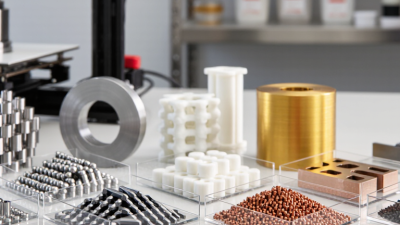
Compare Density: Ti-6Al-4V at ~4.43 vs. 316L at ~8.0 g/cm³

Density offers a fast first comparison when choosing metal for a 3D-printed part. ASM Handbook property data place Ti-6Al-4V near 4.43 g/cm³ and 316L stainless steel near 8.0 g/cm³. For an equal, fully dense volume of 100 cm³, that works out to about 443 g of titanium alloy versus 800 g of steel. That is roughly 357 g less. On a moving arm or handheld component, the difference can matter.

But density alone does not choose the winner. NIST’s report Measurement Science Needs for Real-Time Control of Additive Manufacturing Powder Bed Fusion Processes describes process variability that can affect printed-part quality. In practice, porosity, supports, and machining allowances change the final mass. A lattice can shrink the weight gap; a thick solid section may preserve it. Ti-6Al-4V can help where low mass and high strength matter, while 316L may suit parts where corrosion resistance and cost are central. The trade-off is not simple. I would estimate mass from the finished geometry, then verify it with the chosen process and material data.

Match Material to Process: LPBF Powders Commonly Use 15–45 μm Particles

Choosing a metal for 3D printing starts with the process, not just a strength chart. In laser powder bed fusion (LPBF), metal powders commonly use particles around 15–45 μm. This range is a useful reference, not a universal specification. Alloy chemistry, layer thickness, and machine settings can shift the suitable particle-size distribution. Small details matter.

Powder needs to spread evenly across the build plate. A broad size distribution may affect flow and produce uneven layers, while very fine particles can cling together more readily. Coarser particles may be less suitable for thin layers, depending on the machine and powder blend.

The 15–45 μm range does not mean every particle is identical. Not always. Check the supplier’s size-distribution data, rather than relying on a single average.

Match the powder to the process and the part’s demands. A heat-resistant component and a lightweight bracket may call for different alloys, even when both use LPBF. Review flow characteristics, chemistry, and handling requirements alongside particle size.

Then validate the choice with a small build and inspect the surface and dimensions. Test it. Particle size is important, but it cannot predict print quality on its own; that part is easy to overlook.

Check Build Parameters: LPBF Layer Thickness Often Ranges from 20–60 μm

When choosing a metal for LPBF 3D printing, check the layer thickness supported by the machine and the material’s qualified process window. A common range is 20–60 μm, but it is not universal. The right setting depends on the alloy, powder, part geometry, and other build parameters.

Thinner layers can improve vertical detail and reduce visible stair-stepping on sloped surfaces. They also mean more recoating cycles. For the same 30 mm height, a 30 μm setting requires about 1,000 layers; 60 μm requires about 500. More detail costs time. Thicker layers may build faster, but laser energy and scan settings must still create sound, overlapping melt tracks. A mismatched setup can contribute to porosity or weak bonding.

It is tempting to assume 20 μm is always better. It isn’t. Compare settings using test coupons with thin walls, angled faces, and small features, then check dimensions and density. Keep the part’s orientation and supports consistent during comparisons. Powder characteristics matter, too: particle size and flow can affect how evenly each layer spreads. I would treat the published range as a starting point, not a promise; actual results can vary between machines and geometries.

Assess Post-Processing, Standards, and Qualification Needs Before Production

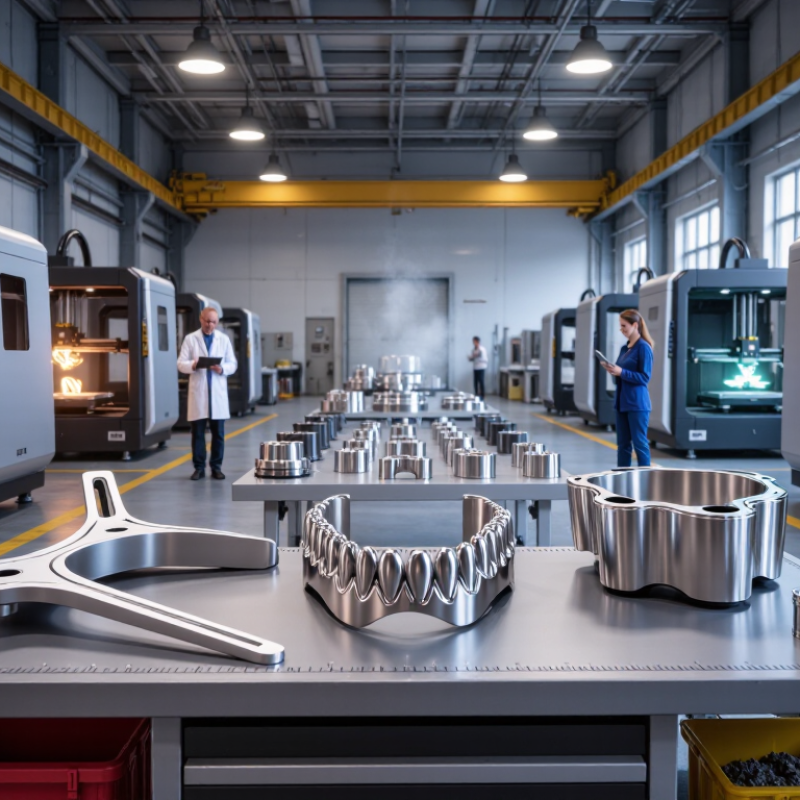
Choosing a metal for 3D printing means looking beyond strength and temperature limits. The finished part may need support removal, stress relief, heat treatment, machining, or polishing. Each step adds time and can change dimensions or surface condition. A thin bracket may distort during heat treatment, while a threaded hole may need machining after printing. Plan for the part you will deliver, not just the part that leaves the printer.

Post-processing can make or break a production plan. Ask how supports will be reached and removed, and whether internal channels can be inspected. Then compare the required finish with what the chosen process can reliably achieve. Standards matter, too. Identify the applicable material and process specifications, such as relevant ISO/ASTM documents, and verify their scope for your part. A standard is not automatic proof that a component is qualified.

Qualification should reflect actual production conditions. Record powder lot details, machine settings, build orientation, and heat-treatment cycles. Test representative parts for dimensions and required mechanical properties, using agreed acceptance limits. Small details matter. I have seen teams spend too long comparing material datasheets and too little time checking post-processing access. That is an easy mistake to make. Before committing, confirm inspection methods, traceability, and the evidence your customer or quality system requires. One qualification build may still miss a real production issue.

How to Choose the Best Metal Material for 3D Printing? — Assess Post-Processing, Standards, and Qualification Needs Before Production

A practical comparison of common metal powder-bed-fusion materials. Post-processing and properties depend on the machine, process parameters, geometry, build orientation, and specification.

Material Typical reasons to select it Post-processing considerations Relevant material specification Qualification checks before production
316L stainless steel Corrosion resistance, good ductility, and broad industrial utility; commonly considered for fluid-handling parts, housings, and components with complex internal features. Stress relief may be specified to reduce residual stress. Support removal and machining are common; polishing or other surface finishing may be needed for sealing, flow, or appearance requirements. ASTM F3184 covers additive-manufactured UNS S31603 stainless steel produced by powder-bed fusion. Confirm that the adopted edition and material condition match the purchase specification. Define density or defect limits, mechanical-property requirements, surface condition, corrosion expectations, inspection method, and acceptance criteria for the part’s intended service.
Ti-6Al-4V High strength-to-weight ratio and good corrosion resistance; often evaluated for aerospace, medical, and other weight-sensitive applications. Stress relief and, where required, a specified heat treatment can help manage residual stress and achieve the required condition. Support removal and machining are usually important; surface finishing may be needed for fatigue-critical features. ASTM F2924 covers additive-manufactured Ti-6Al-4V by powder-bed fusion. ASTM F3001 covers Ti-6Al-4V ELI by powder-bed fusion; these are distinct material specifications. Verify alloy grade, powder and process controls, heat-treatment condition, orientation-dependent properties, internal-defect limits, and any application-specific regulatory or customer approvals.
AlSi10Mg aluminum alloy Low density and useful strength-to-weight performance; considered for lightweight housings, thermal components, and intricate structural parts. Stress relief or a defined heat-treatment route may be required for dimensional stability or target properties. Thin features can be sensitive to distortion; machining and surface finishing may be necessary. ASTM F3318 covers additive-manufactured AlSi10Mg alloy made by powder-bed fusion. Check the specified material condition and applicable edition. Qualify dimensional stability, porosity and leak-tightness where relevant, mechanical properties in the required orientations, surface condition, and any thermal or environmental exposure.
Nickel alloy 718 High-temperature strength and oxidation resistance; considered for demanding hot-section, energy, and industrial applications. A defined solution and aging treatment is commonly used to develop the specified properties. Support removal and machining can be challenging; finishing may be required on fatigue-critical or high-temperature surfaces. ASTM F3055 covers additive-manufactured UNS N07718 nickel alloy made by powder-bed fusion. Confirm the required heat-treatment condition and specification edition. Specify heat treatment, tensile and other required mechanical tests, defect acceptance, inspection coverage, and service-temperature requirements; validate the complete process route on representative parts.

Selection reminder: A material specification does not by itself qualify a machine, process, supplier, or finished part. Before release, align the drawing and purchase requirements with the applicable standard, process qualification, post-processing route, inspection plan, and end-use requirements.