Inquiry
Form loading...

2026 Best Aluminum Alloy Powder Suppliers for Global Buyers?

Choosing the right Aluminum Alloy Powder supplier in 2026 will require more than comparing prices. Global buyers must examine chemistry, particle size, morphology, traceability, packaging, and production capacity. A shiny specification sheet is not enough.

The International Aluminium Institute reported global primary aluminum production above 70 million tonnes annually in recent years. That scale supports strong powder availability, but it also hides major differences between suppliers. Meanwhile, the Wohlers Report 2025 identifies continued growth in additive manufacturing, where aluminum powders serve aerospace, automotive, medical, and industrial applications. Demand is rising. So are expectations for repeatable performance.

Professor Seeram Ramakrishna, a recognized additive-manufacturing researcher, has called 3D printing “one of the key enabling technologies of Industry 4.0.” His observation matters because powder quality directly affects layer spreading, laser absorption, porosity, surface finish, and final strength. Small variations can become visible defects in a finished bracket or heat exchanger.

This guide evaluates the 2026 best Aluminum Alloy Powder suppliers through a buyer-focused lens. It considers alloy families such as AlSi10Mg, 6061, 7075, and aerospace-oriented grades. It also reviews COA practices, ISO 9001 systems, ASTM and ISO testing alignment, minimum order quantities, lead times, and export support.

No ranking is perfect. Supplier data can change. Regional availability can shift quickly. Buyers should request recent batch records, not old marketing samples. That detail is easy to miss. It may also be the difference between a smooth production run and an expensive requalification.

2026 Best Aluminum Alloy Powder Suppliers for Global Buyers?

What Is Aluminum Alloy Powder and How Is It Classified?

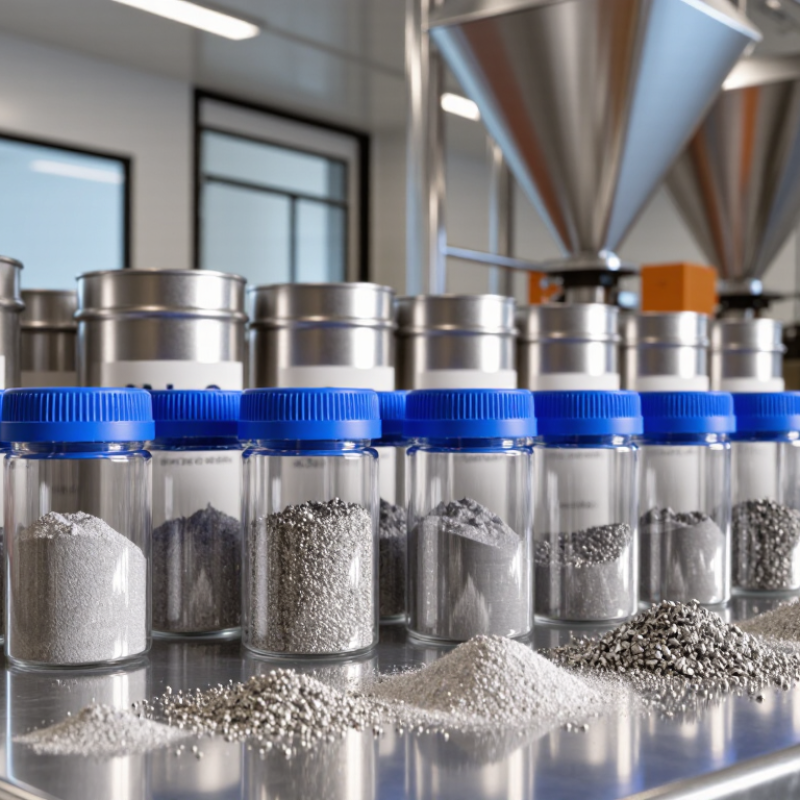
Aluminum alloy powder is a finely divided aluminum-based material blended with elements such as silicon, magnesium, copper, or zinc. It is produced through atomization, milling, or other controlled powder-making processes. Each route changes the particles. Gas atomization often creates rounded particles with good flow, while water atomization usually produces more irregular shapes. Milling can introduce wider size variation.

Classification is not always perfectly clean. A practical system considers alloy chemistry, particle size, particle shape, and production method together. Chemical grades may follow familiar aluminum alloy families, but powder buyers should verify the actual composition rather than trust a general label. Particle sizes can range from coarse granules to fine powders, commonly measured through laser diffraction or sieve analysis. Shape is examined with microscopy. It matters.

For global purchasing, experienced quality teams request a certificate of analysis, particle-size distribution, oxygen level, moisture content, apparent density, and flow rate. Packaging should resist humidity and contamination, especially during long-distance transport. Fine powder can behave differently after storage, even when its certificate appears acceptable. This is an overlooked risk. A supplier’s technical data should match a tested production lot, not only a brochure specification. Buyers should also review handling procedures, traceability, and consistency between batches. No classification system replaces application testing. That lesson is easy to learn late.

Which Aluminum Alloy Powder Grades Suit Different Applications?

Choosing an aluminum alloy powder starts with the application, not the supplier list. The strongest grade may perform poorly if its particle size or flowability does not match the equipment. Buyers should review composition certificates, particle-size distribution, oxygen levels, moisture control, and batch traceability.

For laser powder bed fusion, AlSi10Mg is widely selected for lightweight housings, cooling channels, and automotive prototypes. Its silicon content supports good castability and helps reduce cracking during processing. Aluminum 6061 powder suits general engineering parts, but heat treatment and printing parameters require careful validation. A rushed qualification can produce weak zones.

High-strength applications may require 2024 or 7075 powder for aerospace-style structures, tooling, and demanding mechanical components. These grades can be difficult to process because copper or zinc additions increase cracking sensitivity. Process control matters more than the label alone. For thermal spraying, spherical aluminum powders with controlled size ranges can support consistent deposition and adhesion. Powder metallurgy may favor different distributions, depending on compaction pressure and sintering conditions.

Particle shape matters. Spherical particles usually flow better, while irregular particles may pack differently. This is easy to overlook. A reliable supplier should provide recent test data, handling guidance, safety documentation, and sample quantities for trials.

In practice, I would compare at least two batches before approving a long-term source. Some published specifications look complete, yet they may not reveal oxygen variation between production lots.

How to Evaluate Aluminum Alloy Powder Suppliers in 2026

Choosing an aluminum alloy powder supplier in 2026 requires more than comparing prices. Buyers should verify alloy composition, particle size distribution, morphology, oxygen content, and moisture levels. Ask for recent certificates of analysis, not generic templates. The reported values should match independent laboratory testing.

Reliable suppliers provide complete lot traceability from raw material intake to final packaging. Their records should identify production dates, testing equipment, calibration status, and storage conditions. During an audit, inspect sealed containers, humidity controls, dust management, and worker training. Small details matter. A damaged liner can change powder quality.

Request a production sample before signing a long-term agreement. Compare flowability, apparent density, particle shape, and performance under your actual processing conditions. Ask how the supplier handles nonconforming batches and customer complaints. Clear answers show operational maturity. Vague promises do not.

Digital batch records and transparent environmental data will become more important in 2026. However, software cannot replace physical testing. A supplier may present impressive dashboards while delivering inconsistent lots. This remains an easy risk to overlook. Build a scorecard covering quality, capacity, delivery history, technical support, packaging, and regulatory documentation. Leave room for human judgment, because no checklist captures every factory weakness. Pricing should be reviewed only after these risks are visible.

What Quality Standards and Certifications Should Global Buyers Check?

For global buyers, a certificate folder is only the starting point. Ask suppliers for a current ISO 9001 certificate with a clear production scope. The certificate should cover aluminum alloy powder, not unrelated metal products. ISO 14001 may support environmental control, but it does not prove powder quality. Check whether the supplier follows relevant ASTM, ISO, or EN specifications. Requirements should match your application, equipment, and destination market.

Request a Certificate of Analysis for every production lot. It should show alloy chemistry, particle-size distribution, oxygen, moisture, and apparent density. Powder morphology can also affect flow and printing performance. Ask which test methods and instruments produced the results. An independent laboratory report adds confidence, especially for new suppliers. However, laboratory data still needs practical verification.

Traceability deserves careful attention. Each container should carry a lot number, production date, net weight, and storage guidance. Request Safety Data Sheets and compliant transport documentation before shipment. For high-risk applications, review EN 10204 inspection certificates or equivalent records. Audit three recent lots, not only one attractive sample. A supplier may perform well during qualification and drift later. No certificate replaces incoming inspection. Buyers should retain samples, check packaging damage, and compare results over time. Mistakes happen, and a small sampling plan may miss them.

Quality Standards and Certifications to Check for Aluminum Alloy Powder Suppliers

Edition years of widely referenced quality-management, laboratory-competence, and metal-powder characterization standards.

Use these standards as a verification checklist, not as a supplier ranking. Confirm that certificates are valid and cover the relevant site and scope; ask for powder-specific test reports, traceability, and the applicable material specification. Edition years shown are from the standard designations and do not indicate whether an edition is currently the latest.

How Do Pricing, Packaging, Shipping, and Import Rules Affect Purchasing?

In 2026, aluminum alloy powder buyers should price more than the metal itself. USGS Mineral Commodity Summaries 2025 reported global aluminum smelter output near 72 million metric tons in 2024. Yet powder prices also include alloying elements, atomization losses, testing, and certification. A low quotation may hide expensive quality controls.

Packaging directly affects usable yield. Moisture, oxygen, and damaged seals can cause oxidation or powder agglomeration. Request lined, moisture-resistant containers, batch labels, net weight, and a current safety data sheet. Packaging costs may rise with smaller drums, but oversized containers can increase warehouse waste. I have seen buyers compare only price per kilogram. That method is incomplete.

Shipping deserves careful checking. UNCTAD’s Review of Maritime Transport 2024 reported global maritime trade growth of about 2.4% in 2023, while disruptions continued affecting routes and freight planning. Confirm insurance, Incoterms, port handling, and delivery buffers before ordering. Powder classification must be reviewed for the specific alloy and particle size. Import documentation should match the correct Harmonized System code, origin, invoice value, and SDS. Some markets may require chemical registration or conformity records. Requirements change. A customs broker should verify them before production begins, not after the cargo reaches the port.

2026 Best Aluminum Alloy Powder Suppliers for Global Buyers? - How Do Pricing, Packaging, Shipping, and Import Rules Affect Purchasing?
Supplier Type Best-Fit Products and Buyers Pricing and Quote Considerations Packaging to Request Shipping Considerations Import Checks Documents and Quality Checks
Atomized-powder producer Useful for buyers needing specified particle-size distributions, alloy chemistry, or repeat production lots. Confirm whether the powder is gas-atomized, water-atomized, or produced by another process; these are not interchangeable specifications. Request a quotation against the exact alloy, particle-size range, morphology, order quantity, and delivery terms. Finer or tightly controlled grades can cost more because of processing, screening, yield, and testing requirements. Compare quotes on the same specification and Incoterm. Ask for sealed, moisture-protective packaging compatible with the powder’s hazard classification. Specify net weight per package, inner liner, tamper evidence, and pallet requirements. Powder transport classification depends on properties such as particle size, coating, and reactivity. Have the supplier and carrier confirm the applicable dangerous-goods classification and packaging instructions before booking. Check the destination country’s tariff classification, duty, import permits, and chemical or product rules. Aluminum powders are generally classified in HS heading 7603; the applicable subheading and national tariff treatment depend on the product and jurisdiction. Request a lot-specific certificate of analysis (CoA), safety data sheet (SDS), particle-size distribution, alloy chemistry, and batch traceability. For sensitive applications, agree on test methods and acceptance limits before purchase.
Additive-manufacturing powder specialist Best suited to buyers who need spherical powder and controlled flow or size characteristics for metal additive manufacturing. Confirm that the alloy grade and powder specification match the machine and process qualification requirements. Compare price per kilogram alongside usable yield, screened size range, test data, packaging, and minimum order quantity. Ask whether the quotation covers new powder only or includes any reprocessed material; do not assume reused powder is equivalent. Request a sealed moisture-barrier container and clear labeling of alloy, particle-size range, batch number, net weight, and storage conditions. Follow the supplier’s handling guidance after opening. Confirm the carrier accepts the specific powder and packaging. Air and sea shipments can have different restrictions, documentation, and cost; obtain a compliant dangerous-goods declaration where required. Check import requirements for the product’s exact composition and intended use. Export-control requirements, where applicable, depend on the product, destination, parties, and end use; verify with the relevant authorities or a qualified trade-compliance professional. In addition to a CoA and SDS, request morphology and flow-related data when required by the process. Agree on sampling, inspection, and change-notification requirements for repeat orders.
Specialty-alloy or custom-grade producer Suitable for buyers requiring a defined alloy composition, a less common grade, or powder made to a customer specification. Confirm that the requested composition can be produced consistently at the needed scale. Custom chemistry, tighter tolerances, small production runs, and additional testing may increase price or lead time. Ask for separate line items for powder, testing, packaging, and freight, plus quote validity and payment terms. Set packaging requirements in the purchase specification, including package size, moisture protection, labels, and any clean-room or contamination controls needed by the application. Allow time for production, testing, dangerous-goods review, and export documentation. Confirm the named place of delivery and responsibility for freight, insurance, clearance, and unloading in the agreed Incoterm. Provide accurate product descriptions and composition data to the customs broker. Classification and duty can depend on product form and national tariff schedules; confirm the final code with the importing country’s customs authority or broker. Request a CoA tied to the production lot, full chemistry results, SDS, and agreed inspection records. For critical uses, define independent testing and nonconformance procedures contractually.
Industrial powder distributor Can be convenient for buyers seeking consolidated orders, local inventory, or smaller quantities than a producer may offer. Verify the original manufacturer, grade, and batch before comparing offers. Evaluate the delivered cost, not just the unit price. Stock availability, repacking, local warehousing, order size, and delivery distance can affect the final quote. Confirm whether the distributor’s price includes testing or certificates. Ask whether the powder remains in the producer’s original sealed packaging or is repacked. If repacked, request details of the packaging controls, new labels, and traceability back to the original lot. Local stock may reduce transit time, but the same powder-safety and carrier rules still apply. Confirm that the distributor is authorized and equipped to store and ship the specific material. For cross-border purchases, establish who is importer of record and who handles customs declarations, duties, and taxes. Check whether local product, chemical, or workplace-safety rules apply after import. Obtain the original lot’s CoA and SDS, along with documentation linking the distributor’s shipment to that lot. Check seal condition, labels, and received quantity on arrival.
Recycled or reclaimed powder supplier May suit applications with defined, validated requirements for secondary material. Use only when the buyer can qualify the powder’s history, contamination risk, and performance for the intended process. Do not compare price alone with virgin powder. Factor in screening, reprocessing, testing, yield, and the cost of qualification. Agree on whether the quoted material is reclaimed, blended, or reprocessed. Require packaging that prevents moisture ingress and contamination, with clear identification of material status and lot. Keep lots segregated if the application requires batch-level traceability. Confirm the material’s current hazard classification and transport documentation; prior use does not establish the classification of the shipped powder. Check carrier acceptance and packaging before dispatch. Confirm the customs description and classification for the actual product. Do not declare material as scrap or waste unless that description is accurate and permitted under applicable import rules. Request documented material history where available, a lot-specific CoA, SDS, contamination checks, and agreed acceptance criteria. Validate performance in the intended process before production use.
Practical buyer checklist Define alloy designation, chemistry limits, particle-size distribution, morphology, intended process, and required order quantity before requesting bids. Request comparable, itemized quotations with currency, quote validity, minimum order, lead time, payment terms, Incoterm, freight, insurance, and any testing charges. Specify package material, package weight, moisture protection, labeling, palletization, and storage instructions. Check that proposed packaging meets the applicable transport rules. Aluminum powder can present fire or dust-explosion hazards; some forms may react dangerously with water. Use the supplier’s current SDS and obtain carrier confirmation of the shipment’s classification and handling requirements. Verify tariff code, duty, taxes, permits, labeling, chemical controls, and any end-use requirements in the destination market before placing the order. Rules vary by country and product details. Keep the purchase specification, approved sample, CoA, SDS, shipping documents, and customs records together. Inspect seals and labels at receipt and quarantine material that does not match the order.
Important: This table compares supplier models and purchasing considerations, not named or independently ranked suppliers. Prices, minimum orders, lead times, hazard classifications, tariff codes, and import obligations are product- and route-specific; obtain current written confirmation from the supplier, carrier, customs broker, and relevant authorities before purchase.