What Are the Best 3D Metal Printed Parts for Buyers in 2026?
In 2026, buying 3d Metal Printed Parts is less about choosing the newest machine and more about matching a part to its job. The Wohlers Report 2024 estimated that the global additive manufacturing industry reached $21.9 billion in revenue during 2023, growing 11.1% year over year. That figure covers the wider industry, not metal printing alone. Still, it shows why buyers now compare printed components for production, not just prototypes.
Metal printing can make lightweight brackets with internal channels, compact heat exchangers, and geometries that are difficult to machine. But “printable” does not automatically mean economical. Buyers should weigh alloy choice, build orientation, support removal, heat treatment, inspection, and repeatability. A titanium part may save weight in an aircraft fixture; a stainless-steel component may better suit a wet industrial environment. The wrong material or finishing plan can erase the design’s advantage.
Industry analyst Terry Wohlers has cautioned, “3D printing is not a silver bullet.” That warning belongs in every sourcing discussion. A capable supplier should explain its process, material traceability, dimensional checks, and finishing steps—not just quote a low unit price. Ask for sample inspection records and confirm which tolerances apply after machining. Small details matter. A rough internal channel, for example, may affect flow or cleaning.
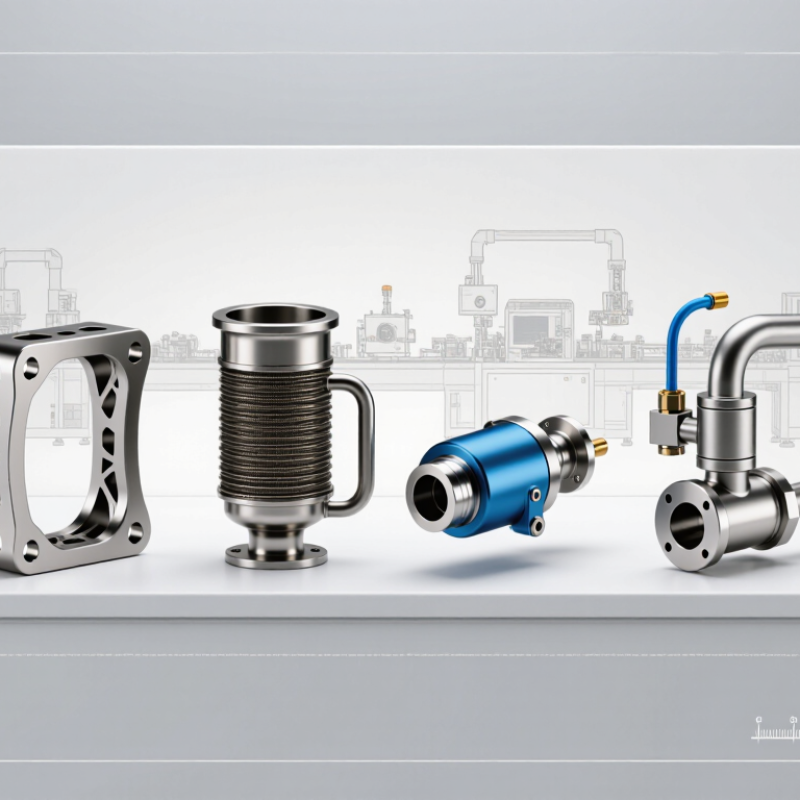
This guide compares the most promising 3d Metal Printed Parts for buyers in 2026, including brackets, tooling, fluid-handling components, and lightweight assemblies. It also considers material suitability, production volume, and post-processing. The trade-offs are real, and some applications still favor conventional manufacturing. That deserves a closer look.
How Metal 3D Printed Parts Are Defined and Classified
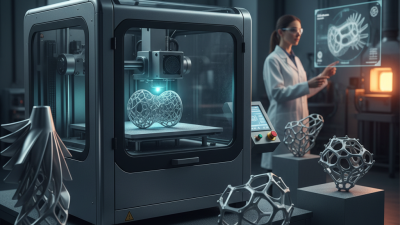
Metal 3D printed parts are components made by adding material layer by layer from digital designs. ISO/ASTM 52900:2021 classifies additive manufacturing by process, not by a part’s shape or end use. For metal buyers, common routes include powder bed fusion, directed energy deposition, binder jetting, and metal material extrusion. The label matters: it signals how the part is formed, but does not prove its strength or suitability.
Powder bed fusion melts selected regions of metal powder, making it useful for intricate channels and thin lattice brackets. Directed energy deposition feeds material into a focused energy source, often supporting larger features or repairs. Binder jetting joins powder with a binder; parts then require debinding and sintering, which can change dimensions. Details matter. A narrow hole may print well yet still need machining to meet tolerance.
Wohlers Report 2024 recorded $20.035 billion in global additive manufacturing industry revenue for 2023, up 11.1% year over year. That figure covers the wider industry, not metal parts alone, so it should not be read as a metal-market estimate. Buyers can classify candidates more usefully by process, alloy, post-processing, and inspection needs. Ask for density, dimensional accuracy, surface finish, and test data tied to the actual production route. I would also question any broad claim that one process is automatically best; geometry and service conditions can change the answer.
Which Applications Benefit Most from Metal 3D Printing
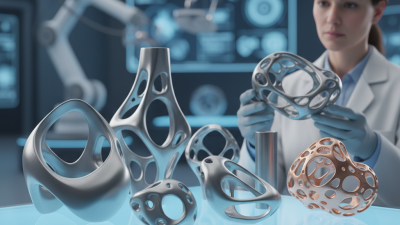
Metal 3D printing delivers the greatest value when a component’s shape improves performance, not just appearance. Aerospace brackets are a strong example: internal ribs can add stiffness while reducing weight. In compact heat exchangers, fine channels can increase surface area and fit into tight spaces. These designs may be difficult or impossible to machine as one piece.
Medical implants can also benefit, especially when porous surfaces support bone integration or a patient-specific shape is needed. In energy equipment, fuel nozzles and compact fluid components may use integrated passages to reduce joints and potential leak points.
Tooling is another practical application. Conformal cooling channels can follow a mold’s contours, helping heat leave more evenly and shortening cooling cycles. Results still depend on the alloy, build orientation, and finishing process.
Not every part belongs in a printer. A simple bracket made in high volume may remain cheaper to cast or machine. Buyers should compare the full cost, including powder, inspection, heat treatment, and machining. Ask for dimensional data and test results on representative parts, not just a demonstration sample. A small caveat. Metal printing can produce impressive geometry, but designers sometimes preserve an old part’s shape instead of redesigning it. That can waste the process’s main advantage. The best candidates usually combine difficult geometry, clear performance goals, and a production need that conventional methods handle poorly.
How Materials and Printing Processes Shape Part Performance
What Are the Best 3D Metal Printed Parts for Buyers in 2026?
The best part depends on its job, not just its metal. A lightweight bracket may benefit from aluminum’s low weight, while a hot, wear-prone component may call for a suitable nickel or tool-steel alloy. Material data sheets help narrow choices, but they cannot predict every result. Geometry, build direction, and post-processing also affect performance. Fit matters.
Printing processes shape the trade-offs. Laser powder bed fusion can produce intricate passages and thin features, though supports and surface finishing may be needed. Directed energy deposition suits larger repairs or additions, but its surface and dimensional accuracy can differ. Binder jetting can build parts efficiently; sintering may change dimensions, so allowances matter. These are not plug-and-play choices. A part that looks sound on screen may still need machining or heat treatment to meet its requirements.
Tips: Define load, temperature, corrosion exposure, and allowable weight before choosing a material. Ask for test results relevant to the intended process and build orientation. Check tolerances on a representative sample, especially around holes and mating faces. A small test coupon is useful, but it may not capture the behavior of a complex part. Revisit the design after testing; sometimes the original geometry needs work.
What Buyers Should Compare When Selecting Printed Parts
What Are the Best 3D Metal Printed Parts for Buyers in 2026?
What Buyers Should Compare When Selecting Printed Parts
Choose a printed part by its job, not by the process label alone. Compare the alloy with operating temperatures, corrosion exposure, and expected loads. A bracket inside a dry enclosure may need different properties from a thin fluid manifold. Small details matter.
Ask for evidence of dimensional capability, not just a quoted tolerance. Check a sample’s bolt-hole spacing, wall thickness, and mating surfaces. Then review the inspection method and measurement report. A smooth exterior can hide internal porosity, so consider suitable non-destructive testing when failure would be costly. Not every part needs it. A test coupon helps, but may not represent a complex finished component.
Compare surface finish and post-processing as part of the final specification. Heat treatment, machining, and support removal can affect cost, lead time, and dimensions. Request test data for strength claims, and check whether it matches the part’s build orientation and production settings. Ask how repeat builds are controlled. Price is easy to compare; consistency is harder. I would also weigh repair options and replacement timing, though these often get less attention than they deserve.
Which Metal 3D Printed Parts Offer the Best Value in 2026
What Are the Best 3D Metal Printed Parts for Buyers in 2026?
Which Metal 3D Printed Parts Offer the Best Value in 2026?
In 2026, the best-value metal printed parts are often brackets, manifolds, and lightweight housings with complex internal passages. These shapes can combine several components and reduce assembly work. Wohlers Report 2024 put the global additive manufacturing industry at $20.0 billion in 2023, up 11.1% year over year. That growth signals wider adoption, but it does not mean every printed part saves money. For simple, high-volume pieces, machining or casting may still cost less.
Stainless steel is a practical choice for corrosion-resistant fixtures, fluid components, and production tooling. Aluminum suits lightweight housings and heat-management parts, while titanium can earn its higher material cost in weight-sensitive, demanding applications. My first instinct is to recommend titanium for performance. On reflection, that can be poor value when weight savings do not affect the final product. Compare the finished part cost, including powder, build time, post-processing, inspection, and any redesign—not just the quoted print price.
Tips: Ask for a design-for-additive review and compare at least one conventional manufacturing route. Check wall thickness, support removal, and surface finish around seals or moving interfaces. Request material and inspection records for critical parts. A small test batch helps reveal surprises. Even then, estimates can miss real production variation.