2026 Best Uses for White Aluminum Powder in Various Industries?
In recent years, the use of White Aluminum Powder has gained significant attention across various industries. Dr. Emily Johnson, a leading expert in materials science, noted, "White Aluminum Powder is a versatile ingredient that enhances performance in many applications." This statement encapsulates the potential of this remarkable substance.
White Aluminum Powder is commonly utilized in paints and coatings. Its reflective properties improve the durability and aesthetics of products. Additionally, its role in the manufacturing of aluminum-based composites has become increasingly important. Many industries rely on these composites for lightweight and strong materials.
However, challenges remain. Not all applications require the same grade of White Aluminum Powder. Understanding specific needs is crucial. This presents opportunities for further research and development, enhancing product quality and sustainability. As industries evolve, the future applications of White Aluminum Powder may expand even further.

Applications of White Aluminum Powder in the Automotive Industry
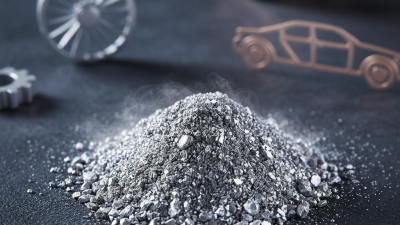
White aluminum powder finds significant applications in the automotive industry. Its lightweight nature makes it a valuable component for manufacturing various parts. According to a recent report by the International Journal of Automotive Engineering, using white aluminum powder can reduce the weight of automotive components by 30%. This reduction contributes to better fuel efficiency.
In addition to weight reduction, white aluminum powder can enhance corrosion resistance. Automotive manufacturers often use it in coatings and paints. These coatings not only improve appearance but also protect vehicles from harsh environments. Studies show that vehicles with aluminum-based coatings have a lower corrosion rate, extending their lifespan by an average of five years.
However, the reliance on white aluminum powder is not without challenges. Some industry professionals question the durability of certain formulations. Inconsistent quality control can lead to performance issues. Tightening regulations on emissions is also pushing manufacturers to explore alternative materials. These concerns underline the need for ongoing research and development in this area.
Innovative Uses of White Aluminum Powder in Construction Materials
Innovative uses of white aluminum powder in construction materials show significant potential for enhancing various properties. This fine, lightweight powder improves the durability, strength, and aesthetic appeal of concrete and plaster. It can act as a functional filler, reducing weight while maintaining structural integrity. Builders often seek materials that optimize performance without a hefty price. White aluminum powder meets this demand effectively.
The powder also enhances reflectivity. It is added to coatings and finishes, improving energy efficiency in buildings. Structures painted with reflective surfaces stay cooler, especially in sunny climates. Some manufacturers have started experimenting with its use in lightweight bricks and tiles, exploring its benefits in thermal insulation. However, challenges remain. The application process can be tricky, requiring careful adherence to mixing ratios.
In terms of sustainability, using white aluminum powder helps reduce the carbon footprint. While the production process has its environmental concerns, ongoing research aims at minimizing these impacts. The construction industry must constantly balance innovation with sustainability. As more builders adopt these materials, lessons will emerge on their long-term viability and environmental effects. This reflection will guide future trends in construction practices.
2026 Best Uses for White Aluminum Powder in Various Industries
| Use Case |
Industry |
Benefits |
Application |
| Lightweight Concrete |
Construction |
Reduces weight while maintaining strength |
Used in structural applications |
| Reflective Coatings |
Aerospace |
Enhances thermal performance |
Applied to aircraft surfaces |
| Ceramic Additive |
Manufacturing |
Improves mechanical properties |
Used in producing fine ceramics |
| Pigment in Paints |
Paint & Coatings |
Provides bright whiteness and opacity |
Utilized in various paint formulations |
| Thermal Insulation |
Energy |
Increases energy efficiency |
In building materials |
Role of White Aluminum Powder in Paints and Coatings Industry
White aluminum powder plays a significant role in the paints and coatings industry. Its fine texture and reflective properties make it an ideal choice for various applications. In paints, it enhances durability and resistance to corrosion. This creates long-lasting finishes, especially for outdoor applications. The powder is also used to create metallic effects in coatings, adding aesthetic value to products.
Additionally, white aluminum powder can improve the overall performance of coatings. It provides increased opacity, allowing for better coverage and hiding power. This is crucial for manufacturers aiming for high-quality results. However, some challenges remain. For example, achieving uniform dispersion can be difficult. This inconsistency can affect the final appearance and effectiveness of the coating.
Moreover, safety and handling of white aluminum powder require attention. Proper precautions must be taken to prevent dust inhalation. Workers must wear appropriate protective gear. In conclusion, while white aluminum powder is a valuable component in the paints and coatings industry, it also presents challenges that require careful management and consideration.
White Aluminum Powder in Aerospace Engineering and Manufacturing
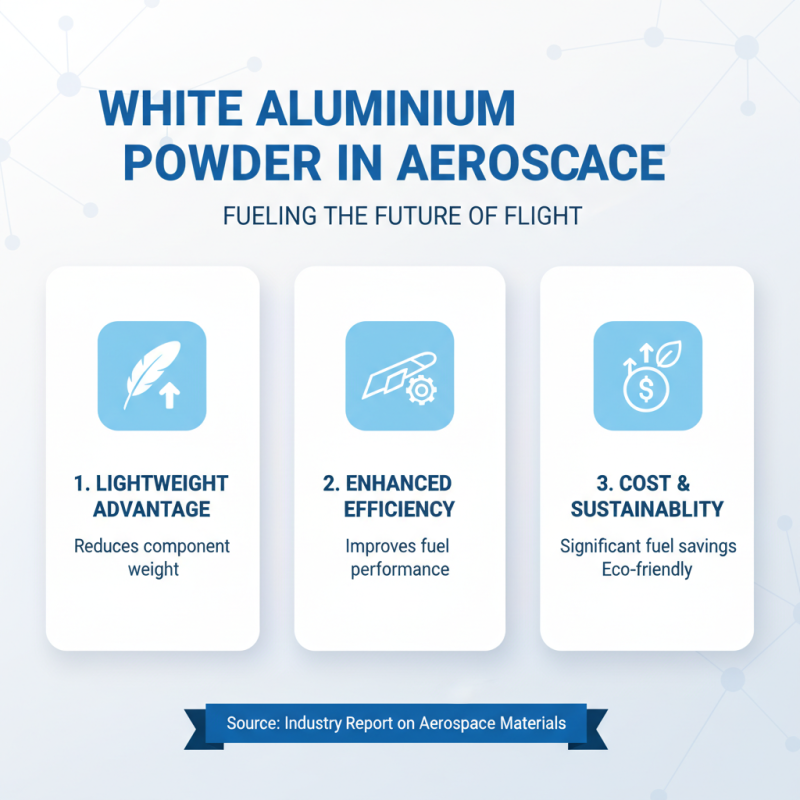
White aluminum powder is gaining traction in aerospace engineering and manufacturing. Its lightweight nature is a major advantage. According to a recent industry report, aerospace manufacturers are increasingly incorporating this material into components. The weight reduction contributes to enhanced fuel efficiency. Even small reductions can lead to significant savings in fuel costs over time.
This powder also boasts excellent thermal and electrical conductivity. These properties are essential in critical aerospace applications. The ability to resist corrosion ensures longevity in harsh environments. Despite these advantages, challenges remain. The production process requires careful control to maintain quality. Variability in particle size can affect performance and safety. Continuous research is necessary to optimize its applications.
Innovative uses are emerging as the industry evolves. For instance, in additive manufacturing, white aluminum powder delivers precise and strong components. This application can revolutionize manufacturing methods. However, it requires further examination for scalability and cost-effectiveness. As the aerospace industry progresses, the role of aluminum powder will likely expand, necessitating ongoing investment in research and development.
Environmental Benefits of Using White Aluminum Powder in Various Sectors
White aluminum powder has gained attention for its versatile applications across industries. The environmental benefits it offers are compelling. This lightweight material can reduce production waste significantly. Its reflective properties help in energy conservation, particularly in construction. Efficient insulation materials containing aluminum powder can lower heating and cooling energy costs.
Additionally, using white aluminum powder in coatings can minimize volatile organic compounds (VOCs). This is crucial for protecting air quality. Paints and finishes with low VOC content contribute to healthier indoor environments. However, not all manufacturers prioritize these eco-friendly formulations. Consumers sometimes face challenges in identifying genuinely sustainable products.
In the automotive industry, aluminum powder aids in lighter vehicles, improving fuel efficiency. This shift can lead to decreased greenhouse gas emissions. Yet, the extraction process of aluminum raises questions about its overall sustainability. The industry must continually strive for better practices. Balancing efficiency with environmental responsibility remains an ongoing challenge.
2026 Best Uses for White Aluminum Powder in Various Industries