Understanding Uncoated Aluminum Powder and Its Applications in Industry?
Uncoated Aluminum Powder is a versatile material with numerous industrial applications. Its unique properties make it suitable for various sectors, including aerospace, automotive, and manufacturing. This powder is composed of fine aluminum particles that exhibit excellent chemical stability and good conductivity.
In many cases, uncoated aluminum powder provides enhancements in processing and performance. For instance, in the production of lightweight composites, it can contribute significantly to weight reduction without compromising strength. However, the powder’s reactivity requires careful handling.
There are challenges associated with its use. The absence of coating can lead to oxidation over time. This factor may impact performance in certain applications. Therefore, understanding the nature of uncoated aluminum powder is crucial for industries aiming to leverage its advantages. By exploring its characteristics and limitations, organizations can better assess its suitability for specific purposes.

Overview of Uncoated Aluminum Powder Properties
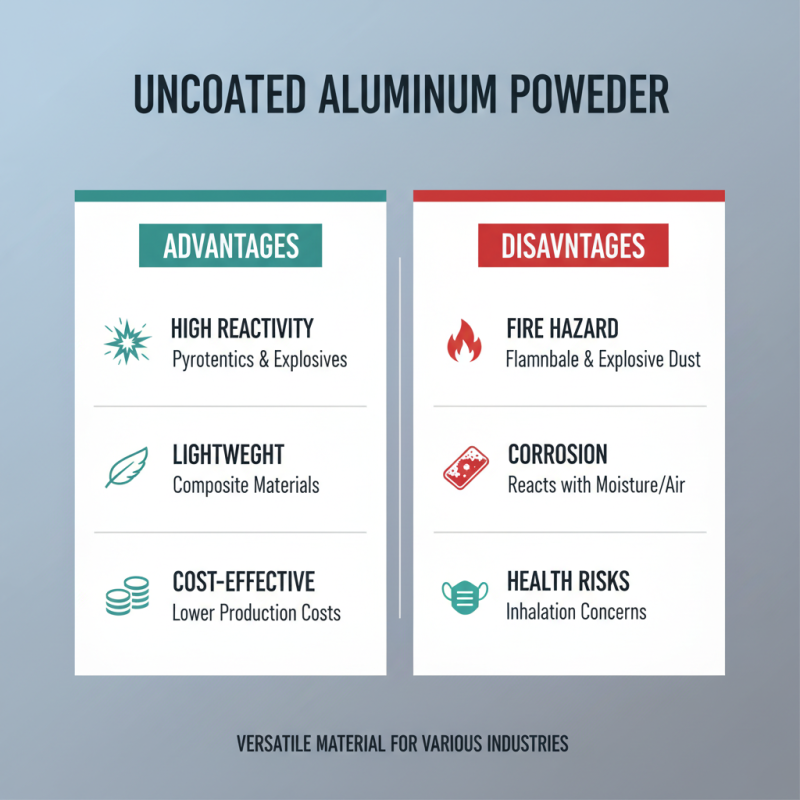
Uncoated aluminum powder is known for its unique properties that make it valuable in various industries. This powder is lightweight and possesses excellent thermal and electrical conductivity. Its high surface area allows for improved reactivity, making it essential in applications such as pyrotechnics and chemical manufacturing. However, these very properties can make handling the powder challenging.
One of the significant aspects of uncoated aluminum powder is its corrosion susceptibility. The lack of a protective coating means that the powder can oxidize quickly when exposed to moisture. This oxidation can alter its performance and shelf life, indicating a need for careful storage and usage protocols. In addition, the fine particle size enhances its reactivity, which requires stringent safety measures during transport and handling. Industry professionals must regularly review these factors to optimize the use of uncoated aluminum powder in their processes.
Furthermore, the variability in particle morphology can lead to inconsistent performance in applications. Some batches may exhibit different behaviors due to slight variations in particle shape or size. This inconsistency raises questions about quality control in production processes. As a result, companies should invest in thorough testing and analysis to ensure the reliability of the uncoated aluminum powder they use.
Understanding Uncoated Aluminum Powder and Its Applications in Industry - Overview of Uncoated Aluminum Powder Properties
| Property |
Description |
Applications |
| Particle Size |
Typically ranges from 10 to 100 microns |
Used in additive manufacturing and as a pigment |
| Bulk Density |
Varies between 0.2 to 0.5 g/cm³ |
Important for powder metallurgy applications |
| Aluminum Purity |
High purity levels, typically 99% or higher |
Electronics, automotive, and aerospace industries |
| Reactivity |
Can react with moisture and air |
Requires careful handling in chemical applications |
| Conductivity |
Good electrical and thermal conductivity |
Used in electronic components and thermal management |
| Formulation |
Can be modified with additives for specific properties |
Custom applications in various industrial processes |
Industrial Applications of Uncoated Aluminum Powder
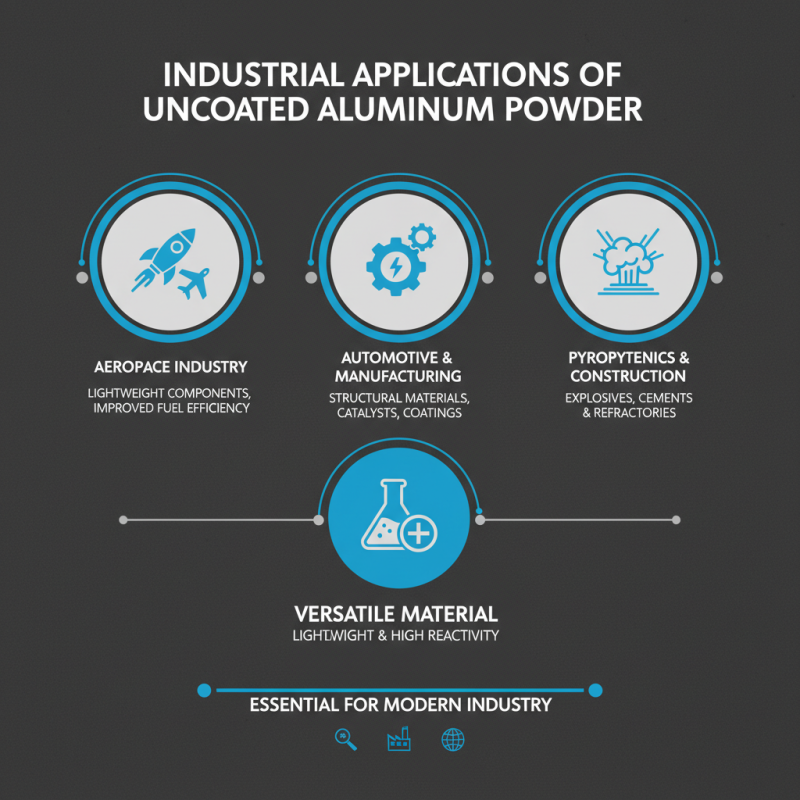
Uncoated aluminum powder is a versatile material widely used in various industrial sectors. Its lightweight nature and high reactivity make it suitable for many applications. In the aerospace industry, it is often utilized in the production of lightweight components that require sufficient strength. Engineers value this powder for its ability to improve fuel efficiency in aircraft.
In the automotive sector, uncoated aluminum powder plays a crucial role in lightweighting vehicles. Manufacturers use it to create parts that contribute to better fuel economy and lower emissions. However, achieving the right balance between weight and strength can be challenging. Engineers must continuously refine their processes to optimize performance without compromising safety.
Another application lies in the production of explosives and pyrotechnics. Uncoated aluminum powder serves as a key ingredient in formulations that require precise combustion properties. Despite its benefits, handling and storage require careful consideration to prevent hazards. Overall, while there are clear advantages to using uncoated aluminum powder, continuous monitoring and adjustment are necessary to mitigate risks in its applications.
Production Methods for Uncoated Aluminum Powder
Uncoated aluminum powder is versatile in many industries. The production methods significantly impact its properties. This powder is often used in applications like paints, coatings, and as a reducing agent.
The most common method involves atomization. Liquid aluminum is forced through a nozzle, forming fine droplets that cool and solidify. This method creates uniform particle sizes. Another technique is mechanical milling. By grinding aluminum pieces, manufacturers can achieve desired particle sizes. This method allows for more control over the powder’s physical properties.
Tips: When selecting a production method, consider the end application. Smaller particles may be desired for paints, while larger particles might be suitable for 3D printing. Test different methods for specific performance requirements.
Sourcing raw materials is critical, yet often overlooked. The purity of aluminum affects the final product. Contamination can lead to inconsistent properties. Explore multiple suppliers to ensure quality.
Understanding Uncoated Aluminum Powder Production Methods
Safety Considerations in Handling Uncoated Aluminum Powder
Safety is a critical consideration when handling uncoated aluminum powder. This material can pose various health hazards if not managed properly. According to the Occupational Safety and Health Administration (OSHA), the powder can become a fire or explosion risk when mixed with air in certain concentrations. The fine particles can easily ignite, leading to serious incidents in industrial settings.
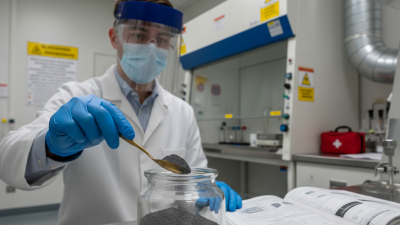
Personal protective equipment (PPE) is essential for workers handling uncoated aluminum powder. This includes gloves, goggles, and respirators to minimize inhalation and skin exposure risks. A study published by the American Journal of Industrial Medicine highlights that exposure to aluminum dust can lead to respiratory issues and skin irritations. Effective ventilation systems must be installed in workplaces to mitigate airborne particles, reducing the risk of accumulation and ensuring a safer environment.
Understanding the proper storage and disposal of uncoated aluminum powder is also vital. It should be stored in cool, dry locations, away from ignition sources. Inappropriate storage can lead to self-ignition events. Organizations must conduct regular safety training sessions and audits to emphasize the importance of handling protocols, underlining that complacency can lead to catastrophic outcomes. This continuous focus on safety can help reduce accidents and ensure a more secure work environment.