Best Sintered Aluminium Powder for Global Suppliers?
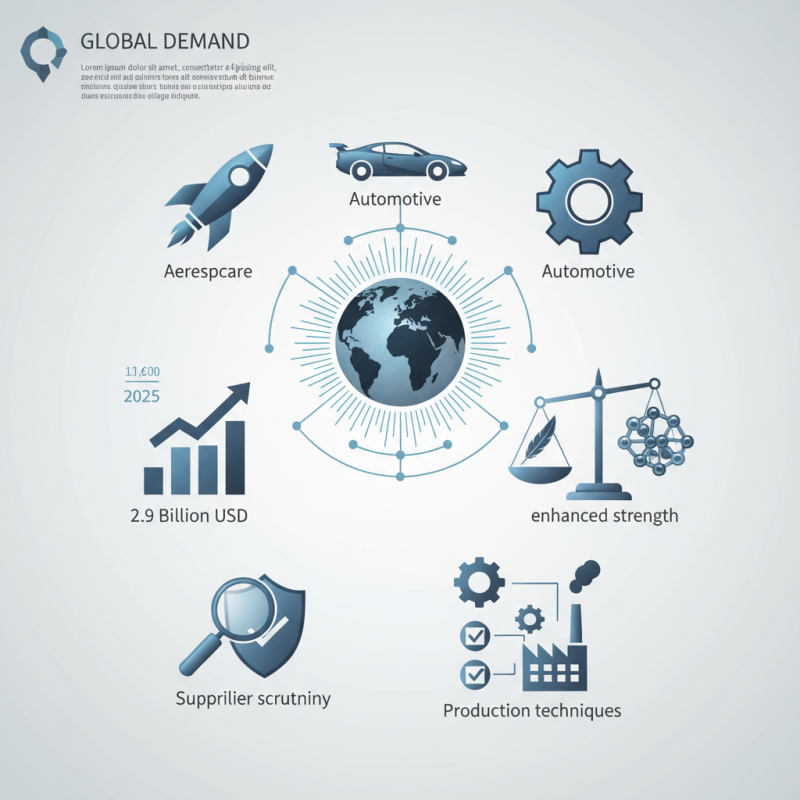
The global demand for Sintered Aluminium Powder is rapidly growing, driven by advancements in industries such as aerospace and automotive. According to a report by MarketsandMarkets, the market for aluminum powder is projected to reach USD 2.9 billion by 2025, reflecting a compound annual growth rate (CAGR) of 4.5%. This surge highlights the importance of sourcing high-quality sintered options from reliable global suppliers.
Sintered Aluminium Powder offers unique advantages, including reduced weight and enhanced strength. These properties are crucial for manufacturers aiming to optimize performance while adhering to strict regulatory standards. However, the challenge remains in identifying the best suppliers who provide consistent quality and innovation. Companies often face difficulties due to varying standards and manufacturing processes across different regions.
There is a need for scrutiny in selecting suppliers. While some suppliers promise high-quality sintered powders, not all meet stringent industry regulations. It's essential for businesses to engage in thorough due diligence and consider factors such as supplier certifications and production techniques. Evaluating these elements can ensure a steady supply of Sintered Aluminium Powder that meets the demands of the modern marketplace.
Sintered Aluminium Powder: An Overview of its Properties and Applications
Sintered aluminium powder is gaining traction in various industries due to its unique properties. It boasts high strength-to-weight ratios, excellent thermal conductivity, and intricate design capabilities. These factors make it an ideal material for applications in aerospace, automotive, and even sports equipment. The powder metallurgical process allows for complex shapes that would be difficult to achieve with traditional methods.
When selecting sintered aluminium powder, consider the particle size. Smaller particles often lead to improved density and uniformity, enhancing the final product's mechanical properties. Another tip is to evaluate the powder's oxidation resistance. This characteristic influences the material's behavior during high-temperature applications. Remember, even small changes in composition can impact performance.
Testing and quality assurance are vital. Ensure that suppliers have robust quality control measures in place. This can prevent potential issues in application. It’s worth noting that while sintered aluminium powder holds many advantages, its cost can be a factor. Balancing quality and affordability is essential in procurement decisions.
Best Sintered Aluminium Powder for Global Suppliers
| Property |
Application |
Particle Size (microns) |
Density (g/cm³) |
Porosity (%) |
Melting Point (°C) |
| High Purity |
Aerospace Components |
5-10 |
2.70 |
20 |
660 |
| Alumina Reinforced |
Automotive Parts |
10-15 |
2.68 |
15 |
660 |
| Spherical Shape |
3D Printing |
20-30 |
2.72 |
25 |
660 |
| Fine Grain |
Biomedical Devices |
15-20 |
2.69 |
18 |
660 |
| Nano Aluminium Powder |
Electronics |
1-5 |
2.74 |
30 |
660 |
Key Factors Influencing the Quality of Sintered Aluminium Powder
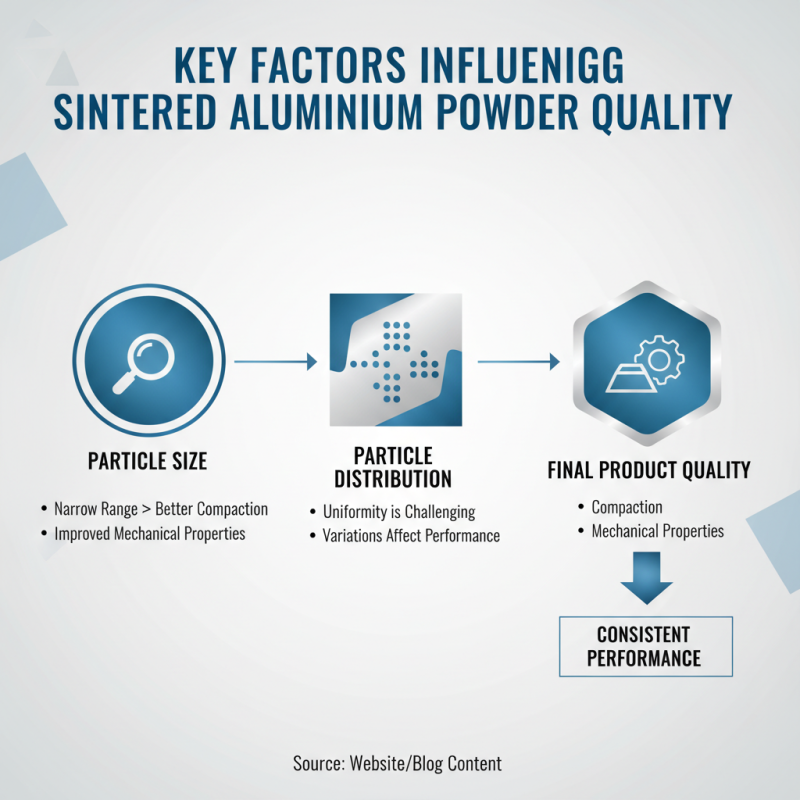
When assessing sintered aluminium powder, multiple factors impact its quality. Particle size and distribution play crucial roles. A narrow particle size range leads to better compaction and improved mechanical properties. However, achieving a uniform distribution can be challenging. Even slight variations can affect the performance of the final product.
Another significant aspect is the purity of the aluminium powder. Impurities can alter the sintering process. They can affect the properties and durability of the end material. High-quality powders are usually produced through meticulous processes. Yet, some suppliers may cut corners in production, introducing contaminants. This can create variability in quality, which is often hard to detect until after production.
The manufacturing method also influences the final product. Various techniques, such as gas atomization or mechanical milling, result in powders with differing characteristics. Each method brings its own set of advantages and drawbacks. For example, while gas atomization offers finer particles, it might not be cost-effective for large volumes. Balancing these factors requires careful consideration from suppliers and manufacturers alike. Investing time in understanding these nuances can lead to better products and satisfied customers.
Leading Global Suppliers of Sintered Aluminium Powder
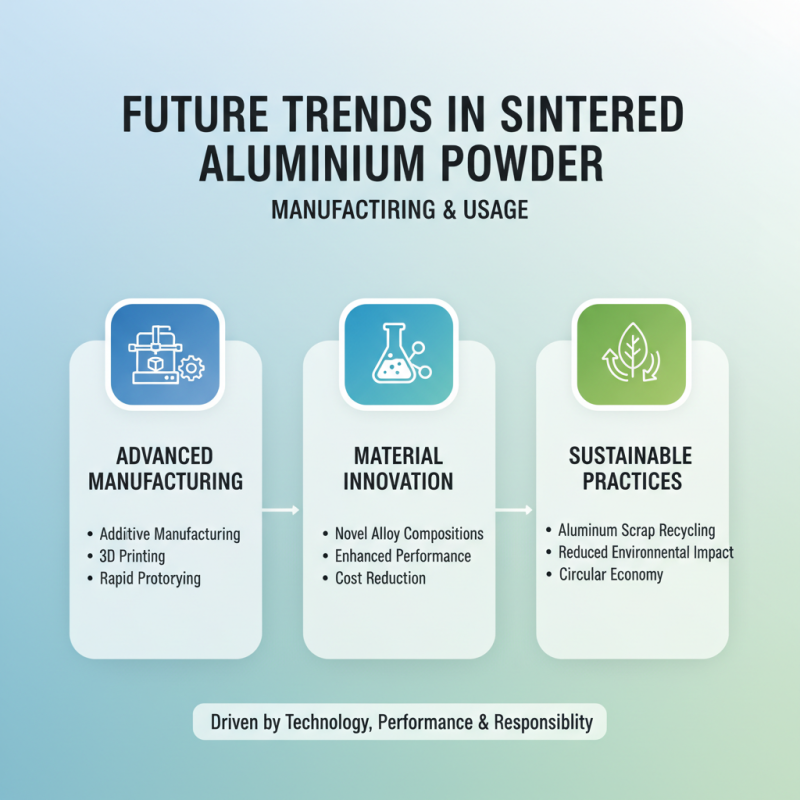
Sintered aluminium powder is crucial in various industries, especially in additive manufacturing. According to recent industry reports, the global sintered aluminium powder market is expected to grow significantly, projected to reach over 1.5 billion USD by 2025. This growth is driven by the increasing adoption of powder metallurgy in automotive and aerospace applications.
Leading global suppliers are adapting to these market demands. They strive to improve the quality of sintered aluminium powders, while also focusing on sustainability in production processes. However, there are challenges. Many suppliers face issues with consistency and particle size distribution, which can affect the final product quality. Reports suggest that achieving the ideal particle morphology remains an ongoing challenge in the industry.
Moreover, regional dynamics significantly influence supplier strategies. North America and Europe generally focus on high-grade materials, while suppliers in Asia may prioritize cost-effectiveness. This highlights the need for suppliers to balance quality and affordability. While competition intensifies, it is crucial for suppliers to invest in research and development. Continuous improvement in product performance is essential for maintaining competitiveness in a rapidly evolving market.
Best Sintered Aluminium Powder - Global Suppliers Comparison
Comparative Analysis of Sintered Aluminium Powder Types
When exploring sintered aluminium powders, it's essential to consider their various types and properties. Each type has unique benefits. For example, fine powders offer better packing density, while coarser ones provide enhanced airflow in production processes. The choice of powder ultimately influences the final product's performance and quality.
Tips: Always assess the specific needs of your application. Different industries require distinct characteristics from their powders. Understanding your requirements is key to making the right choice.
Moreover, keep in mind the manufacturing process. Variations in sintering temperature can significantly affect the final product's properties. Some powders may perform optimally only under specific conditions. It's a complex decision with potential trade-offs that require careful consideration.
Tips: Test samples before full-scale production. This method helps identify the optimal type of powder for your needs. Don’t hesitate to re-evaluate your choices if the results are not as expected. Continuous improvement is critical in this evolving field.