In today's fast-paced market, choosing the right Rapid Prototyping Materials is crucial for product development success. According to Dr. Lisa Thompson, an expert in material science, “The right materials can make or break your prototype.” Her insight underscores the importance of selecting materials that can endure testing and modifications quickly.
Rapid Prototyping Materials vary widely, impacting both the development process and the final product's quality. Professionals must consider factors like strength, flexibility, and production speed. For instance, thermoplastics are often favored for their versatility and ease of use; however, they may lack the durability needed for some applications. Balancing material properties with prototype objectives can be a complex puzzle.
Marketers often overlook material limitations. Understanding these challenges is essential for creating prototypes that not only meet design specifications but also serve their intended purposes. Each material choice has its strengths and weaknesses. Reflecting on these aspects provides deeper insights into the prototyping process, allowing for more informed decisions.
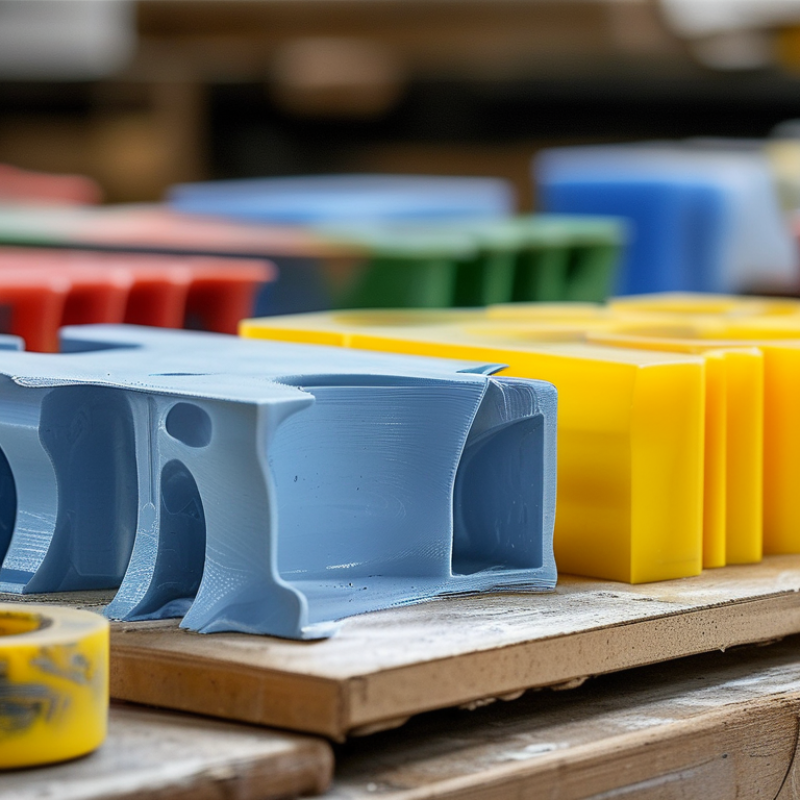
Rapid prototyping has transformed product development across various industries. Selecting the right materials is essential for cost-effective and efficient results. According to a report by the Wohlers Associates, the global 3D printing market will grow to over $35 billion by 2025. This underscores the increasing demand for efficient prototyping materials.
Common materials include thermoplastics, metals, and ceramics. Thermoplastics are prized for their flexibility and ease of use. They suit projects needing rapid iteration. Metals, while often more expensive, provide greater durability and precision. Ceramics are excellent for heat resistance but require careful handling. Each material has pros and cons that must be considered based on the product’s specific requirements.
Research indicates that 40% of companies struggle to select appropriate materials due to a lack of understanding. This gap can hinder innovation. Material choice impacts everything from production speed to the final product’s market fit. Evaluating materials based on mechanical properties, cost, and end-use allows for informed decisions. Missteps can lead to wasted resources and delays. Exploring case studies may provide insight into successful material applications.
Rapid prototyping materials play a critical role in the design and development process. They enable designers and engineers to create tangible models that inform further iterations. Common materials include plastics, metals, and composite materials, each with unique properties. Understanding these materials helps teams to select the right one for their specific project needs.
In practice, the choice of material affects performance, durability, and cost. For example, thermoplastics are lightweight and easy to work with, making them popular for quick iterations. However, they may lack the strength needed for end-use products. On the other hand, metals provide durability but often require more time and resources to manipulate. The decision isn't always clear-cut; balance is necessary.
Ultimately, the prototyping phase is critical for avoiding costly errors down the line. It allows teams to test ideas and ask important questions about functionality. Reflecting on past prototypes can reveal valuable insights. Sometimes, what works in theory does not translate well in practice. Hence, exploring various materials is crucial for a successful design process.
| Material Type | Common Uses | Advantages | Disadvantages |
|---|---|---|---|
| PLA (Polylactic Acid) | 3D Printing, Prototyping, Educational Models | Biodegradable, Easy to print, Low cost | Low temperature resistance, Brittle |
| ABS (Acrylonitrile Butadiene Styrene) | Functional Prototypes, Automotive Parts, Toys | Durable, Good impact resistance, High tensile strength | Warping, Requires higher temperature |
| SLA Resin | High-detail Prototypes, Jewelry, Dental Models | High precision, Smooth finish, Durable | Fragile, Expensive, Limited material choices |
| Nylon | Functional Parts, Wearable Items | Strong, Flexible, Resistant to chemical attack | Difficult to print, Moisture absorption |
| Metal (e.g., Aluminum, Stainless Steel) | Functional Prototypes, Tooling, Industrial Parts | High strength, Heat resistance | High cost, Complex printing process |
The choice between 3D printing plastics and metals significantly impacts prototyping efficiency. Plastics are often favored for their flexibility and cost-effectiveness. A recent report from the American Society for Testing and Materials (ASTM) states that 3D printed plastics can be produced at a cost reduction of 50% compared to metals. They also allow for faster iteration cycles, which is critical in agile development environments.
However, metal prototyping brings its own advantages, particularly in strength and durability. According to a study published by the National Institute of Standards and Technology (NIST), metal parts often achieve up to 60% higher tensile strength than their plastic counterparts. This makes them ideal for applications requiring higher performance under stress. Yet, the complexity of metal printing processes can lead to longer lead times and higher costs.
The decision isn’t merely about material properties. It involves understanding specific project requirements, such as design complexity and required tolerances. Some designs may look good on paper but fail during the prototyping phase due to material limitations. Thus, a reflective approach is necessary when evaluating materials, balancing cost, functionality, and time.
Biodegradable materials are gaining traction in product development. They offer a sustainable alternative to traditional plastics. A study by the Ellen MacArthur Foundation highlights that nearly 90% of plastics are not recycled. This statistic underscores the urgent need for sustainable solutions.
Materials like polylactic acid (PLA) and polyhydroxyalkanoates (PHAs) show promising benefits. PLA is derived from renewable resources like corn starch. Under the right conditions, it can decompose within 60 to 90 days. PHAs are another exciting option. They are produced by bacteria and are fully biodegradable. Yet, challenges remain in production costs and scalability for large-scale applications.
Moreover, consumer preferences are shifting. According to a recent survey, over 70% of consumers prefer products made from sustainable materials.
Despite this, manufacturers often face dilemmas. For instance, the balance between biodegradability and performance can be tricky. Achieving the right material properties is crucial for function and usability. Ongoing research in this field aims to refine these materials and address these challenges effectively.
Rapid prototyping has transformed product development, emphasizing the critical role of material properties. The material you select significantly impacts both prototyping speed and accuracy. For instance, some materials harden quickly, while others may require extended times to cure properly. This affects how fast you can iterate on designs.
Choosing the right material is not merely about speed. Stronger materials lead to more accurate prototypes, reducing the chances of post-processing errors. A stiff material translates designs precisely, while flexible ones might introduce inaccuracies. It's essential to balance rapid production with the need for detail-oriented execution.
Consider these factors heavily when selecting materials. Each project may demand a unique combination of properties, like tensile strength or flexibility. This decision can define the prototype's viability in real-world applications. Reflect on how material choices affect the final output. Learning from past experiments can lead to better future choices. Testing multiple materials on smaller projects can also provide insights without significant investment.
The article "Best Rapid Prototyping Materials for Efficient Product Development" explores the critical role of various rapid prototyping materials in enhancing design efficiency and effectiveness. It provides an overview of these materials, highlighting their importance in the design process, and comparing the use of 3D printing plastics and metals for prototyping. The evaluation of biodegradable materials is also discussed, emphasizing their potential for sustainable product development.
Furthermore, the article examines how the properties of different materials affect prototyping speed and accuracy. Through a series of case studies, it showcases successful applications of advanced prototyping materials, illustrating how these innovations contribute to improved product development outcomes. Overall, the insights gained foster a better understanding of how selecting the right rapid prototyping materials can lead to more efficient and sustainable design practices.