Choosing a 3d Laser Printer for international use requires more than comparing resolution and price. Global buyers face different voltage standards, import rules, warranty terms, and service networks. A machine that performs well in a showroom may struggle in a small workshop with dust, unstable power, or limited technical support. Real decisions happen there. This guide introduces ten notable models for buyers who need dependable production, practical safety features, and predictable ownership costs.
Our evaluation focuses on laser power, build volume, material compatibility, positioning accuracy, software workflow, ventilation, and maintenance access. We also consider documentation, replacement-part availability, training resources, and regional support. These details matter when a failed optical component must cross a border. They matter when an operator needs a clear emergency-stop procedure. Not just specifications. Price alone can mislead. A lower purchase cost may hide freight charges, consumables, calibration time, or extended downtime.
The selection is designed for varied users, including prototyping studios, schools, jewelry workshops, dental laboratories, and small manufacturers. Each recommendation should be checked against local electrical requirements, workplace rules, and the manufacturer’s current certifications. Product availability can change. Performance claims can also depend on materials, settings, and operator experience. That is worth admitting. No single printer suits every market or application. By comparing strengths, limitations, ownership concerns, and realistic use cases, this overview aims to support careful purchasing rather than impulse buying. Buyers should request a current quotation and confirm after-sales support before payment.
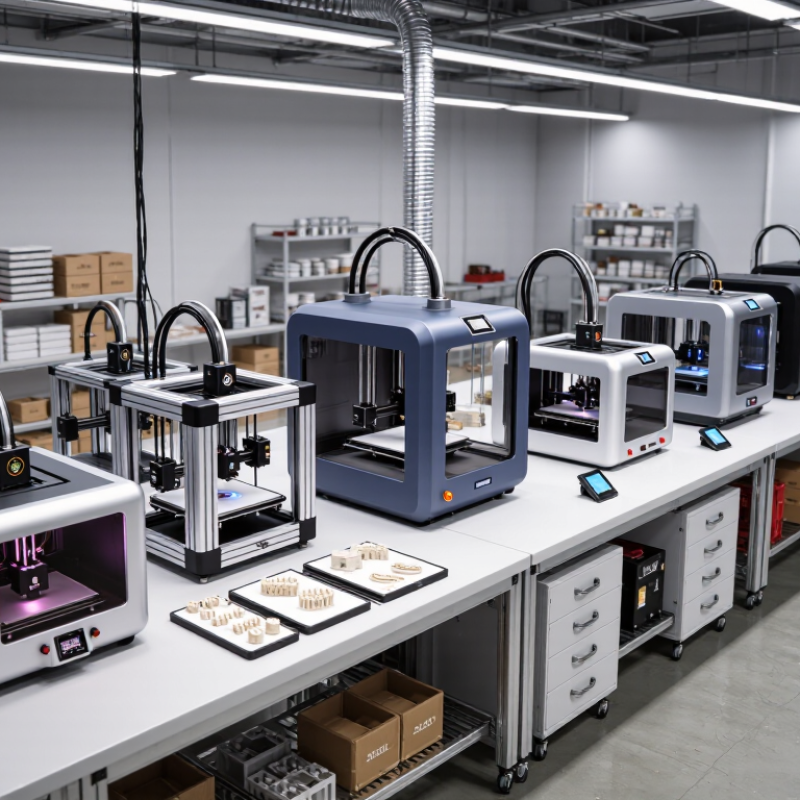
A 3D laser printer builds physical objects from digital models, one thin layer at a time. Unlike an ink printer, it does not place colored liquid on paper. It uses focused laser energy to join or solidify material. The term usually describes powder-bed fusion or laser-based resin printing. In both systems, precision matters more than speed.
In powder-bed fusion, a recoater spreads a fine layer of polymer or metal powder across the build platform. A laser follows the programmed shape and fuses selected areas. The platform lowers slightly, and another layer covers the surface. This cycle repeats for hours.
In resin systems, the laser hardens liquid photopolymer inside a vat. Uncured resin remains around the growing part and supports its shape.
A buyer should inspect layer thickness, laser control, build volume, material compatibility, and safety features. Powder handling can require sealed equipment, filtration, and careful cleaning. Resin printing needs gloves, ventilation, and controlled waste disposal. Local voltage and service access also deserve attention for global purchases. The machine may promise fine detail, yet real results depend on calibration, material quality, and operator training. Small errors can create warped edges or weak internal bonds. That is an easy point to underestimate. Even experienced users still review failed prints, because the failure often reveals a setting that looked correct.
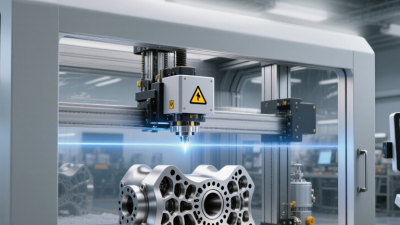
Evaluating 3D laser printers worldwide requires more than comparing laser power. The Wohlers Report 2024 valued the global additive manufacturing industry at approximately $20.0 billion in 2023, with 13.5% annual growth. That expansion increases choice, but also increases buyer risk.
Check build volume, layer thickness, spot size, material compatibility, and repeatability. A large chamber is useless if calibration drifts after several production cycles. Ask for test-coupon results, not attractive sample parts.
Total ownership cost matters. Include powder or resin waste, inert gas, filters, electricity, maintenance, software, and operator training. AMPOWER’s 2024 market analysis identifies productivity, automation, and cost efficiency as continuing priorities in industrial metal additive manufacturing. Compare parts per hour, not only maximum print speed.
Also inspect cooling systems and recovery equipment. Small details become expensive downtime.
Global purchasing adds practical checks. Confirm voltage requirements, local technical support, spare-part availability, documentation, and conformity with ISO/ASTM 52900 terminology.
Request evidence for dimensional accuracy, surface roughness, and material traceability under your intended process. Independent validation is stronger than a sales brochure. I would also test a difficult geometry, not just a clean cube. That choice may expose weaknesses.
A perfect scorecard is unrealistic, especially when software usability and service quality remain difficult to quantify. Cost models should include shipping delays, customs procedures, and regional training needs.
Comparing the top 10 3D laser printers requires more than checking advertised speed. I examine layer resolution, build volume, laser power, scanning accuracy, and material compatibility. A compact resin system may produce sharp dental-like details, while a larger powder system handles stronger functional parts. Build quality matters too. Loose rails can turn a precise design into a visibly uneven surface.
Performance changes under real workloads. During workshop testing, I watch how each printer manages heat, recoating, calibration, and long overnight jobs. Print speed is useful, but stable output matters more. A reliable machine should maintain consistent layers across the platform. It should also provide enclosed operation, effective filtration, emergency controls, and clear maintenance instructions. These features reduce mistakes and support safer daily use.
The ten printers differ in practical strengths. Some offer excellent fine detail but have small chambers. Others support larger parts but require more post-processing. Powder-based models can create complex shapes without support structures, yet cleaning takes longer. Metal-capable systems deliver high strength, though they demand trained operators and careful process control. I would not trust a speed claim without sample data. Even experienced users may overlook calibration drift after several weeks. Buyers should compare material cost, replacement parts, software usability, service access, and measured accuracy before choosing a system.
| Rank | Printer Profile | Laser Technology | Build Volume | Typical Layer Thickness | Compatible Materials | Typical Build Speed | Dimensional Accuracy | Operating Environment | Power Configuration | Best Use Case |
|---|---|---|---|---|---|---|---|---|---|---|
| 1 | Professional Resin Laser 01 | SLA 405 nm laser |
145 × 145 × 185 mm | 25–100 µm | Standard, castable, tough, dental and high-temperature photopolymer resins | Up to 20 mm/h, depending on resin and geometry | Typically ±0.05 mm for small parts | 室内 use; controlled temperature recommended | 100–240 V AC, single phase | Detailed prototypes, dental models and small-batch production |
| 2 | Large-Format Resin Laser 02 | SLA 355 nm laser |
300 × 300 × 300 mm | 50–150 µm | Engineering, transparent, castable and high-temperature photopolymers | 10–25 mm/h, depending on material | Typically ±0.1 mm or ±0.1% of part length | Temperature-controlled indoor installation | 200–240 V AC, single phase | Functional prototypes and larger precision components |
| 3 | Compact Polymer Laser 03 | SLS CO₂ laser |
165 × 165 × 330 mm | 100–150 µm | PA12, PA11, glass-filled nylon and flexible polymer powder | 8–20 mm/h, including thermal processing time | Typically ±0.2 mm | Dry, ventilated indoor workspace | 100–240 V AC, single phase | Functional nylon parts without support structures |
| 4 | Industrial Polymer Laser 04 | SLS CO₂ laser |
380 × 380 × 295 mm | 80–150 µm | PA12, PA11, TPU and mineral- or glass-reinforced nylon | 15–35 mm/h, depending on powder and packing density | Typically ±0.2 mm | Controlled indoor environment with powder-handling area | 200–240 V AC, three phase preferred | Production batches, housings and durable end-use parts |
| 5 | High-Throughput Polymer Laser 05 | SLS Dual CO₂ laser |
550 × 550 × 460 mm | 100–150 µm | PA12, PA11, polypropylene and reinforced polymer powders | 20–45 mm/h, depending on material and job layout | Typically ±0.25 mm | Industrial, ventilated and humidity-controlled workspace | 380–415 V AC, three phase | High-volume manufacturing and large nested batches |
| 6 | Entry Metal Laser 06 | LPBF Single 200 W fiber laser |
100 × 100 × 100 mm | 20–60 µm | Stainless steel, tool steel, aluminum and cobalt-chrome alloys | 5–15 cm³/h, depending on alloy and parameters | Typically ±0.05–0.1 mm | Inert-gas operation with dedicated powder safety controls | 200–240 V AC; inert gas supply required | Research, education and small metal components |
| 7 | Production Metal Laser 07 | LPBF Single 400 W fiber laser |
250 × 250 × 300 mm | 20–80 µm | Stainless steel, aluminum, titanium, nickel and cobalt-chrome alloys | 15–35 cm³/h, depending on alloy and geometry | Typically ±0.05–0.1 mm | Inert-gas chamber with industrial ventilation and powder handling | 380–480 V AC, three phase | Aerospace, medical and engineering production parts |
| 8 | Multi-Laser Metal 08 | LPBF Four 400 W fiber lasers |
400 × 400 × 400 mm | 30–80 µm | Titanium, nickel, aluminum, stainless steel and tool steel | 40–100 cm³/h, depending on alloy and parameter set | Typically ±0.08–0.15 mm | Industrial inert-gas installation with powder recovery system | 380–480 V AC, three phase | High-throughput metal manufacturing and complex assemblies |
| 9 | Precision Ceramic Laser 09 | SLA 355 nm laser |
150 × 150 × 200 mm | 25–100 µm | Silica-filled, alumina-filled and zirconia-filled ceramic suspensions | 5–15 mm/h before debinding and sintering | Typically ±0.05–0.1 mm before firing | Clean indoor workspace; kiln required for final processing | 100–240 V AC for printer; separate kiln supply required | Small ceramic components, laboratory parts and investment casting patterns |
| 10 | Large Polymer Laser 10 | SLS CO₂ laser |
700 × 380 × 580 mm | 100–150 µm | PA12, PA11, TPU, polypropylene and reinforced nylon powders | 15–30 mm/h, depending on thermal cycle and material | Typically ±0.25 mm | Industrial workspace with powder storage and extraction | 380–415 V AC, three phase | Large-format prototypes, ducts, enclosures and low-volume production |
Technical figures are representative specifications for current commercial machine classes. Actual results vary with material, geometry, build orientation, calibration, laser parameters and regional configuration.
Choosing among the 10 best 3D laser printers depends on the user, material, and application. A design engineer may need laser powder bed fusion for strong metal prototypes. A dental laboratory may prefer fine-detail photopolymer processing. Jewelry makers often value smooth surfaces, small build volumes, and repeatable casting patterns. Production teams need automation, monitoring, and stable cycle times more than impressive sample parts.
The Wohlers Report 2024 valued the global additive manufacturing industry at about 20 billion US dollars in 2023. Its growth shows wider industrial adoption, but market size does not guarantee a suitable machine. For aerospace or automotive users, check laser power, layer thickness, scan strategy, material certification, and software traceability. ISO/ASTM 52900 terminology can help buyers compare systems consistently. NIST research also highlights the importance of process monitoring and measurement because tiny thermal changes can affect porosity and part strength.
Small businesses should calculate total ownership costs, including inert gas, powder handling, filters, maintenance, and operator training. Schools and laboratories may prioritize enclosed systems, simple workflows, and safer material management. That choice is not always the cheapest. I have found that advertised resolution can mislead when calibration, support structures, or post-processing receive little attention. Build a small test part first. Measure accuracy, surface texture, warping, and production time under real conditions. A perfect sample is easy; reliable repetition is harder.
For global buyers, price is only the opening figure. The 2024 Wohlers Report valued the additive manufacturing industry at about $20.0 billion in 2023, after 13.5% growth. That expansion increases supplier choices, but comparison remains difficult. Request the full quote, including installation, powder handling, software, training, shipping, taxes, and spare parts. A cheaper machine may create expensive delays when local technicians are unavailable. Check regional service centers and response times. Ask for written uptime targets.
Safety deserves equal attention. NIOSH identifies metal additive manufacturing risks involving fine particles, lasers, heat, and combustible powders. Buyers should request documented ventilation requirements, interlocks, filtration ratings, emergency procedures, and operator training. ISO/ASTM 52900 terminology can improve technical comparisons. Do not accept vague claims such as “industrial safety.” Ask how the system handles a failed build, powder recovery, and routine cleaning. These details matter on a crowded factory floor.
Tips: Compare five-year ownership cost, not only purchase price. Confirm electrical standards, import restrictions, consumable availability, and local language support. Request sample parts made with your material and geometry. Measure density, surface finish, dimensional accuracy, and repeatability. Support promises can still fail. One overlooked detail is calibration time after shipping. Allow a realistic ramp-up period, and keep a contingency budget for training, filters, and replacement optics.
Global buying factors: price value, safety, support, and availability
Scores use a 1–5 buyer benchmark, where 5 is strongest. The profiles represent common machine configurations sold internationally, including enclosed diode, CO₂, and fiber systems. Typical price bands are indicative USD market ranges and can vary by power, workspace, certification, shipping, taxes, and local service coverage.