Choosing a 3d Laser Printer is no longer a simple comparison of price tags and print speed. The right machine must match your materials, production volume, tolerances, workspace, and service expectations. A polished specification sheet can still hide expensive limitations.
The Wohlers Report 2024 valued the global additive manufacturing industry at approximately $20.0 billion in 2023. It also reported 13.5% year-on-year growth. However, this figure covers many additive technologies, not only laser-based systems. That distinction matters. A metal powder-bed machine, a resin stereolithography printer, and a laser powder deposition system require different decisions.
Chuck Hull, the inventor of stereolithography, explained the core principle clearly: “The basic idea was to make a three-dimensional object by building it up layer by layer.” That layered process affects surface finish, strength, accuracy, and post-processing time. It also exposes a common mistake: choosing the most powerful laser instead of choosing the best complete workflow.
This guide presents seven practical tips for evaluating a 3d Laser Printer. It considers laser type, material compatibility, build volume, resolution, operating costs, safety controls, software, and technical support. Reports from Wohlers Associates and ASTM International show why process control and standardization remain important across additive manufacturing.
Look closely.
A printer may claim ten-micron precision, yet your final component can change through thermal distortion, calibration drift, or shrinkage. I have also seen buyers underestimate powder handling, ventilation, and maintenance requirements. Those details are less exciting than speed, but they often determine whether a machine performs reliably after installation.
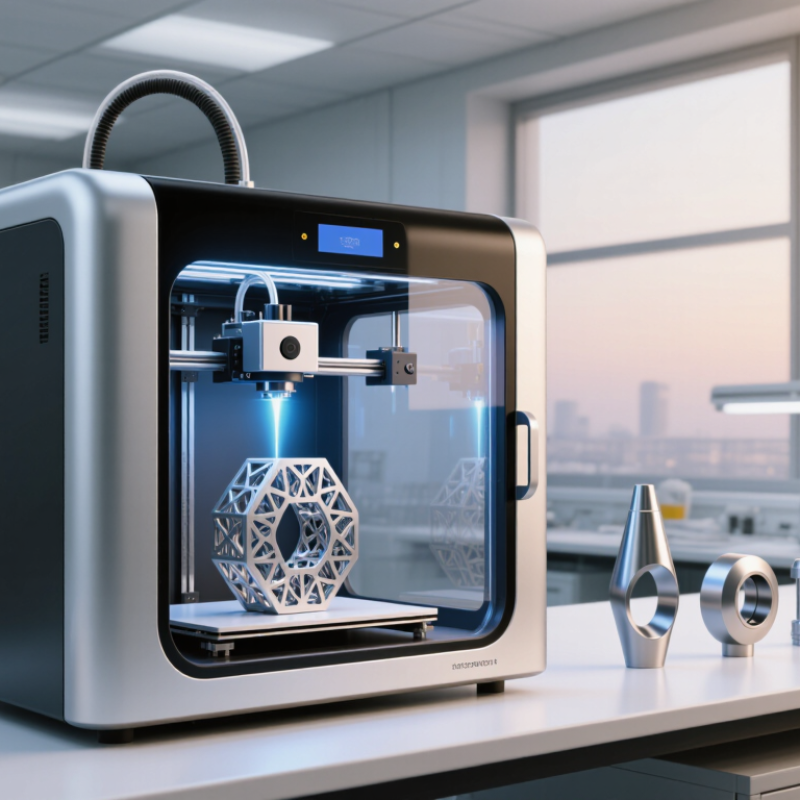
Choosing the best 3D laser printer starts with your intended result, not its advertised speed. Decide whether you need visual prototypes, functional parts, or repeatable production components. A display model may prioritize smooth surfaces and fine details. A mechanical part needs strength, dimensional stability, and reliable layer bonding. These goals require different laser power, material compatibility, and calibration standards.
Measure the output before comparing machines. Record the smallest feature, acceptable tolerance, surface texture, and expected part size. For example, a prototype with 0.1 mm lettering needs different performance from a bracket requiring consistent holes. The Wohlers Report 2024 valued the global additive manufacturing industry at 20.035 billion dollars in 2023. This growth reflects wider use beyond experimentation. Sculpteo’s State of 3D Printing survey also identifies prototyping and product development as major applications. Your printer should match your application, not market excitement.
Test real parts.
Ask suppliers for sample prints made with your chosen material. Inspect edges under bright light, measure critical dimensions with calipers, and compare several repeated parts. A specification sheet may describe ideal conditions. Your workshop may be less controlled. Temperature, resin exposure, dust, and operator habits can change results. I would also question my first decision after testing: impressive detail is not useful if parts warp during assembly. Define a pass-or-fail checklist before buying, then judge the printer against evidence rather than promises.
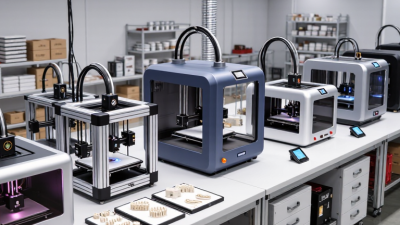
Typical layer-thickness targets vary by application. Lower layer thickness can improve surface smoothness and fine detail, but it usually increases printing time and may not improve functional strength.
Use the required visual quality, detail size, tolerance, production volume, and acceptable print time to define your target before comparing machines.
Choosing the best 3D laser printer starts with the laser process, not the advertised speed. SLA uses a focused beam to cure liquid resin, producing smooth surfaces and fine details. SLS fuses powder with heat, so it can create complex parts without support structures. Metal laser systems work differently and demand strict powder handling, ventilation, and calibration. Match the technology to your material, part strength, and surface requirements. Material changes everything.
Build area deserves careful attention. Measure the usable volume, not just the external chamber size. A wider platform supports multiple parts, but it can increase heating time and powder consumption. A smaller chamber may deliver more stable results for prototypes. Consider part orientation, support clearance, and access for post-processing. That trade-off matters. Do not assume the largest build area is automatically better.
Printing speed should be judged through complete production time. Laser exposure is only one step. Recoating, heating, cooling, curing, cleaning, and finishing also affect delivery. Ask for tested throughput with your material and typical layer thickness. A high scan speed may reduce detail or increase failed prints. In workshop evaluations, a slower setting often produced more reliable parts. That finding is easy to overlook. Compare hourly output, dimensional accuracy, and repeatability instead of trusting one speed figure. Keep a small test log, because advertised performance can change with geometry, temperature, and operator settings.
Material compatibility should guide your decision. List the powders, polymers, or composites your projects require. Then verify laser wavelength, chamber temperature, and powder handling limits. ISO/ASTM 52900 terminology helps compare specifications without confusing marketing claims. Ask for printed samples. A datasheet cannot reveal warping around a thin wall.
Precision needs measurable evidence. Check the manufacturer’s repeatability data, layer thickness range, and calibration method. Request results from independent testing, not only laboratory demonstrations.
The 2024 Wohlers Report valued the additive manufacturing industry at $20.035 billion in 2023, showing rapid adoption across demanding applications. Growth, however, does not guarantee accuracy. Smaller layers may improve detail, but they can increase build time and maintenance.
Surface finish deserves equal attention. Examine roughness measurements, support marks, and edge sharpness on curved parts. Compare vertical and horizontal surfaces. Post-processing can hide weak printing, so inspect untreated samples whenever possible.
Check whether the machine supports controlled cooling and stable recoating. These features often influence consistency more than headline resolution. Keep a simple test log. Measure the same part weekly.
My own preference is cautious: impressive first prints can create false confidence. One missed calibration may change a critical fit. Choose the printer that proves repeatable results with your material, geometry, and finishing process.
Choosing the best 3D laser printer requires more than comparing speed and resolution. The 2024 Wohlers Report valued the additive manufacturing industry at about $20 billion in 2023, showing how quickly workplace equipment is evolving. Start by testing software before purchase. Look for clear build preparation, automatic error alerts, version control, and editable process settings. A beautiful interface is not enough.
Check whether the printer supports secure wired and wireless connections. The 2024 Verizon Data Breach Investigations Report found that the human element appeared in 68% of breaches. Use unique accounts, multi-factor authentication, encrypted file transfer, and permission controls. Confirm whether software updates remain available after installation. Cloud access can help, but offline operation is still valuable during network failures. I once selected a machine with weak job recovery. Two overnight builds were wasted.
Inspect maintenance access carefully. Replaceable filters, visible optics, guided calibration, and documented cleaning intervals reduce downtime. Ask for real service data, not only laboratory claims. Keep a log of lens checks, filter changes, failed builds, and operator training. Small records reveal recurring problems.
Workplace safety deserves equal attention. NIOSH research warns that additive manufacturing can release ultrafine particles and chemical vapors. Choose enclosed equipment, local exhaust ventilation, interlocks, and clear emergency procedures. ISO/ASTM 52900 terminology can improve training consistency. Do not assume a sealed cabinet removes every hazard. Measure the workspace when possible, and review the assessment after materials or workflows change.
| Tip | Evaluation Dimension | What to Check | Practical Benchmark | Why It Matters | Suggested Weight |
|---|---|---|---|---|---|
| 1 | Confirm the Printing Technology | Identify whether the system uses a laser-based resin process, powder-bed process, or another laser fabrication method. Review compatible materials, build volume, layer-height range, and required post-processing. | Choose a build volume that is at least 20% larger than the largest part you expect to produce, including supports and handling clearance. | The technology determines surface finish, dimensional accuracy, material options, operating cost, and workflow complexity. | 15% |
| 2 | Evaluate Slicing and Control Software | Check file formats, automatic support generation, repair tools, editable process parameters, job previews, material profiles, firmware updates, and user-access controls. | The software should provide a layer-by-layer preview, estimated material usage, estimated print time, and a way to detect unsupported or non-manifold geometry. | Good software reduces failed prints, simplifies training, and makes print results more repeatable. | 20% |
| 3 | Check Connectivity and Data Security | Review USB, wired network, wireless network, and removable-media options. Check job authentication, user permissions, encrypted communication, audit logs, and offline operation. | For shared workplaces, prioritize wired networking or a secured wireless network, role-based access, and the ability to continue essential work if cloud services are unavailable. | Reliable connectivity supports production monitoring while access controls help protect design files and prevent unauthorized jobs. | 15% |
| 4 | Assess Maintenance Requirements | List routine tasks such as cleaning optical surfaces, replacing filters or consumables, checking tanks and seals, calibrating the platform, and updating software. | Prefer clearly documented maintenance intervals, tool-free access where practical, replaceable wear parts, maintenance alerts, and locally available service support. | Predictable maintenance reduces downtime, contamination risk, and variation between print jobs. | 15% |
| 5 | Review Workplace Safety Controls | Check enclosure design, laser interlocks, access-door sensors, emergency-stop controls, ventilation requirements, spill containment, electrical protection, and safety documentation. | Do not operate an open or inadequately shielded laser system in a general work area. Follow applicable laser, electrical, chemical, and occupational-safety requirements. | Controls help reduce exposure to laser radiation, fumes, uncured materials, dust, heat, moving parts, and electrical hazards. | 20% |
| 6 | Compare Total Cost of Ownership | Calculate equipment cost, materials, vats or trays, filters, cleaning supplies, post-processing tools, electricity, software fees, service contracts, training, and disposal costs. | Estimate cost per usable part over at least 12 months rather than comparing the purchase price alone. Include failed-print and post-processing allowances. | A lower purchase price can result in higher operating costs if consumables, labor, or service requirements are substantial. | 10% |
| 7 | Verify Support, Training, and Scalability | Review manuals, onboarding, troubleshooting resources, warranty terms, response times, spare-parts availability, operator training, and options for adding more units later. | Request a demonstration using your own representative parts and confirm that at least two trained operators can complete the normal workflow safely. | Accessible support shortens downtime and helps maintain consistent quality as production volume increases. | 5% |
The purchase price is only the visible cost. Build a five-year ownership sheet before choosing a 3D laser printer. Include powder or resin, electricity, filters, calibration, software, operator time, facility upgrades, and downtime. A machine priced 20% lower may become more expensive after repeated service visits.
The Wohlers Report 2024 valued the global additive manufacturing industry at $20.035 billion in 2023, with 13.5% annual growth. That expansion increases equipment choices, but also complicates comparisons.
I inspect a supplier’s support process, not just its brochure. Ask for response-time targets, spare-part availability, remote diagnostics, and technician coverage near your facility. Request anonymized service records when possible. NIST’s additive manufacturing measurement work repeatedly highlights repeatability, process control, and traceability as essential for dependable production. Support should help you document these factors. Otherwise, quality problems may look like operator mistakes.
Test the service before signing. Send three technical questions and measure the reply. Ask how a failed laser, contaminated material, or software fault is handled. A clear escalation path matters. So does training.
I once underestimated installation time and lost several production days. The spreadsheet looked accurate, but it ignored staff learning curves. That was my mistake. Recheck every assumption with a pilot build, actual utility readings, and a written maintenance schedule.