Why Choose Aluminum Bronze Powder for Your Manufacturing Needs?
In the manufacturing industry, the choice of materials directly affects product performance. Aluminum Bronze Powder has emerged as a critical option for many applications. According to recent market reports, the demand for aluminum powders is growing at a rate of 7% annually. This growing preference is due to aluminum bronze's excellent corrosion resistance and strength.
Utilizing Aluminum Bronze Powder can enhance the durability of components. For instance, industries like marine and aerospace have reported significant improvements in product lifespan. These benefits stem from the unique properties of aluminum bronze, which include high wear resistance and thermal conductivity. However, despite these advantages, some manufacturers remain hesitant. They raise concerns regarding cost-effectiveness and availability.
Addressing these concerns requires a deeper understanding of materials science. Manufacturers should evaluate their specific needs and intended applications. Choices made today can impact overall efficiency and sustainability. Adopting Aluminum Bronze Powder is not without challenges. It invites reflection on supply chains, production methods, and long-term viability in various sectors.

Benefits of Aluminum Bronze Powder in Manufacturing Processes
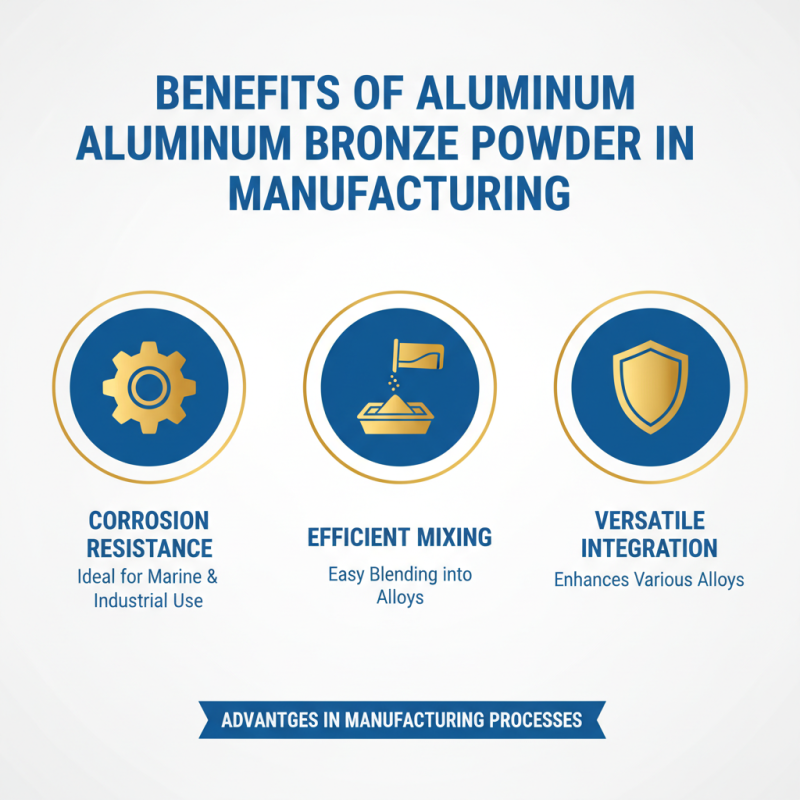
Aluminum bronze powder offers several significant advantages in manufacturing processes. This material is known for its excellent corrosion resistance. It is particularly valuable in marine and industrial applications. The powder form allows for efficient mixing and blending. Manufacturers appreciate how easily it can be integrated into various alloys.
Another notable benefit is Aluminum bronze's high strength-to-weight ratio. This makes it ideal for products requiring durability without adding excessive weight. It can withstand harsh environments, extending the lifespan of components. Some manufacturers face challenges when sourcing quality aluminum bronze powder. Variability in grain size and purity can affect performance.
Using aluminum bronze powder might also have economic implications. Initial costs may be higher than some alternatives. However, the long-term savings from reduced maintenance and replacement are often considerable. This trade-off might not be immediately apparent. Continuous evaluation and testing are essential for optimizing its use in specific applications. By carefully considering these factors, manufacturers can enhance their processes effectively.
Applications of Aluminum Bronze Powder in Various Industries
Aluminum bronze powder is gaining traction across various industries due to its unique properties. Its exceptional corrosion resistance and high strength make it ideal for marine applications. According to a report by Market Research Future, the global aluminum bronze market is projected to grow at a CAGR of 6.5% through 2025.
In the aerospace sector, aluminum bronze powder is utilized for creating lightweight components. These components undergo rigorous testing to ensure reliability and performance. Another significant application is in the oil and gas industry, where the powder is used in pumps and valves that require durability against harsh environments.
Tips: When considering aluminum bronze powder, evaluate its grain size. Finer powders provide expansive surface areas for improved bonding. Additionally, monitor environmental conditions during storage to maintain powder quality. Always consult with experts for optimized mixing ratios in your applications. Balancing performance and cost can be challenging but is critical for achieving the desired outcome.
Applications of Aluminum Bronze Powder in Various Industries
Comparison of Aluminum Bronze Powder with Other Metal Powders
Aluminum bronze powder stands out in the realm of metal powders due to its unique properties. Compared to conventional metal powders like steel or brass, aluminum bronze offers superior corrosion resistance. This makes it particularly valuable in marine applications. Its excellent wear resistance also makes it ideal for components that experience high friction.
When comparing aluminum bronze powder to other options, consider the melting point. Aluminum bronze has a higher melting point than many other metals. This can enhance the durability and longevity of the products made from it. Additionally, its excellent machinability can lead to cost savings in manufacturing processes.
Tips for using aluminum bronze powder include ensuring proper storage. Keep the powder in a cool, dry place to maintain its quality. Also, be mindful of mixing it with other powders. This can impact the final properties of the manufactured product. Experimenting with different blends may yield unexpected but beneficial results.
Considerations for Selecting Aluminum Bronze Powder for Projects
When choosing aluminum bronze powder for manufacturing, several factors come into play. The composition of the powder is critical; it directly affects the properties of the end product. Aluminum bronze is known for its excellent corrosion resistance and strength. These traits make it suitable for marine and industrial applications. However, the specific alloy ratios can vary, impacting performance. A thorough understanding of these ratios is essential.
The particle size distribution also matters. Finer powders can improve fluidity and packing density during processing. Consider how the powder will be used. Will it be used in additive manufacturing, or as an overlay? Different applications may require different particle sizes. Testing a sample can reveal important characteristics, such as how well it blends with other materials.
Quality assurance is another crucial aspect. Ensure that the supplier has robust quality control measures. This can impact product reliability in the long term. Lack of consistency in powder quality may lead to defects. Evaluate the supplier’s track record and customer feedback. Understanding these elements can guide informed decisions.
Why Choose Aluminum Bronze Powder for Your Manufacturing Needs? - Considerations for Selecting Aluminum Bronze Powder for Projects
| Property |
Importance |
Considerations |
| Corrosion Resistance |
High |
Essential for marine and chemical environments. |
| Wear Resistance |
Moderate |
Important for components subjected to friction. |
| Thermal Conductivity |
Moderate |
Critical in applications requiring heat dissipation. |
| Electrical Conductivity |
Moderate |
Consider for electrical applications. |
| Machinability |
High |
Facilitates ease of shaping and fitting. |
| Cost |
Variable |
Evaluate based on project budget limitations. |
| Weight |
Low |
Consider in applications where weight is a factor. |
Best Practices for Handling and Using Aluminum Bronze Powder
Aluminum bronze powder is a versatile material used in various manufacturing applications. Handling and using this powder requires specific best practices to ensure safety and efficiency. Professionals recommend wearing appropriate personal protective equipment (PPE). Dust inhalation can lead to respiratory issues. A 2018 report by the OSHA indicates that up to 14% of workers in metal powder industries experience respiratory challenges due to inadequate protections.
Proper storage is crucial. Aluminum bronze powder should be kept in a cool, dry area to prevent moisture absorption. The presence of moisture can alter its chemical properties. Furthermore, contamination can lead to inconsistent product quality. According to the Aluminum Association, maintaining clean environments can improve production efficiency by up to 15%.
Additionally, processing techniques matter significantly. The particle size can affect performance. Smaller particles may offer better fluidity but can also increase the risk of dust explosions. A study by Powder Metallurgy Review suggests using suitable methods to minimize risks while maximizing benefits. Understanding these details can help manufacturers optimize their use of aluminum bronze powder effectively.