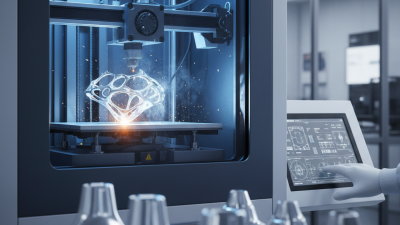
Choosing the best Titanium 3d Printer requires more than comparing build volume and marketing claims. Titanium behaves differently from polymers and many common metals. Its high melting point, low thermal conductivity, and strong reaction with oxygen demand careful process control. A reliable machine should manage laser or electron energy, powder delivery, chamber conditions, and thermal distortion with precision.
This guide examines the practical factors behind a trustworthy purchase. It considers print accuracy, layer thickness, material efficiency, software control, maintenance, and operator training. A useful evaluation also includes test parts, not only impressive showroom samples. Look closely at thin walls, lattice structures, overhangs, and internal channels. Examine surface texture under consistent lighting. Check whether the manufacturer provides parameter data, service support, and documented safety procedures.
Performance is only part of the decision. Total ownership costs can include inert gas, filters, powder handling equipment, post-processing, and inspection tools. Some printers produce excellent results, yet require highly experienced technicians. That limitation matters in a small workshop. A less powerful system may offer better value when its workflow is stable and easier to validate. The “best” choice is rarely universal. It depends on aerospace, medical, automotive, research, or custom manufacturing needs. Even published specifications deserve careful questioning. Real production results may vary with powder quality, geometry, and operator skill. This overview aims to separate measurable capability from attractive promises, while acknowledging that no machine removes every engineering challenge.
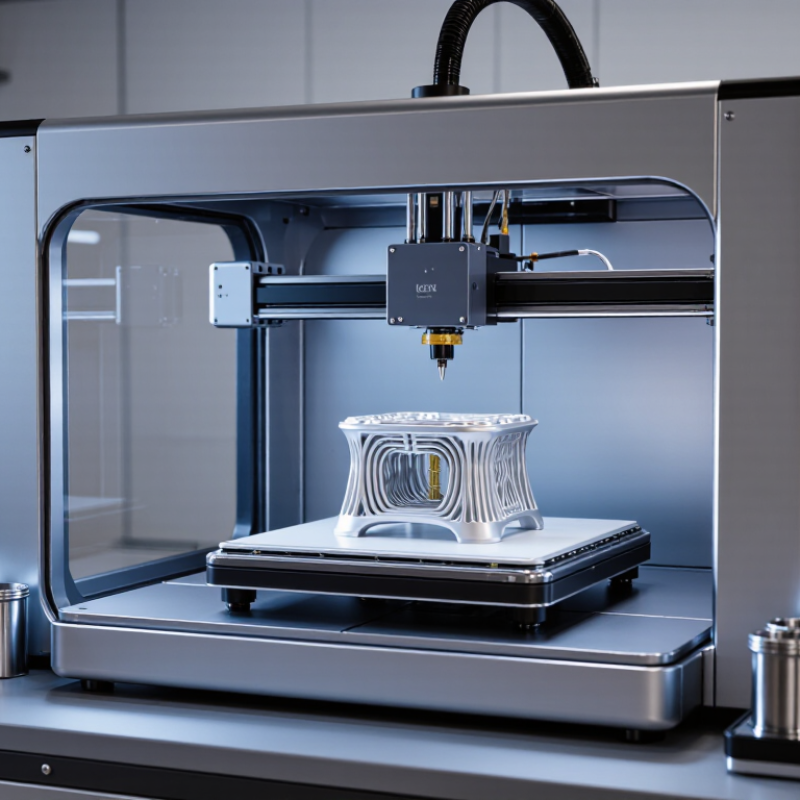
The best titanium 3D printer depends on the part, not a single performance number. Powder bed fusion uses a laser or electron beam to melt fine titanium powder layer by layer. It can produce intricate channels and thin walls, but parts often need support structures and careful heat treatment. The powder is reactive, so controlled conditions matter. Small details come at a cost.
Directed energy deposition feeds metal powder or wire into a focused heat source. It suits larger components, repairs, and adding material to existing parts. Its deposited tracks are usually coarser than powder-bed layers, so machining may be needed for accurate surfaces. Binder jetting takes a different route: it shapes powder with a liquid binder, then sinters the part. This can support higher throughput, though shrinkage and final density require close control. Not every geometry survives that journey unchanged.
The differences show up on the shop floor. A fine lattice may favor powder bed fusion; a worn, expensive component may benefit from deposition. Compare build volume, surface finish, material traceability, and post-processing—not just advertised speed. Ask how oxygen levels and powder reuse are monitored. And inspect real test parts. One limitation is easy to overlook: a technically printable design may still be difficult to clean, qualify, or machine. There is no effortless choice.
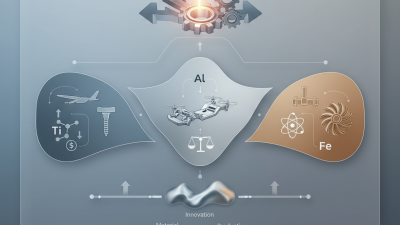
Titanium additive manufacturing technologies differ mainly in energy source, powder or feedstock handling, achievable detail, production speed, and post-processing requirements.
The chart uses a comparative 1–5 capability index derived from established process characteristics: 5 indicates a stronger relative advantage, not a universal performance guarantee. Powder bed fusion generally provides finer detail, directed energy deposition supports larger repairs and structures, and binder jetting requires debinding and sintering before final density and properties are achieved.
The best titanium 3D printer is not simply the machine with the largest build volume or highest laser power. For powder-bed fusion, evaluate how consistently it controls the build atmosphere, energy input, and powder flow. These factors influence porosity, surface finish, and part-to-part variation. Small details matter.
Match the usable build area to the components you actually plan to produce. A large chamber may sound attractive, but it can increase powder use and make temperature uniformity harder to manage. Check the machine’s documented material parameters, layer thickness options, and monitoring tools. Ask how calibration is performed and what records are available after each build.
Reliability also depends on the workflow beyond printing. Review powder loading and recovery, filter changes, maintenance access, and the equipment needed for support removal and heat treatment. A test build with representative geometry can expose issues that a brochure will not. Inspect parts for density, dimensional accuracy, and repeatability across several builds. Results can still vary with geometry and post-processing. That trade-off deserves honest attention. Compare service response times, training, and operating costs alongside headline specifications; a capable printer is useful only when a team can run it safely and consistently.
| Evaluation Criterion | What to Compare | Titanium-Specific Considerations | Evidence to Request |
|---|---|---|---|
| Printing Process | Laser powder bed fusion (LPBF), electron-beam powder bed fusion (EB-PBF), or directed energy deposition (DED). | LPBF is suited to detailed, complex parts; EB-PBF operates in a vacuum and preheats the powder bed; DED is often used for larger deposits and repair, with typically coarser features. | Process description, representative titanium builds, and examples matching the intended part size and geometry. |
| Compatible Alloys | Which titanium alloys and material conditions are qualified for the specific machine and process? | Ti-6Al-4V (Grade 5) and Ti-6Al-4V ELI (Grade 23) are widely used in additive manufacturing. Alloy availability and qualified settings vary by system. | Material specifications, powder or feedstock certificates, and mechanical test results for the selected alloy and process. |
| Atmosphere and Contamination Control | How the system controls oxygen, moisture, and other contamination during building and material handling. | Titanium can react with oxygen and nitrogen at elevated temperatures. LPBF commonly uses an inert gas atmosphere, while EB-PBF uses a vacuum; suitable controls are essential for the process used. | Atmosphere-monitoring records, handling procedures, and applicable material chemistry or contamination test results. |
| Build Volume and Part Fit | Usable build dimensions, build height, and the space needed for supports and part orientation. | The advertised build envelope does not guarantee that a particular part will fit in a production-ready orientation. Thermal behavior, supports, and removal access can limit usable space. | A build-layout review using the actual part file, including support and removal considerations. |
| Feature Resolution and Surface Finish | Minimum reproducible features, dimensional capability, and as-built surface condition. | Results depend on process, feature orientation, scan or deposition settings, supports, and post-processing. Powder-bed processes and DED have different feature capabilities. | Measured sample parts with documented geometry, orientation, measurement method, and post-processing state. |
| Density and Defect Control | Porosity, lack-of-fusion defects, inclusions, and consistency across builds. | Density is affected by alloy, process settings, part geometry, and inspection method. A single density figure should not replace evaluation of defect type and part requirements. | Inspection results using suitable methods, such as metallography or computed tomography, with sampling and acceptance criteria stated. |
| Mechanical Properties | Tensile strength, elongation, fatigue performance, and other properties relevant to the application. | Properties can vary with build orientation, heat treatment, hot isostatic pressing (HIP), and specimen preparation. Values should be tied to the specific alloy and process route. | Test reports identifying standards, specimen orientation, heat treatment, sample count, and material condition. |
| Productivity and Operating Cost | Build time, setup and changeover, material use, post-processing, and expected machine availability. | Layer time alone does not represent finished-part throughput. Supports, powder or feedstock handling, heat treatment, machining, and inspection can add substantial time and cost. | A documented estimate based on representative parts, including preparation, printing, post-processing, inspection, and material recovery assumptions. |
| Repeatability and Process Monitoring | Consistency between builds and the availability of traceable process data. | For safety-critical or regulated applications, repeatable parameters and traceable material and build records are particularly important. Monitoring tools do not, by themselves, prove part quality. | Build logs, calibration records, monitoring-data examples, and results from repeat builds or process qualification. |
| Post-Processing Requirements | Support removal, stress relief, heat treatment, HIP, machining, and surface finishing. | Many titanium parts need additional operations to meet dimensional, surface, or mechanical requirements. The necessary route depends on the alloy, application, and acceptance criteria. | A complete process flow showing required operations, equipment access, and final inspection steps. |
| Software, Training, and Service | Build-preparation tools, operator training, maintenance support, and access to process documentation. | Reliable titanium production depends on controlled workflows for build preparation, material handling, parameter management, and equipment upkeep. | Software workflow demonstration, training plan, maintenance schedule, and documented technical support arrangements. |
Note: The best system depends on the part, alloy, production volume, and qualification requirements. Performance claims should be verified using representative parts and documented test methods; results vary by machine configuration and process parameters.
What Is the Best Titanium 3D Printer?
The practical answer depends on the part, workflow, and validation burden. Laser powder bed fusion suits intricate brackets, lattice structures, and thin channels. It builds detailed parts layer by layer inside a controlled inert-gas chamber. Directed energy deposition fits large repairs and near-net-shape components. It deposits titanium powder or wire through a focused heat source. Bigger parts. Lower detail.
For aerospace work, prioritize stable oxygen monitoring, repeatable laser calibration, sealed powder handling, and complete build records. Energy equipment may favor robust deposition rates and repair access over tiny features. Automotive teams often need faster changeovers, simple parameter control, and predictable post-processing. Research groups may value open data access, flexible materials, and easy sensor integration. A printer is only one link. Heat treatment, machining, inspection, and operator training can determine final quality.
Ask for evidence rather than polished demonstrations: density results, tensile data, surface measurements, and long-run repeatability. Validate results with relevant ISO or ASTM methods. Inspect software logs and maintenance schedules. Small omissions matter. I would test representative geometries, including thin walls, overhangs, and solid mounting sections, before approving production. My selection criteria remain cautious; impressive speed can hide powder waste, support removal, or thermal distortion. During trials, record failed builds as carefully as successful ones.
Choosing the best titanium 3D printer starts with material control, not print speed. Titanium powder demands sealed handling, inert-gas management, oxygen monitoring, and reliable filtration. A small leak can change powder quality and increase fire risk. The Wohlers Report 2024 valued the global additive manufacturing market at about $20.0 billion in 2023, showing rapid industrial growth. Safety systems have not always matured at the same pace.
Post-processing is equally important. Operators should use dedicated powder recovery tools, grounded equipment, suitable respiratory protection, and non-sparking cleaning methods. Compressed air is a poor choice. It can spread fine particles into hidden spaces. NIOSH lists exposure limits of 2.4 mg/m³ for fine titanium dioxide particles and 0.3 mg/m³ for ultrafine particles, measured as 10-hour averages. These values do not replace a site-specific risk assessment. They also do not describe every titanium alloy.
Printed parts usually need support removal, stress relief, surface finishing, and dimensional inspection. Heat treatment can reduce residual stress, but incorrect cycles may affect strength. Machining often exposes trapped powder or sharp support marks. CT inspection helps reveal internal defects, although it adds cost and technical complexity. I would not select a machine until its powder-change procedure, waste controls, and emergency response plan are physically demonstrated. Specifications look clean on paper. Workshops are messier.
Selecting the best titanium 3D printer starts with the application, not the machine’s brochure. Aerospace brackets need repeatability, traceability, and qualified process parameters. Medical components demand controlled surfaces, cleaning, and documented biocompatibility pathways. For prototypes, speed and easy parameter adjustment may matter more than maximum build volume.
Titanium reacts readily with oxygen and nitrogen at elevated temperatures. Therefore, evaluate chamber atmosphere control, powder handling, filtration, and monitoring systems carefully. Ask for oxygen-level records, density results, tensile data, and layer-by-layer inspection options. The Wohlers Report 2024 valued the global additive manufacturing industry at approximately $20.035 billion in 2023, with 13.5% growth. That expansion does not guarantee reliable titanium production. It only shows rising adoption.
Think beyond laser power. Compare build volume, spot size, scanning strategy, cooling design, software controls, and maintenance access. ISO/ASTM 52900 provides common additive manufacturing terminology, while ASTM powder and process standards support clearer qualification plans. Request sample parts using your actual alloy and wall thickness. Small details matter. A thin lattice may expose defects hidden in a solid test block. Operating costs also include powder recycling, inert gas, heat treatment, machining, and trained personnel.
A larger chamber can look impressive. It may still produce uneven thermal behavior. I would question unusually fast production claims without independent test data.
One uncomfortable truth remains: the “best” printer may be the one your team can qualify consistently, not the one with the highest specifications.