China Top 10 Applications of 3D Metal Printed Parts in Modern Industry?
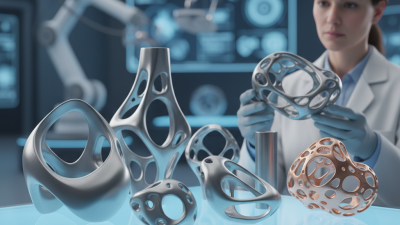
3D metal printed parts are revolutionizing modern industry. These innovative components offer enhanced performance and design flexibility. According to Dr. Emily Wong, a prominent expert in additive manufacturing, "3D metal printing opens doors to possibilities we once thought were impossible."
In various sectors, such as aerospace and automotive, the application of 3D metal printed parts is increasingly significant. For instance, they enable the creation of lightweight structures that improve fuel efficiency. However, challenges remain. Issues such as material limitations and high costs can complicate widespread adoption.
Despite these hurdles, industries must adapt. The potential for custom solutions remains attractive. Companies can optimize designs for performance and functionality. As the technology evolves, we must evaluate both its advantages and drawbacks. This reflection is key to understanding its future.
Overview of 3D Metal Printing Technology in China
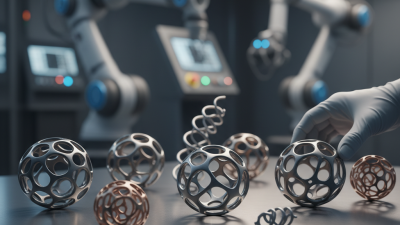
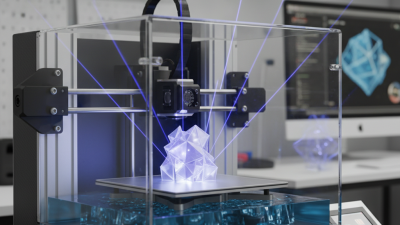
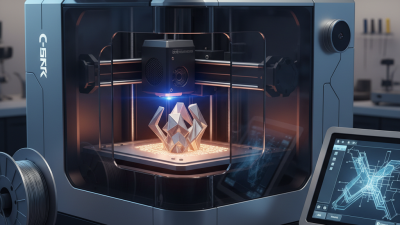
China's 3D metal printing technology is rapidly evolving. This technology enables the creation of intricate components that traditional methods struggle with. Industries such as aerospace, automotive, and healthcare are leading the charge. These sectors are benefiting from faster production times and reduced material waste. In metal printing, precision is key. Manufacturers can produce parts with complex geometries and optimize designs for specific applications.
Tips: Focus on materials. Different metals yield different results. Aluminum, titanium, and stainless steel are popular choices. Their properties vary widely and influence overall performance. Understanding this can enhance your outcomes.
New developments in this field are under constant scrutiny. There are challenges in standards and quality control. However, China is investing heavily in research and development. The goal is to refine processes and ensure reliability. Even small improvements can lead to significant gains in efficiency. Accuracy in printing is crucial as errors can lead to costly repercussions.
Tips: Stay updated on industry standards. Conferences and tech seminars can provide insights. Network with experts to exchange knowledge. This can help identify potential pitfalls in your processes.
China Top 10 Applications of 3D Metal Printed Parts in Modern Industry
| Application Area |
Description |
Industry Impact |
Year of Adoption |
| Aerospace Components |
Lightweight, high-strength parts for aircraft. |
Increased fuel efficiency and reduced emissions. |
2015 |
| Medical Implants |
Customized implants tailored to patient anatomy. |
Improved recovery times and better fit. |
2016 |
| Automotive Parts |
Complex geometries for lightweight vehicles. |
Enhanced performance and fuel efficiency. |
2017 |
| Consumer Electronics |
Enclosures and custom parts for gadgets. |
Faster prototyping and product development. |
2018 |
| Tooling and Fixtures |
Custom tools and fixtures for manufacturing. |
Reduced lead times and costs. |
2019 |
| Energy Sector Components |
Parts for wind turbines and energy systems. |
Enhanced efficiency and sustainability. |
2020 |
| Architecture and Construction |
Structural components for buildings. |
Innovative designs and material usage. |
2021 |
| Robotics |
Custom robotic parts for automation. |
Increased efficiency in production lines. |
2022 |
| Defense Applications |
Parts for military equipment and vehicles. |
Improved performance and durability. |
2023 |
Key Industries Utilizing 3D Metal Printed Parts in China
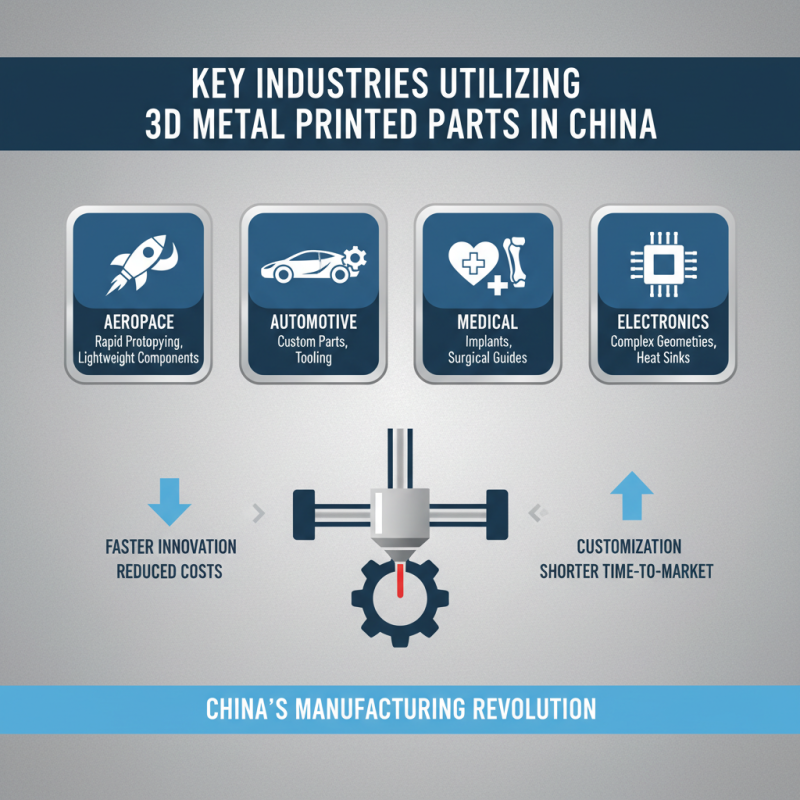
3D metal printing has become a game-changer in numerous industries in China. Aerospace, automotive, medical, and electronics sectors are leading the way in embracing this technology. These industries benefit from rapid prototyping and custom part production. Functional prototypes can be created faster. This not only reduces costs but also shortens time-to-market.
In the aerospace industry, 3D metal printed parts are utilized for lightweight components. This leads to fuel efficiency and improved performance. Similarly, the automotive sector uses these parts for specialized tools and components. In the medical field, customized implants and surgical tools are manufactured using 3D printing. It’s a fascinating blend of technology and precision.
Tips: When considering 3D metal printing, think about material choices. The right material enhances performance. It’s also important to analyze design complexities. Some designs may not be optimal for printing. Additionally, consider post-processing requirements. They can affect both cost and time. Always have a clear understanding of the end application's needs to ensure the best results.
Case Studies of Successful Applications in Aerospace
Aerospace is a crucial sector where 3D metal printing shows impressive advancements. This technology creates lightweight, complex parts, enhancing fuel efficiency and reducing waste. Research by the International Air Transport Association (IATA) indicates that lightweight materials can lower aircraft fuel consumption by up to 15%.
One notable case involves the production of lattice structures for turbine blades. These components benefit from intricate designs unattainable through traditional methods. According to a report from ASTM International, 3D-printed turbo machinery parts can experience a performance increase of around 30%. However, challenges persist in quality assurance and material consistency.
Moreover, maintenance, repair, and overhaul (MRO) practices in aerospace also use 3D printed parts. These components shorten lead times and reduce inventory costs. The use of additive manufacturing for MRO applications can potentially save the industry billions. Despite these advancements, high initial costs and certification hurdles remain significant concerns for wider adoption.
Impact of 3D Metal Printing on the Automotive Sector
The automotive sector is rapidly evolving, with 3D metal printing at the forefront of this transformation. Manufacturers are adopting this technology to create lightweight components. These parts reduce overall vehicle weight, thus improving fuel efficiency. The ability to design complex geometries allows for better performance and durability. Customization becomes feasible, catering to specific automotive needs, enhancing both design and function.
However, challenges remain. Not every component can be produced using 3D metal printing. Some traditional methods still outperform additive manufacturing in certain scenarios. Cost-effectiveness is also a concern for smaller manufacturers. Initial investment in 3D printers can be substantial, which may deter wide adoption.
The integration of 3D metal printing has begun to reshape the supply chain as well. It reduces waste and allows for on-demand production. Yet, companies must consider the learning curve associated with this technology. Training employees is crucial for maximizing capabilities. As the automotive industry continues to embrace this trend, reflection on the balance between innovation and conventional techniques will become essential.
Impact of 3D Metal Printing on the Automotive Sector
Future Trends and Developments in 3D Metal Printing in China
3D metal printing in China is evolving rapidly. The adoption of this technology spans various industries, showcasing its potential. Manufacturing sectors are increasingly leaning on 3D metal printed parts. This shift is fueled by the demand for customized solutions. The ability to create intricate designs is significant. It often leads to enhanced product performance and reduced material waste.
Future trends indicate a stronger focus on automation and artificial intelligence. The integration of these technologies could streamline production processes. Additionally, the development of new metal alloys promises better mechanical properties. However, challenges remain. The complexity of the printing process requires skilled operators. Moreover, ensuring quality control is crucial in meeting industry standards.
Another area of growth lies in sustainable practices. The 3D printing process can minimize energy consumption. It offers opportunities to recycle metal powders. Yet, some companies struggle to implement these eco-friendly measures effectively. Continued research is needed for further advancements. Overall, staying abreast of these trends can provide valuable insights into the future of 3D metal printing in China.