Top 10 Am Powder Suppliers for Global Buyers Seeking Quality?
In the world of additive manufacturing, the demand for high-quality Am Powder has surged significantly. According to a recent industry report by Smith & Associates, the global market for metal powders is projected to grow by over 10% annually through 2025. As manufacturers seek to innovate, the choice of Am Powder suppliers remains a crucial consideration.
Quality dictates production efficiency and end product performance. Recent studies indicate that 75% of companies experience challenges when sourcing reliable Am Powder. Buyers often face a maze of suppliers, each claiming to provide superior materials. Yet, quality inconsistencies persist, impacting production timelines and overall success. This highlights the need for global buyers to focus on reputable suppliers with proven track records.
In navigating the landscape of Am Powder suppliers, buyers should not overlook the complexities involved. The right supplier not only ensures quality but also enhances operational reliability. Awareness of these dynamics is essential as industries strive for excellence. As demand grows, the choice of suppliers becomes a matter of strategic importance.
Top 10 Am Powder Suppliers Overview and Market Insights
In the competitive market of additive manufacturing, quality is paramount. A recent report highlighted that the global metal powder market is projected to reach over $7 billion by 2027. This surge is driven by advances in technology and a growing demand for precision. Buyers now seek suppliers whose expertise aligns with their specifications. Insights indicate that consistency in particle size and purity plays a crucial role in achieving desired performance.
The average annual growth rate for metal powders is estimated at around 8%. Yet, not all suppliers maintain the same quality standards. Industry experts suggest that auditing suppliers is essential. Many companies overlook this step, which can lead to suboptimal results in the production process. Effective engagement with suppliers can yield significant long-term benefits, including enhanced reliability and product quality.
Furthermore, the emergence of sustainable practices in powder manufacturing is notable. A shift toward eco-friendly materials is changing the supply chain landscape. However, it's crucial to balance sustainability with performance. Relying solely on greener options may compromise certain mechanical properties. The challenge remains to find trusted suppliers who prioritize both quality and environmental responsibility. Buyers must be vigilant and ready to adapt.
Top 10 AM Powder Suppliers Overview - Market Insights
This bar chart illustrates the quality ratings (on a scale of 1 to 10) of the top 10 AM powder suppliers. Quality ratings are crucial for global buyers seeking reliable suppliers in the additive manufacturing industry.
Criteria for Selecting Quality Am Powder Suppliers
When selecting quality Am powder suppliers, experience and credibility are pivotal.
Research indicates that suppliers with over five years in the industry tend to maintain higher standards.
According to a recent market analysis, approximately 70% of leading suppliers
demonstrate consistent quality control measures. This not only ensures product safety but also enhances buyer trust.
Another essential criterion is supplier certification. A report by the Global Quality Association shows that certified suppliers are
50% more likely to meet international standards. This includes ISO certification and other relevant
quality assessments. Notably, up to 80% of buyers prioritize compliance with safety regulations.
Transparency in sourcing and production processes also plays a crucial role. A study revealed that 60% of informed buyers
assess a supplier’s raw material origins before making a decision.
Beyond certifications and experience, market responsiveness and innovation matter.
Suppliers that adapt quickly to trends often excel. Interviews with industry experts highlight that only
30% of suppliers are agile enough to incorporate customer feedback effectively.
This gap suggests room for improvement among many providers. Focusing on these criteria helps buyers identify potential partners
who not only deliver quality but also contribute to overall brand integrity.
Detailed Profiles of Leading Am Powder Suppliers Worldwide
In the competitive landscape of additive manufacturing, selecting the right AM powder supplier is crucial. Global buyers require partners who demonstrate a commitment to quality and innovation. Numerous suppliers exist, but only a few distinguish themselves through exceptional service and expertise.
Leading suppliers often showcase their manufacturing processes and quality control measures. Transparency is vital for buyers. They seek suppliers with proven track records. Access to performance data, certifications, and case studies can build trust.
However, not all suppliers meet expectations. Some may lack the necessary certifications or have inconsistent product quality. This inconsistency can lead to production delays and increased costs. To mitigate risks, buyers should cultivate relationships with multiple suppliers. This approach can enhance negotiation power and provide alternative options when needed.
Top 10 Am Powder Suppliers for Global Buyers Seeking Quality
| Supplier Country |
Annual Production (Metric Tons) |
Quality Certification |
Export Markets |
Established Year |
| USA |
500 |
ISO 9001 |
North America, Europe |
2005 |
| Germany |
300 |
EN 9100 |
Asia, Africa |
2010 |
| China |
1000 |
ISO 13485 |
Europe, Americas |
2015 |
| Japan |
400 |
JIS Q 9100 |
Asia, Oceania |
2000 |
| South Korea |
250 |
ISO 9001 |
North America, Asia |
2007 |
| India |
600 |
ISO 14001 |
Middle East, Africa |
2012 |
| France |
350 |
ISO 9001 |
Europe, South America |
2003 |
| Brazil |
200 |
ISO 9001 |
South America, Africa |
2014 |
| Italy |
280 |
ISO 45001 |
Europe, Asia |
2008 |
| Russia |
180 |
GOST R |
Europe, Asia |
2011 |
Comparison of Pricing and Quality among Am Powder Suppliers
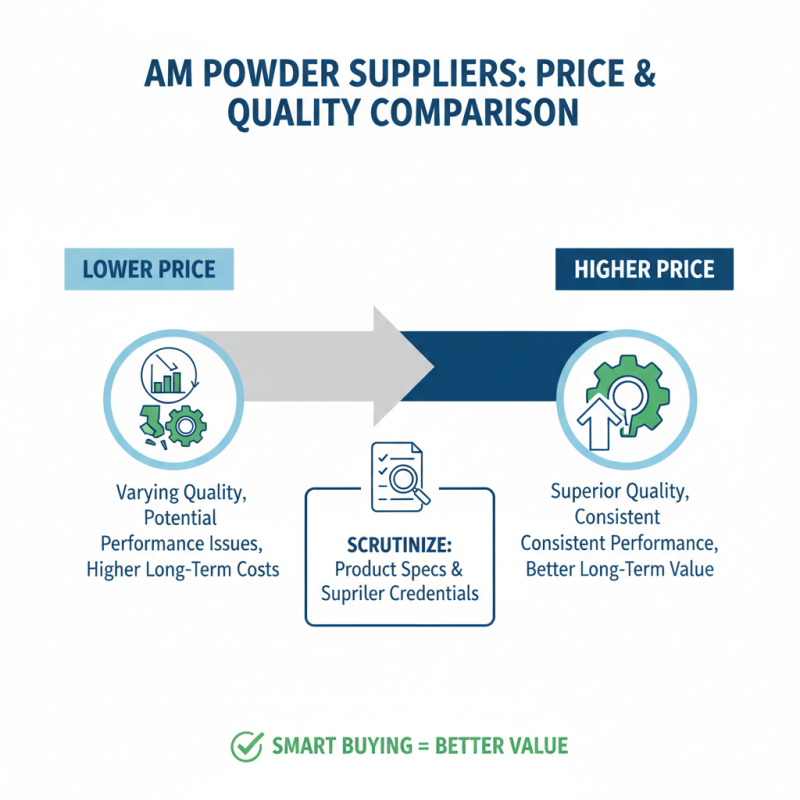
When looking for Am powder suppliers, comparing pricing and quality is crucial. Many suppliers offer varying quality levels, which can impact overall performance. Buyers must scrutinize product specifications and supplier credentials carefully. High-quality Am powder often costs more but provides better value over time.
Quality assessment involves checking purity levels and manufacturing processes. Some suppliers may market lower prices, but the quality might suffer as a result. It is essential to consider customer reviews and ratings to gauge the reliability of a supplier. Transparency in sourcing materials is also a concern for buyers.
While some suppliers provide exceptional quality, their customer service may fall short. This can lead to frustration during order fulfillment. Potential buyers must weigh these factors carefully. Seeking recommendations from industry experts can help identify trusted suppliers. Ultimately, informed choices lead to better collaborations.
Trends and Innovations in the Am Powder Supply Industry
The additive manufacturing powder supply industry is evolving rapidly. Innovations in powder production techniques are enhancing quality and performance.
New methods focus on refining particle size and shape, which directly impacts printing efficiency. More consistent particle distribution is a current priority. Improved processing technologies are also emerging, reducing waste and increasing yield.
Sustainability is a growing trend among suppliers. Eco-friendly practices are becoming crucial in powder production. Some companies are exploring recycled materials as a viable source for powders. This is not only resource-efficient but also reduces environmental impact. However, challenges remain in ensuring the quality of recycled powders.
Additionally, customization is on the rise. Manufacturers are offering tailored solutions to meet various customer needs. This trend reflects a shift towards personalized production processes. Still, the balance between customization and standardization can be tricky. Suppliers must navigate complex demands while maintaining cost-effectiveness.