How to Select the Best 3D Metal Powder for Your Printing Projects?
The selection of the right 3D metal powder can significantly impact print quality. Recent industry reports indicate that 3D metal printing is expected to grow by 25% annually. This growth underlines the importance of choosing suitable materials for effective project outcomes.
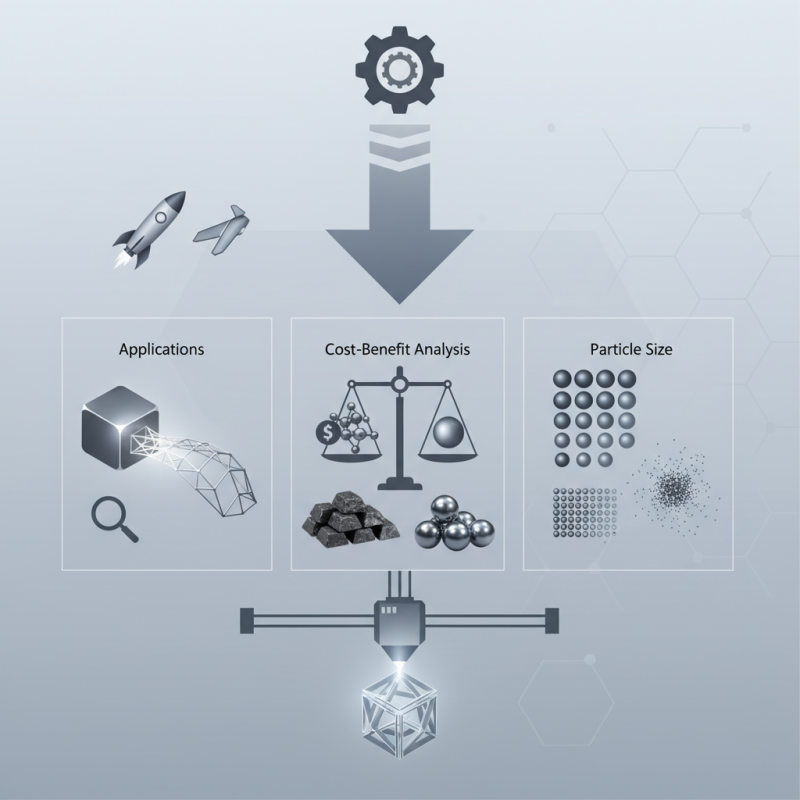
Different applications require different types of 3D metal powders. For example, titanium alloys are popular for aerospace applications due to their high strength-to-weight ratio. However, they can be more expensive and harder to work with compared to stainless steel powders. As a result, cost-benefit analysis should be a key part of your selection process.
Another depth to consider is the powder's particle size. According to a study by the Additive Manufacturing Research Group, fine powders offer better flow and packing density. However, they can lead to higher rates of defects. As you make your decision, reflect on your specific project requirements and be aware of these nuanced challenges in material selection.
Understanding the Various Types of 3D Metal Powders Available
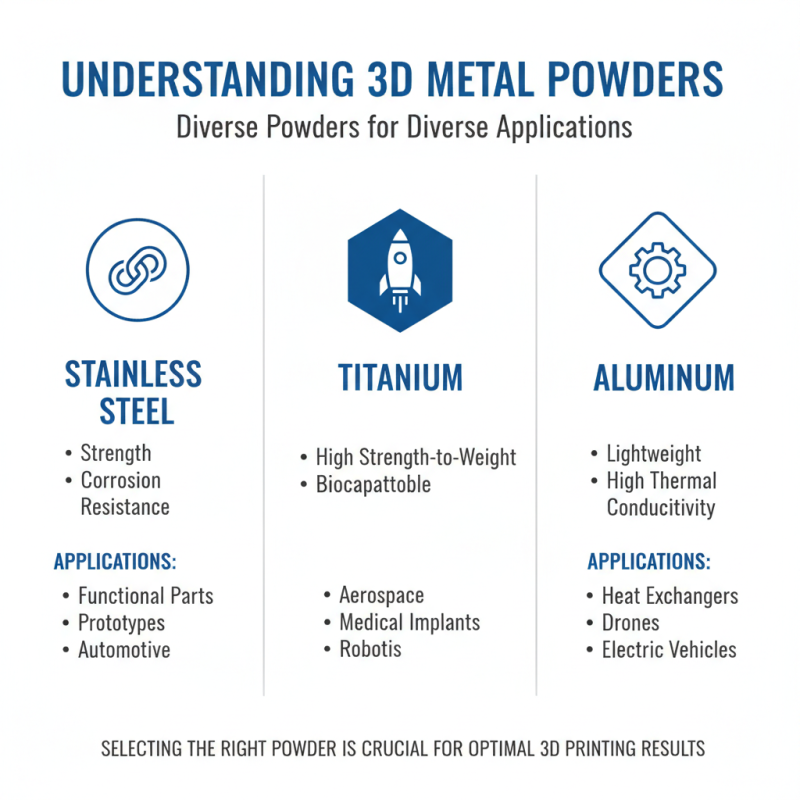
When selecting metal powders for 3D printing, diversity is key. Different applications require specific types of powders. Stainless steel, for instance, is known for its strength and corrosion resistance. It’s suitable for both functional parts and prototypes. Titanium powder, on the other hand, offers excellent strength-to-weight ratios. This makes it ideal for aerospace applications.
Aluminum powders are lightweight and easy to work with, but they can be less durable under certain conditions. Consider your project requirements carefully. Reflect on the end-use of the printed parts. This understanding will guide you in choosing the right powder.
There are also specialized alloys tailored for unique tasks. These often perform better but can be more expensive. Not all powders behave similarly during the printing process. Some might require specific settings or equipment adjustments. Testing different powders can reveal surprising results. Trial and error may help, but it can lead to wasted materials. It’s important to be aware of this as you make your selection.
Key Properties to Consider When Selecting Metal Powders for Printing
When selecting metal powders for 3D printing, several key properties come into play. Particle size is crucial. The average particle size can significantly affect the flowability of the powder. A 2022 report by the Additive Manufacturing Industry showed that powders with sizes between 10 and 50 microns often yield better results. Larger particles may lead to uneven layer formation and increased porosity.
Another important factor is chemical composition. Variability in composition can result in differences in strength and durability. The same report indicated that specific metal blends, such as titanium alloys, can enhance tensile strength by up to 20%. This property is critical for aerospace and automotive applications where failure is not an option.
You should also consider the morphology of the powder. Spherical powders tend to flow more easily during the printing process. However, irregular shapes may sometimes provide better mechanical interlocking in final parts. The trade-off between flowability and interlocking strength requires careful evaluation. Often, the ideal blend may not be straightforward, calling for tests and experiments. Remember, every selection has its advantages and drawbacks. Each project may demand a different focus, highlighting the complexity of material selection in 3D printing.
How to Select the Best 3D Metal Powder for Your Printing Projects? - Key Properties to Consider When Selecting Metal Powders for Printing
| Property |
Description |
Importance |
| Particle Size |
Refers to the diameter of the metal powder particles. |
Influences the flowability and packing density in the printing process. |
| Morphology |
The shape of the powder particles (e.g., spherical, irregular). |
Affects the packing efficiency and the mechanical properties of printed parts. |
| Chemical Composition |
The elements that compose the metal powder. |
Determines the material properties like strength and corrosion resistance. |
| Density |
The mass per unit volume of the powder. |
Impacts the amount of material used and the final part weight. |
| Flowability |
The ability of powder to move freely. |
Crucial for achieving consistent layer deposition during printing. |
| Oxygen Content |
The percentage of oxygen present in the metal powder. |
Affects the material's properties, especially for reactive metals. |
Evaluating Powder Size Distribution for Optimal Print Quality
The size distribution of metal powder plays a crucial role in 3D printing quality. Smaller particles can lead to better flowability and packing density. Research suggests that powders with a D10–D90 range of 10 to 45 micrometers yield the best results. This distribution can enhance layer adhesion and reduce porosity.
In contrast, larger particles can cause issues. They may lead to weak bonds between layers, resulting in lower mechanical properties. A 2021 report indicated that prints made with powders outside the optimal size range experienced up to 20% lower tensile strength. However, achieving a perfect balance in powder size is a challenge. Imbalanced distributions can lead to inconsistent print quality.
It’s essential to monitor the particle size regularly. Many rely on sieving techniques or laser diffraction methods. Yet, these techniques may not capture the entire picture. They may overlook agglomerated particles present in the mix. This oversight can lead to poorer quality prints and dissatisfaction with end products. Evaluating the powder not just during selection, but throughout the printing process can significantly enhance overall performance.
Assessing the Impact of Powder Composition on Finished Part Performance
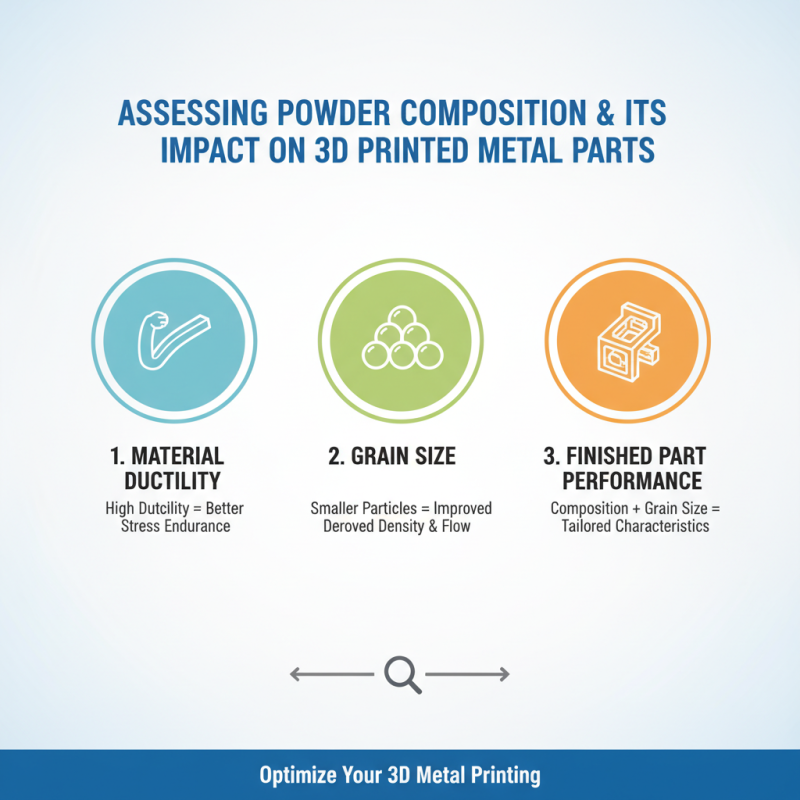
When selecting the right 3D metal powder, the composition is crucial. Different materials yield varied characteristics in the final product. For instance, powders with high ductility can result in parts that endure stress better. Yet, this isn't the only factor to consider. The grain size of the powder also influences how the metal flows during printing. Smaller particles tend to pack better, improving density.
**Tip:** Always examine the chemical makeup of the powder. Elements like cobalt and nickel can enhance strength. However, they can also bring challenges during the printing process. Balancing strength and printability can be tricky.
The surface finish of the printed parts directly correlates with the powder characteristics. An uneven particle distribution may lead to compromised layers. This could cause weak points in the final part. Testing different powders might reveal surprising results.
**Tip:** Conduct small-scale tests to understand how different compositions behave. It offers insights into performance you might not expect. Keep track of outcomes for future reference. This iterative approach is vital for refining your selections.
Industry Standards and Certifications for Quality Metal Powders in 3D Printing
When selecting 3D metal powders, quality is paramount. Adhering to industry standards and certifications ensures the materials used are suitable for your projects. For instance, ISO 9001 certification is an indicator of a quality management system that meets customer and regulatory requirements. In 2021, reports indicated that about 78% of companies in the 3D printing sector prioritized certified powders for safety and performance.
Often overlooked, the ASTM F3055 specification provides guidelines for metal powders in additive manufacturing. It evaluates factors such as particle size, shape, and flowability. These characteristics directly impact print quality. Interestingly, some manufacturers may skip these tests, causing inconsistencies in their products. Always scrutinize your supplier’s certifications and test results to avoid issues.
Tips: Always request certificates of analysis for the metal powders. This document confirms that the powder meets specified properties. Testing powders before large-scale use can save you from potential failures. Stay informed about the latest standards, since the field evolves quickly. Remember, not every certified powder guarantees exceptional performance.
3D Metal Powder Selection Criteria