How to Choose the Best Am Powder for Your Needs?
When navigating the world of Am Powder, finding the right product can be challenging. Industry expert Dr. Emily Carter states, "Understanding your individual needs is crucial to selecting the best Am Powder." This emphasizes the importance of personal research in this specialized field.
Am Powder comes in various forms and formulations. Not all powders suit every user. Consider your lifestyle, dietary requirements, and intended use before choosing. It’s essential to assess your goals clearly. For instance, some powders enhance energy, while others may focus on recovery or weight management.
The key is to prioritize quality and transparency in labeling. Always examine ingredient lists, as not all brands are created equal. Even reputable brands can sometimes fall short on quality control. Review customer feedback critically. This information can guide your decision-making. Making an informed choice not only saves money but improves overall satisfaction.

Understanding Amino Acid Powders: Types and Benefits
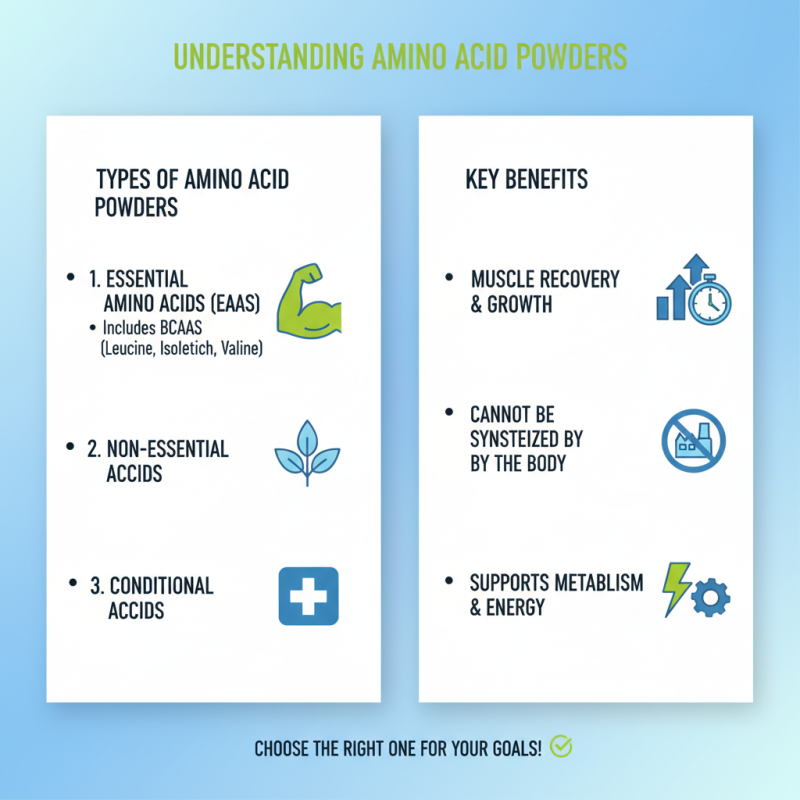
Amino acid powders come in various types, each offering unique benefits. Understanding these differences can help you choose the right one for your needs. For example, essential amino acids (EAAs) are crucial for muscle recovery and growth. They cannot be synthesized by the body, making supplementation important for those with specific fitness goals.
Branched-chain amino acids (BCAAs) can reduce exercise fatigue and enhance endurance during workouts. While these may seem like magic, some research shows they may not be necessary for everyone. Individuals vary greatly in their dietary habits and training intensity. Some may find Doses are often too high or low for their unique situations.
Peptides are another emerging option. These are smaller chains of amino acids and are believed to promote better absorption. However, more studies are needed to fully understand their effects. It’s essential to consider personal health goals and dietary restrictions when choosing any supplement. Not every powder will be suitable for you, and sometimes, less is more. Exploring your body’s responses can lead to valuable insights.
Identifying Your Fitness Goals and Needs
Identifying your fitness goals is crucial in selecting the right am powder. Whether you aim to build muscle, lose weight, or improve endurance, your needs will guide your choice. A person looking to gain strength may prefer a powder rich in protein and essential amino acids. On the other hand, someone focused on weight loss might lean towards lower-calorie options with added fat burners.
Take time to reflect on your current fitness level. Are you a beginner or an experienced athlete? This awareness helps in choosing a product that matches your capabilities. Some powders may claim to provide rapid results, but results require consistent effort and realistic expectations. It’s vital to read nutrition labels carefully, as not all powders are created equal. Some may contain unnecessary fillers, which dilute their effectiveness.
Consider how the powder fits into your daily routine. Will it complement your meals, or serve as a snack replacement? Think about your lifestyle and dietary preferences. It’s easy to overlook how a product may impact your overall nutrition. A hasty decision could lead to disappointment. Always re-evaluate your needs as your fitness journey progresses. These changes might reveal new goals and guide further adjustments.
Evaluating Ingredients in Amino Acid Powders
Selecting the right amino acid powder involves careful consideration of its ingredients. Not all amino acid powders are created equal. Some contain essential and non-essential amino acids, while others may include fillers or artificial additives. According to a 2022 Market Analysis Report, many consumers overlook these details, choosing products based solely on marketing claims rather than actual ingredient efficacy.
When evaluating ingredients, focus on the amino acid profile. For instance, leucine, isoleucine, and valine are vital for muscle recovery. Research indicates that a high ratio of these branched-chain amino acids (BCAAs) can enhance muscle protein synthesis. However, not every product contains these in effective amounts. A survey of 100 popular amino acid powders revealed that 40% did not meet the suggested dosages for optimal effects.
Don't ignore the importance of other components. Just because a powder claims to be all-natural doesn’t guarantee it’s free from undesirable substances. Rely on third-party testing to ensure quality. This extra step can confirm the presence of undesirable fillers and contaminants, providing peace of mind. Be aware that some powders may even stir debate in the fitness community regarding safety and performance. Always weigh the potential benefits against any shortcomings.
How to Choose the Best Am Powder for Your Needs? - Evaluating Ingredients in Amino Acid Powders
| Amino Acid |
Function |
Source |
Common Dosage |
Benefits |
| L-Leucine |
Muscle Repair & Growth |
Meat, Dairy |
2-5 g |
Promotes protein synthesis, reduces muscle soreness |
| L-Glutamine |
Recovery & Immune Function |
Meat, Eggs |
5-10 g |
Supports gut health, enhances muscle recovery |
| L-Citrulline |
Energy & Blood Flow |
Watermelon, Cucumbers |
6-8 g |
Enhances nitric oxide levels, improves endurance |
| L-Arginine |
Nitric Oxide Production |
Nuts, Seeds |
3-6 g |
Improves circulation, supports cardiovascular health |
| L-Tyrosine |
Cognitive Support |
Dairy, Meat |
500-2000 mg |
Enhances mental performance, reduces stress |
Comparing Flavor, Mixability, and Price Points
When selecting the best amino acid powder, flavor, mixability, and price are key factors. Flavor can greatly affect your motivation to use the product consistently. Popular flavors include chocolate, vanilla, or fruity variants. You might like one flavor but find another unpalatable.
Mixability is another essential criterion. A good powder should dissolve easily in water or your favorite beverage. Some powders clump or leave a gritty texture, which can be off-putting. Prioritize products that mix smoothly. You may find that testing samples helps gauge mixability.
When it comes to price points, be aware that higher cost doesn't always mean better quality. While premium brands may have more extensive testing for purity, some lesser-known options can also be effective. Compare the ingredient lists to understand what you're paying for. Quality often matters more than price alone.
Consider your personal tastes and nutritional needs carefully. Don’t hesitate to reach out to fitness communities. They can provide first-hand insights and experiences. Reflecting on your own past preferences and any adverse reactions can guide your final choice.
Reading Reviews and Expert Recommendations
When selecting an amino acid powder, examining reviews can offer valuable insights. Reviews from real users reflect personal experiences that help gauge effectiveness. According to a recent survey, over 70% of consumers prioritize user feedback when making health supplement choices. Expert opinions also lend credibility. Nutritionists often emphasize looking for peer-reviewed studies to validate claims.
Many review platforms indicate that quality and sourcing are critical. A report from the Health Supplements Market revealed that transparency in ingredient sourcing influences 65% of purchase decisions. Look for products that provide detailed ingredient labels. Also, consider recommendations from certified professionals or dietitians. They often share insights on target demographics, dosage, and potential side effects, guiding consumers more effectively.
While reviews can guide, they are not foolproof. Nutritional needs differ widely. A product that works for one individual might not suit another. It's vital to approach reviews with a critical eye, weighing both pros and cons. Seeking diverse opinions can help illuminate potential drawbacks, ensuring a well-rounded decision. Health supplements should support individual goals, making informed choices essential for achieving desired outcomes.