How to Choose the Best 3D Laser Printer for Your Needs?
In recent years, the demand for 3D laser printers has surged. A report from Smithers Pira indicates that the global 3D printing market will reach $35.6 billion by 2024. This impressive growth highlights the need for businesses and enthusiasts to make informed choices when selecting a 3D laser printer.
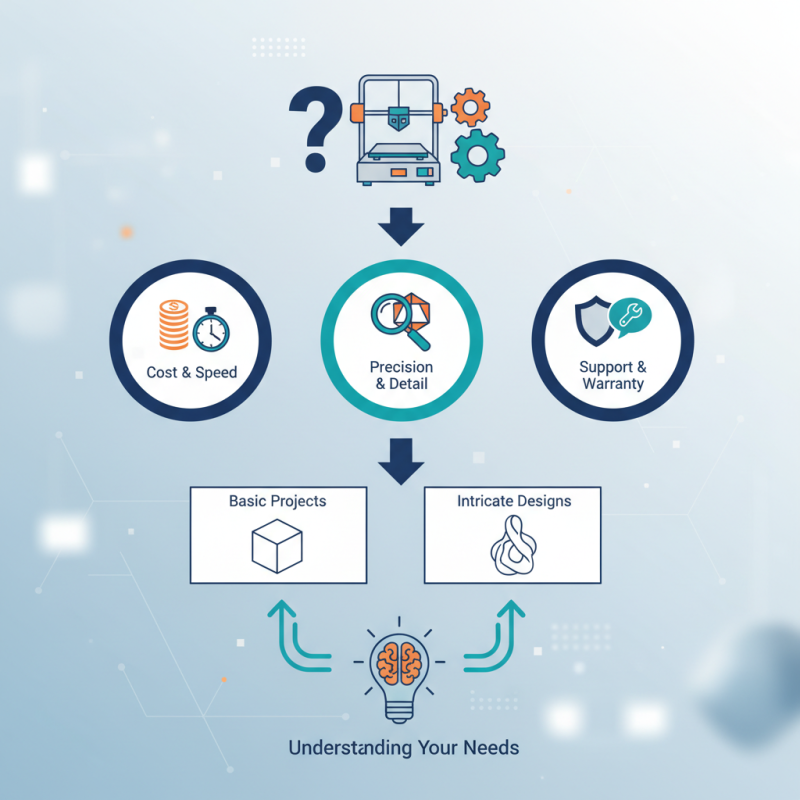
Selecting the right 3D laser printer is crucial. Different models cater to various needs and industries. Factors like cost, print speed, and precision should be carefully considered. For instance, a high-resolution printer is essential for intricate designs, while a more affordable model may suffice for basic projects. However, not every option is suitable for every user.
Another aspect to reflect on is the printer's long-term support and resources for users. A good warranty and customer service can make a significant difference. People often overlook these factors in their decision-making process. Ultimately, understanding your specific requirements will lead to a more satisfying purchase. Selecting a 3D laser printer should be a blend of thorough research and personal needs.
Key Factors to Consider When Choosing a 3D Laser Printer
When choosing a 3D laser printer, consider several key factors. One of the most important is the printing technology used. Different printers employ various techniques, which can affect the final product. For example, some printers use resin that cures with lasers, while others might use powder bed fusion. Research the technology that best suits your projects.
Build size matters as well. If you plan to create larger models, ensure your printer has the capacity. Some printers have limited build volumes, restricting your designs. Examine your typical project dimensions to avoid frustration later.
Tips: Think about your workspace. Some printers can be quite large and require significant ventilation. Take note of noise levels during operation, too. Also, check for ease of use. If the printer has a steep learning curve, you might want to rethink your choice.
Material compatibility cannot be overlooked. Different printers work with various materials. This can impact your design and production choices. Ensure the printer you choose can handle the materials you plan to use. It’s essential to reflect on these factors before making a decision.
Understanding Different 3D Printing Technologies and Their Applications
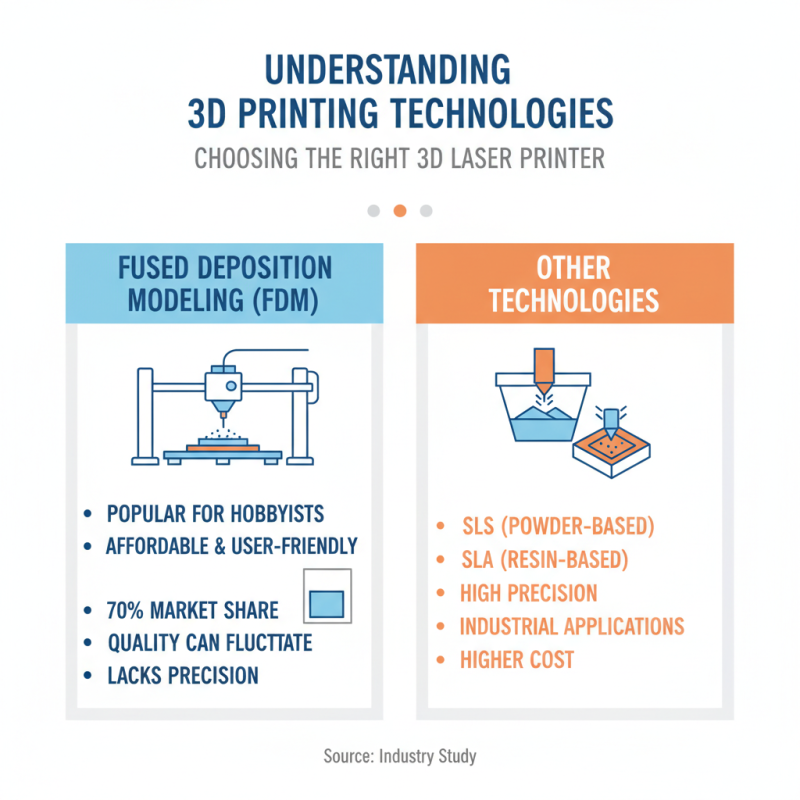
When choosing a 3D laser printer, understanding printing technologies is crucial. Fused Deposition Modeling (FDM) is popular for hobbyists. It’s affordable and user-friendly. However, it lacks the precision of other methods. A study showed FDM printers account for 70% of the market. Yet, the quality can fluctuate significantly.
Stereolithography (SLA) offers higher precision. It uses a laser to cure resin, producing intricate details. SLA is ideal for prototypes in industries like dental and jewelry. Industry data suggests SLA’s accuracy is two to three times better than FDM. But it has downsides, like higher material costs and a steeper learning curve.
Selective Laser Sintering (SLS) is another option. It fuses powdered materials layer by layer. This method allows for complex geometries. Reports indicate SLS has become more popular in industrial applications. Still, it’s less accessible for beginners due to the price. Understanding these trade-offs is essential when making a choice. Select a technology that aligns with your specific needs and budget.
Evaluating Print Quality: Resolution, Speed, and Layer Thickness
When choosing a 3D laser printer, evaluating print quality is vital. Resolution affects the clarity of the printed model. A printer with higher resolution can produce finer details. Most professional-grade printers offer resolutions from 50 to 300 microns. However, the trade-off is often slower print speeds. For instance, a printer working at 100 microns typically takes longer than one at 200 microns.
Speed is another essential factor. Print speed determines how quickly a model can be completed. Some models operate at a pace of 30mm/hour, while others may exceed 200mm/hour. Balancing speed and layer thickness is complex. Lower layer thickness can ensure better quality but at the expense of time. Users should consider what is more important for their projects: rapid prototypes or detailed prints.
Layer thickness significantly influences the quality of finished products. Thinner layers result in smoother surfaces. However, achieving ideal thickness can necessitate adjustments in settings. Experimentation is key here. Feedback from designs often highlights the need for adjustments, especially when aiming for quality in intricate models. It's crucial to assess these factors based on individual requirements. The ideal setup varies widely among users.
Assessing Material Compatibility and Availability for Your Projects
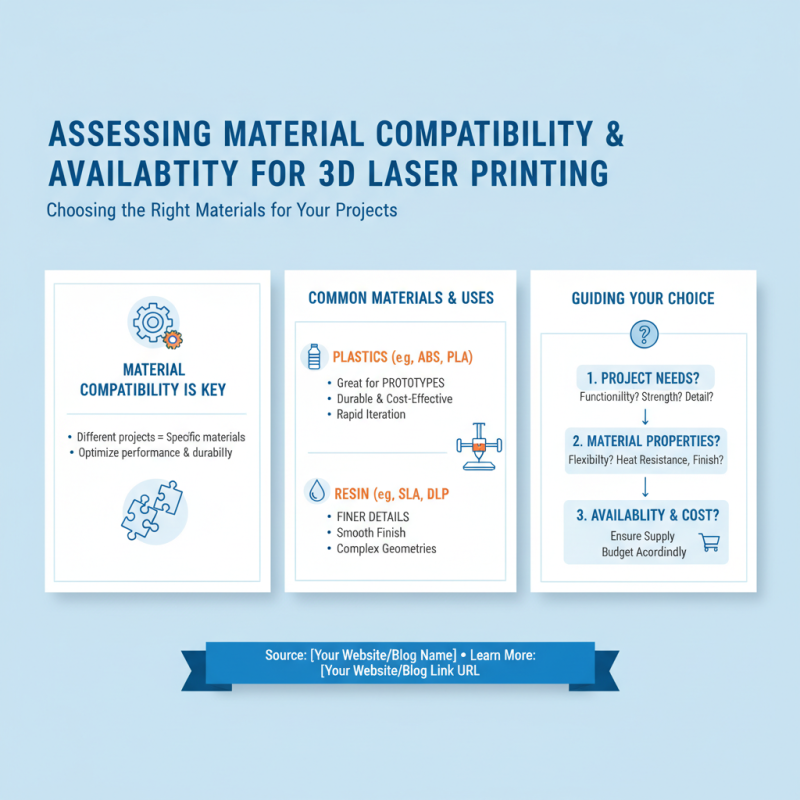
When choosing a 3D laser printer, material compatibility is key. Different projects work better with specific materials. For example, certain plastics are great for prototypes. Others, like resin, provide finer details but may be more challenging to work with. Understanding your project needs will guide your material choice.
Tips: Always check the printer’s specifications. Look for compatible filament or resin types. Not all printers handle every material effectively. Experimenting can be rewarding but also a source of frustration. Some materials might produce unwanted results. Test a small batch before committing to a large print.
Also, consider the availability of materials. Some options may be plentiful, while others are harder to find. Local shops can quickly stock popular filaments. Yet, niche materials might require online orders with longer shipping times. You might feel rushed to start a project, but ensure materials are ready. This can save time and stress later on.
Cost Analysis: Initial Investment, Maintenance, and Operational Costs
When considering a 3D laser printer, cost plays a critical role. The initial investment can vary significantly. Industry reports suggest that entry-level models start around $1,000. However, high-quality, professional-grade printers can exceed $10,000. This price difference reflects technology and capabilities. Be sure to think long-term.
Maintenance is another crucial factor. Regular upkeep can add to your expenses. For instance, annual maintenance might range from $200 to $2,000 depending on the model and usage. Moreover, repairs can unexpectedly escalate costs. In some cases, you might face downtime, impacting productivity.
Operational costs are often overlooked. Materials such as resin or filament can become surprisingly pricey. Estimates indicate that ongoing material costs might reach $50 per week for casual users. For heavy users, this number can skyrocket. Understanding these factors is essential for budget planning. Many users find themselves revisiting their choices down the line. A hasty decision can lead to financial strain. Balancing upfront costs with long-term expenses is vital for sustainable use.