2026 How to Choose the Right Metal 3D Printing Materials for Your Projects?
Choosing the right metal 3D printing materials is crucial for any project. The choice can determine the final product's strength, durability, and functionality. Every type of metal has unique properties that affect the outcome. For instance, stainless steel offers corrosion resistance, while titanium is lightweight and strong. Understanding these differences is essential.
It’s not just a straightforward decision; factors like cost and availability also play a role. Some metals may be ideal in theory but impractical in practice. So, careful consideration is necessary. Trial and error may reveal unexpected challenges. Sometimes, the first choice doesn't yield the best results. Analyzing failures can lead to better decisions in future projects.
Each project demands a tailored approach. The requirements of a medical component differ from those of an aerospace part. It is vital to align the project goals with the right metal 3D printing materials. This thought process often uncovers dimensions that might have been overlooked initially. Emphasizing the specific needs can lead to innovative solutions.

Understanding Different Types of Metal 3D Printing Materials
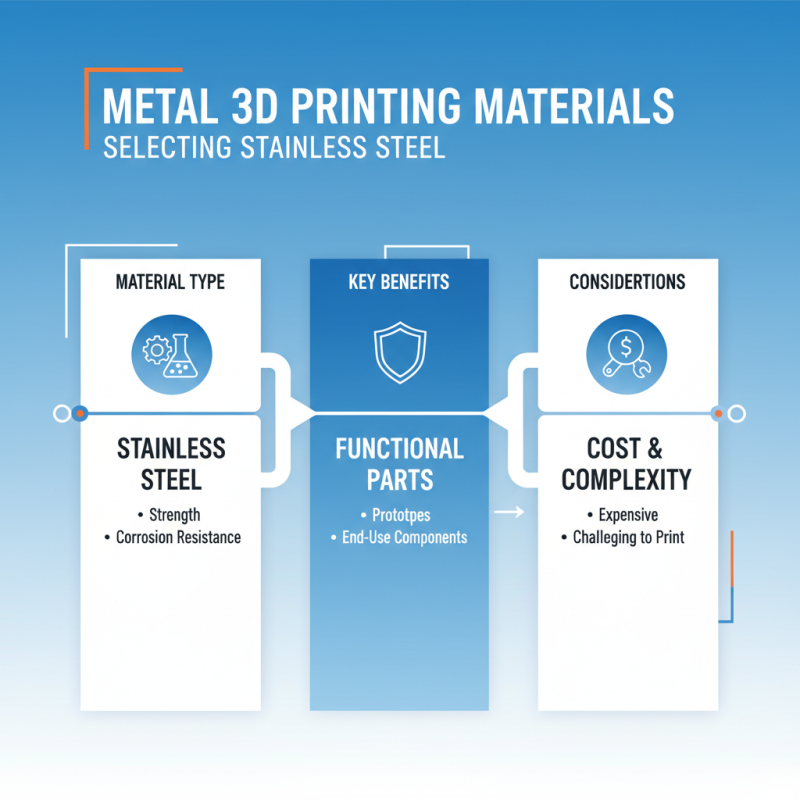
When selecting metal 3D printing materials, understanding their unique properties is crucial. There are several types to consider. Stainless steel is popular for its strength and corrosion resistance. It's an excellent choice for functional prototypes and end-use parts. However, it can be expensive and more challenging to print correctly.
Aluminum is another common material. It is lightweight and offers good thermal conductivity. This makes it great for aerospace and automotive applications. But be aware that it may not have the same durability as stainless steel. Titanium, on the other hand, is known for its high strength-to-weight ratio. It's often used in medical and aerospace fields. Yet, titanium powder can be less accessible and demanding to handle.
Each material presents its challenges. It is essential to test and experiment to find the best fit for your specific projects. Sometimes, the ideal choice is not immediately clear, and a few iterations may be needed. Don't be discouraged by initial failures; they can lead to better insights.
Key Properties to Consider in Metal 3D Printing Materials
When selecting metal 3D printing materials, key properties play a critical role. One essential property is tensile strength. It measures a material's ability to withstand tension. Stronger materials result in more durable prints. However, high-strength alloys can be challenging to work with. They may require advanced processing techniques.
Another vital factor is thermal conductivity. Materials with high thermal conductivity dissipate heat quickly. This property is crucial for components exposed to high temperatures. Yet, this can lead to warping in certain designs. Understanding how a material reacts to heat is essential for successful prints.
Corrosion resistance is also important. It determines how well materials withstand environmental factors. For projects that expose parts to harsh conditions, this property is essential. But remember, not all corrosion-resistant materials are suitable for every application. Balancing strength, heat resistance, and durability requires careful consideration. Each project demands a unique approach to material selection.
Evaluating Cost vs. Performance in Material Selection
When selecting metal 3D printing materials for your projects, cost and performance are critical factors. Different materials come with varying prices and properties. For instance, titanium might be costly, but it offers excellent strength and lightweight characteristics. Conversely, some less expensive materials may not perform as well in demanding applications, leading to potential failures.
Evaluate your project's requirements carefully. Are you focusing on durability or weight? This will guide your choice. Sometimes, a cheaper material can save money upfront but might lead to higher costs in the long run due to replacements or repairs. Testing small samples can be helpful. It allows you to assess material behavior without committing to larger, pricey quantities.
Tip: Keep an eye on market trends. Prices can fluctuate, and a material that was once expensive might become more affordable. Always check multiple suppliers. Negotiating prices could yield better deals, especially for bulk orders. Lastly, don’t hesitate to consult experts. They can offer insights that you might overlook. Balancing cost and performance requires thoughtful consideration and sometimes a willingness to experiment with different options.
Application-Based Material Recommendations for Various Projects
Choosing the right metal 3D printing materials can significantly impact project success. Different applications demand specific characteristics from materials. For instance, aerospace projects require lightweight alloys with high strength-to-weight ratios. According to a 2022 industry report, titanium alloys are preferred in aerospace due to their excellent mechanical properties and corrosion resistance.
In contrast, applications in the automotive sector may benefit from using aluminum, known for its excellent thermal conductivity and lightweight nature. A recent study indicated that aluminum parts could reduce vehicle weight by up to 30%. This reduction contributes to better fuel efficiency and lower emissions, crucial in today’s automotive market.
However, not every choice is flawless. Steel, while strong and durable, can be heavy and may not suit every application. Decisions made without careful consideration may lead to increased costs or project delays. Selecting a metal for 3D printing should involve evaluating the project requirements, budget constraints, and the intended application’s environment. Balancing these elements is vital for achieving optimal results.
2026: How to Choose the Right Metal 3D Printing Materials for Your Projects
Future Trends in Metal 3D Printing Materials and Technologies
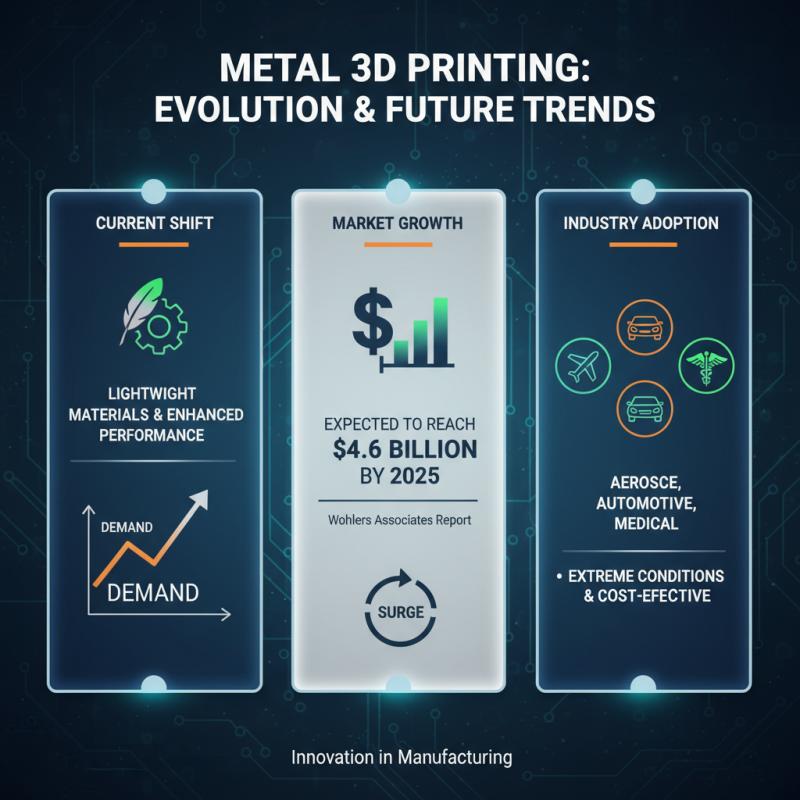
Metal 3D printing is evolving rapidly. Current trends indicate a shift towards lightweight materials and enhanced performance. According to a recent report by the Wohlers Associates, the market for metal 3D printing materials is expected to reach $4.6 billion by 2025. This surge reflects a growing demand across aerospace, automotive, and medical industries. Designers and engineers are looking for materials that can withstand extreme conditions yet remain cost-effective.
Among the most promising developments are titanium alloys and stainless steels. These materials show excellent mechanical properties. However, they also present challenges. The printing process can lead to warping and defects. A detailed study by the Additive Manufacturer Green Trade Association highlights how skilled operators can mitigate these issues but stresses the need for further research.
Looking toward the future, we see innovations like metal matrix composites gaining traction. They combine metals with other materials to improve strength and reduce weight. This opens a pathway for unique applications in various sectors. However, companies must remain cautious. The balance between performance and production cost remains delicate. The decision to opt for new materials must be made with care, as is evident from ongoing experiments in the field. Makers continue to explore what works best by pushing boundaries and learning from failures.