How to Choose the Best 3D Laser Printer for Your Needs?
The market for 3D laser printers is rapidly growing. According to a recent industry report, the global 3D printing market is expected to reach $34.8 billion by 2024. This substantial growth highlights the increasing demand for advanced printing technologies. However, selecting the right 3D laser printer can overwhelm many potential buyers.
When choosing a 3D laser printer, consider your specific needs. Different printers cater to various applications, from prototyping to manufacturing. A fundamental requirement might be the printer's resolution and speed. Some models excel in speed but sacrifice quality, while others offer high-resolution prints but at a slower pace.
It's essential to evaluate your budget as well. Some high-end 3D laser printers can exceed $10,000, while others are more affordable yet may lack specific features. Buyer experiences illustrate that not all models perform as expected. User reviews often reveal shortcomings that professional reports may overlook. Thus, taking time to assess different options is crucial for making the best choice.
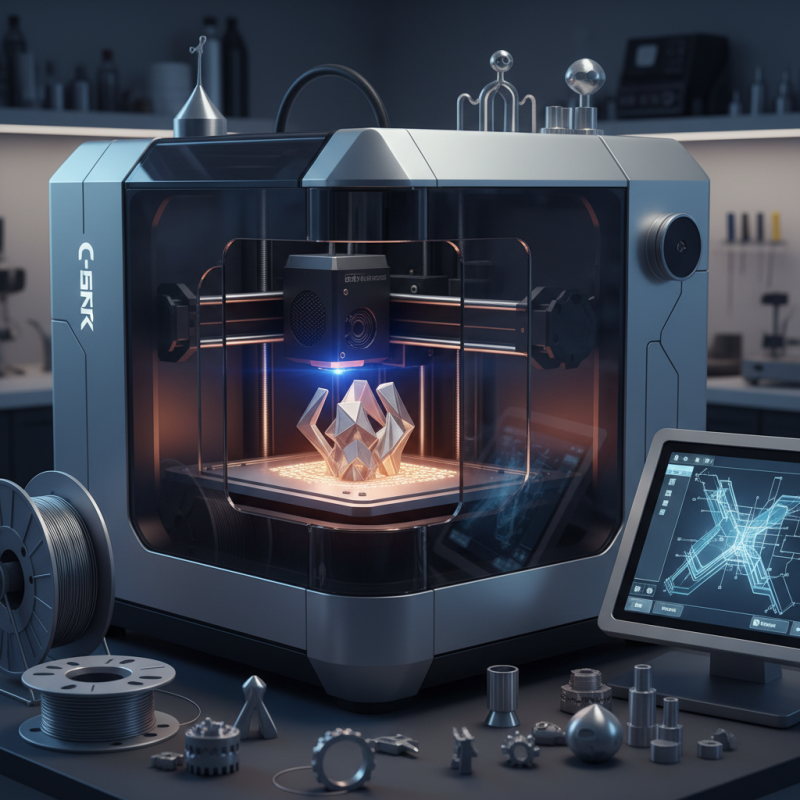
Understanding 3D Laser Printing Technology and Its Applications
3D laser printing technology has transformed industries by providing precise and detailed models. This method uses lasers to fuse materials, creating intricate designs layer by layer. Research indicates the global 3D printing market is expected to reach $35.6 billion by 2026, highlighting its growing significance in various sectors.
When considering applications, the advantages are clear. 3D laser printing is prevalent in aerospace, healthcare, and automotive sectors. For example, customized prosthetics can be produced with incredible accuracy. Some reports suggest that 40% of manufacturers now utilize 3D printing to enhance production efficiency.
Tips: Consider the type of materials you wish to use. Different printers support different materials. Research the compatibility of your chosen printer with those materials. Be mindful of the learning curve; mastering 3D design software can take time. Experimentation is key to achieving desired outcomes. Realize that not every print will turn out perfect. Every failure provides an opportunity to learn and improve.
Key Factors to Consider When Choosing a 3D Laser Printer
When choosing a 3D laser printer, the type of materials it can handle is crucial. Different printers support various filaments, like PLA, ABS, or specialty filaments. Each material has its unique properties. For instance, PLA is easy to use but may not be as durable. ABS is strong but can warp. Understanding these differences helps tailor the printer to specific projects.
Another key factor is print volume. Larger build areas allow for bigger prints, but they also take more space. Consider what you will print. Will you need to create large prototypes or small figurines? Size matters. A reliable printer should also have a high resolution. This gives fine detail to your prints. Check the layer height specifications. Lower layers produce smoother results but increase printing time.
Cost is often a reflection of the features offered. Advanced printers have more settings, but they can require a learning curve. Users sometimes struggle with setup and calibration. Not every feature may suit your needs. Reflect on your experience level. A complex machine might not be the best choice for a beginner. Identify what you truly need versus what looks appealing. Finding balance is key to successful printing.
How to Choose the Best 3D Laser Printer for Your Needs?
| Criteria |
Description |
Importance Level |
| Print Volume |
The maximum dimensions of objects you can print. |
High |
| Layer Resolution |
The thickness of each printed layer, influencing detail and finish. |
High |
| Material Compatibility |
Types of materials you can use, such as plastics, metals, or resin. |
Medium |
| Print Speed |
Speed at which the printer can create objects. |
Medium |
| User Interface |
Ease of use, including software and controls. |
High |
| Cost |
Initial purchase price and ongoing maintenance expenses. |
High |
| Community Support |
Availability of user forums and resources for troubleshooting. |
Medium |
| Warranty and Support |
Coverage duration and type of customer support offered. |
Medium |
Comparing Different Types of 3D Laser Printers Available in the Market
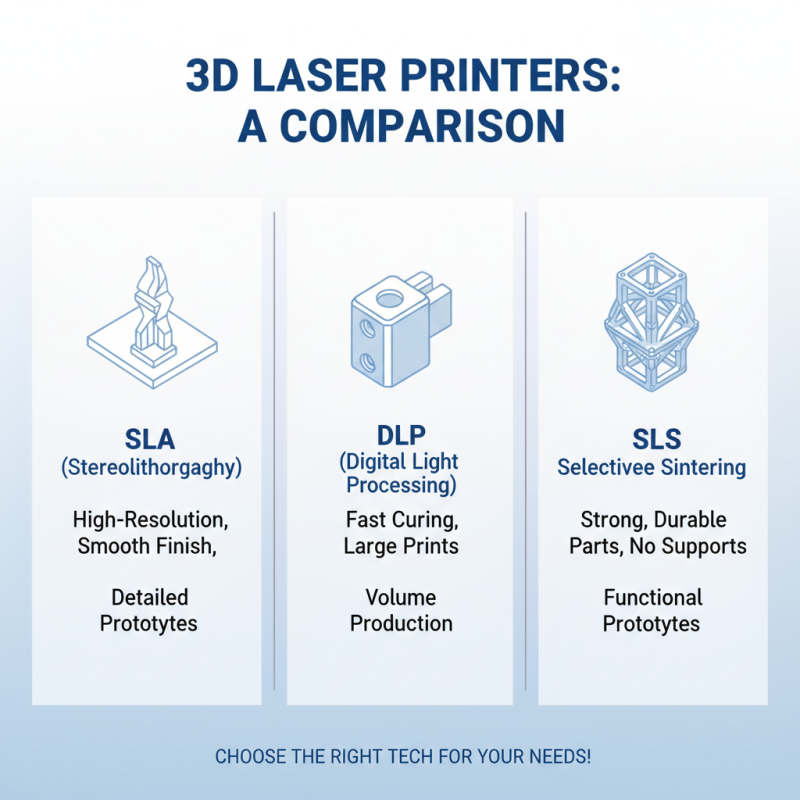
When selecting a 3D laser printer, understanding the various types available is crucial. The market currently offers several models, including stereolithography (SLA), digital light processing (DLP), and selective laser sintering (SLS). Each has its unique advantages. For instance, SLA printers produce high-resolution prints with a smooth finish, typically used for detailed prototypes. DLP, on the other hand, utilizes a light source that cures resin rapidly, making it ideal for larger prints.
According to a recent industry report, the demand for 3D printing in the manufacturing sector will grow by 25% annually. This rise reflects the increasing need for customization and rapid prototyping. SLS printers are gaining traction as they can work with a broader range of materials, including metals. However, their high cost and complexity can be a drawback for small businesses or hobbyists.
Furthermore, many users find that 3D printers require significant calibration and maintenance. The learning curve can be steep, especially for those new to this technology. Understanding which type aligns best with your needs is essential, yet many overlook the importance of material compatibility. Choosing a printer without considering the costs and availability of materials can lead to frustration and waste.
Assessing Your Budget and Long-term Investment for 3D Printing
When considering a 3D laser printer,
budget and long-term investment play crucial roles. Start by determining your
price range. Are you willing to spend a few hundred dollars or several thousand?
Cheaper models may seem appealing, but they often lack durability and advanced features.
Higher-priced options offer better precision and quality. However, they may require
ongoing maintenance costs.
Think about what you'll be printing. A hobbyist might only need a basic printer,
but a professional may require something more reliable. Research hidden costs too,
such as filament prices and software fees. A lower purchase price doesn’t always mean
a better overall investment.
Don’t forget to evaluate your needs over time. Trends in 3D printing evolve quickly;
equipment can become outdated. Consider whether you might expand your projects in the
future. Investing too little now might lead to frequent upgrades later. Balancing
immediate savings with long-term goals is essential. Reevaluate your initial choices
periodically to ensure they still meet your needs.
Evaluating Customer Reviews and Expert Recommendations for 3D Printers
When selecting a 3D laser printer, customer reviews and expert recommendations play crucial roles. According to a 2023 industry report, around 75% of buyers rely on online reviews before making a purchase. This highlights the importance of considering user experiences. Readers often emphasize ease of use and print quality in their feedback. For instance, many users report difficulties in calibrating complex models. This can lead to frustrating initial experiences.
Expert recommendations often focus on specific features. A recent survey showed that 68% of experts prioritize build volume and material compatibility. These factors are essential for successful projects. However, many users overlook them, leading to unmet expectations. Reviews about poor customer support also signal potential issues. A notable statistic found that 52% of users rated their post-purchase assistance as inadequate. Therefore, delving into both customer insights and expert analysis is vital for informed decisions.
Users should be cautious. Friends may endorse popular models, but what works for one might not suit another. The nuances of each project should guide choices. Balancing personal needs with expert advice can lead to better outcomes. Don’t just follow trends. Reflect on your specific use cases and requirements.
3D Laser Printer Features Evaluation