Why Choose a Titanium 3D Printer for Your Next Project?
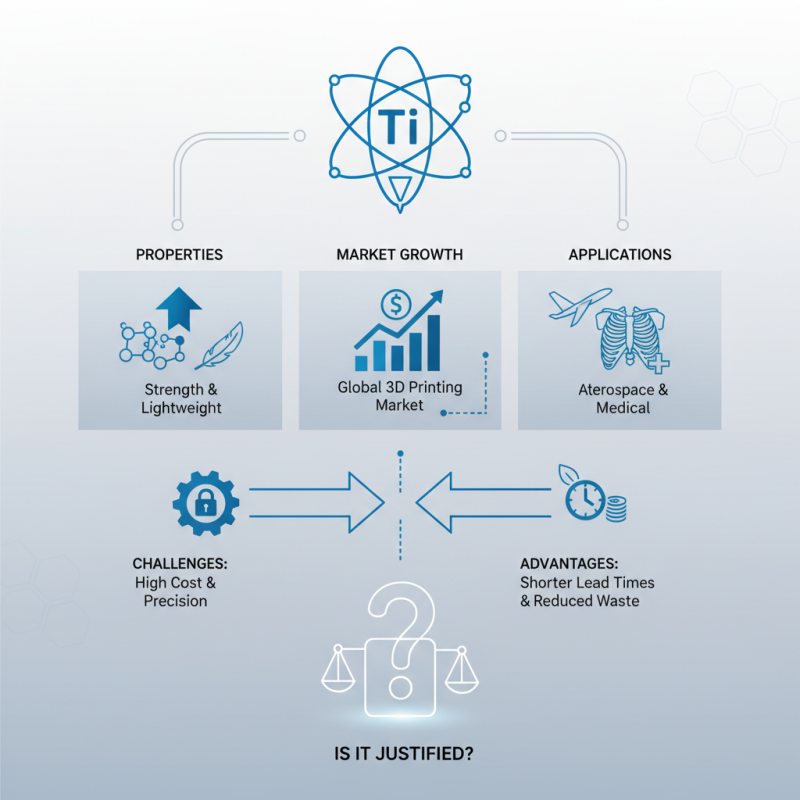
The use of a Titanium 3D Printer is transforming industries. Titanium is known for its strength and lightweight properties. According to a recent report by MarketsandMarkets, the global 3D printing market is expected to reach $34.8 billion by 2026. This growth emphasizes the increasing reliance on additive manufacturing technologies, especially with titanium.
Titanium 3D printers can create complex geometries that traditional methods cannot achieve. Aerospace and medical sectors are major beneficiaries. In aerospace, parts made from titanium reduce weight while maintaining integrity. However, challenges exist. The initial cost of titanium 3D printers is high, and the printing process requires precision.
Despite the hurdles, the advantages can outweigh them. For instance, shorter lead times and reduced waste appeal to manufacturers. Industry leaders report a 50% reduction in material costs when using titanium powder for 3D printing. As industries explore these emerging technologies, a Titanium 3D Printer may be the key to innovation. Yet, one must question: is the investment truly justified for every project?
Advantages of Titanium in 3D Printing Applications
Titanium is becoming a popular choice in 3D printing. Its strength-to-weight ratio is exceptional. According to recent industry reports, titanium is about 45% lighter than steel but still maintains comparable strength. This makes it ideal for aerospace and automotive applications where weight savings can lead to major performance improvements.
In addition to being lightweight, titanium is highly corrosion-resistant. This property extends the lifespan of parts significantly. 3D printed titanium components can withstand extreme environments, reducing the need for frequent replacements. The ability to produce complex geometries is another key advantage. Designers can create intricate shapes that are otherwise impossible with traditional manufacturing methods. However, the printing process can be tricky. Balancing speed and quality is essential, and sometimes layers may not fuse correctly, leading to defects.
Tip: Ensure you understand the printing parameters carefully. Even small errors can affect final outcomes in titanium printing.
Another important aspect is titanium’s biocompatibility. This property is crucial for medical implants. Research indicates that titanium is well-accepted in the human body, minimizing rejection rates. However, the cost of raw titanium can be prohibitive. It’s important to weigh the benefits against budget constraints. Using titanium may not always be feasible for smaller projects.
Tip: Evaluate whether the performance gains justify the expense for your specific application.
Key Features of Titanium 3D Printers
Titanium 3D printers are becoming increasingly popular in various industries. One major feature is their ability to produce strong and lightweight parts. According to a recent industry report, titanium has a tensile strength that is over 30% higher than aluminum. This allows for the creation of components that can perform better under stress.
Another key feature of titanium 3D printers is their high thermal resistance. Parts made from titanium can withstand temperatures over 800°C without deforming. This quality is essential for aerospace applications, where temperatures can be extreme. However, working with titanium can present challenges. Its density requires advanced printing techniques.
Moreover, the process can be slow and complex. Some users report frustration with material costs. A study indicated that producing titanium parts can be 20-30% more expensive compared to other metals. This is a critical point to consider for budget-conscious projects. Still, the long-term benefits often outweigh these initial costs. Quality and durability can lead to significant savings over time.
Why Choose a Titanium 3D Printer for Your Next Project? - Key Features of Titanium 3D Printers
| Feature |
Description |
Advantages |
| Material Capability |
Able to print with titanium powders for strong and lightweight components. |
High strength-to-weight ratio ideal for aerospace and automotive industries. |
| Precision |
Offers high resolution and fine layer detail for complex geometries. |
Perfect for intricate designs and prototypes. |
| Speed |
Faster material melting and layer deposition processes. |
Reduced production time leads to quicker project turnaround. |
| Cost Efficiency |
Minimizes waste as it builds objects layer by layer. |
Lower material costs and cheaper compared to traditional manufacturing. |
| Customization |
Easily adjustable designs with no need for tooling. |
Ideal for bespoke parts tailored to specific needs. |
Comparative Analysis: Titanium vs. Other 3D Printing Materials
When exploring 3D printing materials, titanium stands out for several reasons. Its strength-to-weight ratio is exceptional. This makes it ideal for aerospace and automotive applications. Unlike materials like plastic, titanium can endure high temperatures and extreme conditions. This durability is a game-changer for engineers.
However, titanium isn't perfect. The printing process can be complex and requires precise calibration. This can lead to higher costs and longer production times. Other materials, like aluminum and carbon fiber, may be easier to work with. They are often more cost-effective and less demanding in terms of equipment.
Still, titanium's unique properties cannot be overlooked. It offers better corrosion resistance compared to many metals. This is crucial for products exposed to harsh environments. Engineers often face tough decisions when choosing materials. The benefits of titanium must be weighed against the challenges. Ultimately, the choice depends on specific project needs and goals.
Material Properties Comparison for 3D Printing
This chart illustrates the comparison of key properties of titanium against other common 3D printing materials such as PLA, ABS, and Nylon. The properties compared include tensile strength, heat resistance, and density, which are critical for various applications in manufacturing and engineering.
Industries Benefiting from Titanium 3D Printing
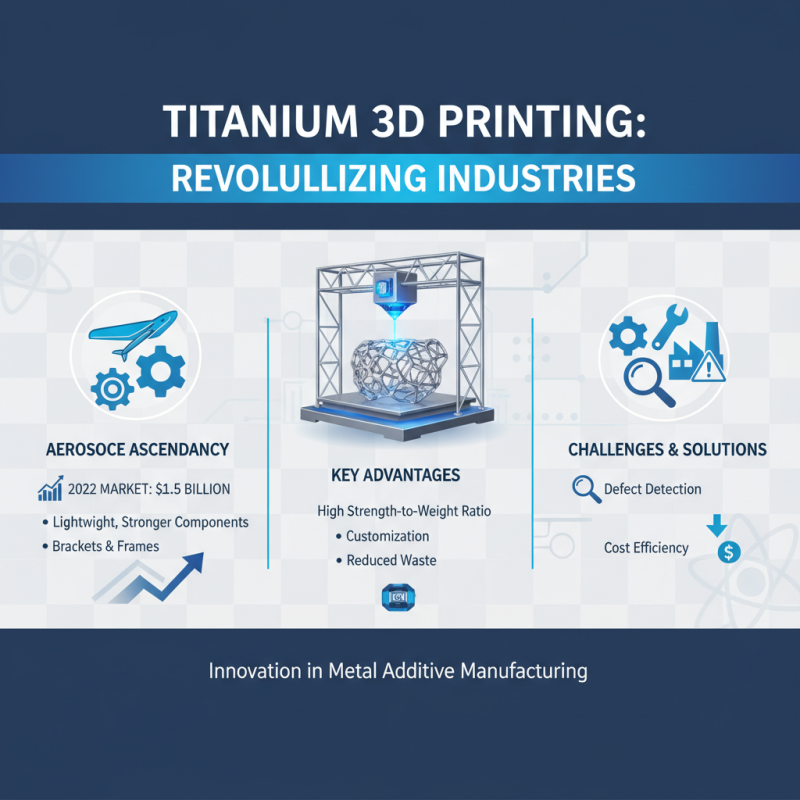
Titanium 3D printing is transforming multiple industries. Aerospace leads the way. In 2022, the market for titanium aerospace components reached $1.5 billion. This sector benefits from titanium’s high strength-to-weight ratio. Components like brackets and frames are now lighter and stronger. However, the technology is not without challenges. Printing defects can occur, leading to increased costs if not caught early.
The medical industry is also seeing advantages. Custom implants and prosthetics can now be created efficiently. Reports indicate a growth rate of 23% in the medical titanium market. Personalized healthcare demands solutions that traditional methods cannot provide. However, there are still questions around biocompatibility and long-term performance. These factors require ongoing testing and validation to ensure patient safety.
The automotive sector is exploring titanium 3D printing, but it's still in the early stages. Lightweighting is critical for electric vehicles. A study showed that reducing weight by just 20% can improve range significantly. Yet, the high cost of titanium remains a barrier for mass scale adoption. Companies must weigh the benefits against production expenses.
Future Trends in Titanium 3D Printing Technology
The future of titanium 3D printing is incredibly promising. According to a report by Markets and Markets, the titanium 3D printing market is expected to grow at a compound annual growth rate of over 20% from 2023 to 2028. This rapid growth indicates that more industries are adopting this technology.
One significant trend is the continued development of advanced materials. New titanium alloys are emerging, offering better strength-to-weight ratios. These materials can meet strict requirements in aerospace and medical fields. However, challenges remain. The cost of these alloys can be high, stunting broader adoption. Additionally, the need for skilled operators in titanium printing is essential yet hard to fulfill.
Process optimization is another critical focus. Techniques like hybrid manufacturing are gaining traction. These methods combine additive and subtractive processes for better precision. However, not every project can benefit from such approaches. It requires careful planning and understanding of both technologies. Experts also highlight the importance of post-processing. Proper finishing is crucial, yet it can be time-consuming and costly. Each of these trends outlines a path forward, yet highlights areas where further reflection and improvement are necessary.