Why Choose Metal 3D Printer Machines at the 2026 Canton Fair?
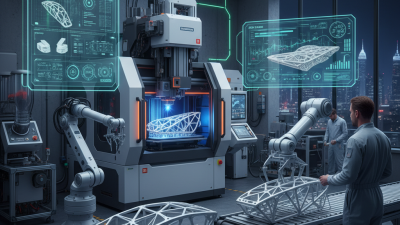
As the 2026 Canton Fair approaches, the spotlight is on innovation, particularly in the realm of advanced manufacturing. Among the exhibiting technologies, the Metal 3D Printer Machine stands out. Reports indicate that the global metal 3D printing market is expected to surpass $5 billion by 2027, driven by increased demand across industries.
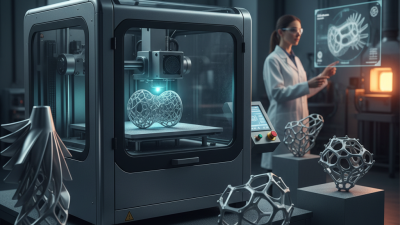
At this fair, businesses seeking efficiency and precision will benefit from the range of Metal 3D Printer Machines. These machines enable complex designs, which traditional methods may struggle to achieve. Additionally, they help reduce material waste, crucial in today’s environmentally aware market.
However, it's essential to consider the current challenges in adopting this technology. The initial investment is significant, and not all manufacturers are equipped for this transition. Buyers should evaluate their capabilities before diving in. Engaging with suppliers at the fair can provide insights into overcoming these hurdles and maximizing ROI. The Metal 3D Printer Machine represents a promising future, but careful consideration is needed.
Benefits of Metal 3D Printing Technology for Manufacturers
Metal 3D printing technology offers significant advantages for manufacturers.
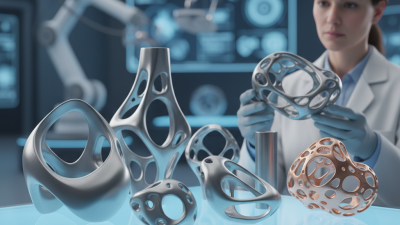
It allows for the creation of complex geometries that traditional methods cannot achieve.
This capability can lead to lighter components, conserving material while maintaining structural integrity.
With metal 3D printing, manufacturers can reduce waste during production.
That’s a crucial factor for sustainability efforts.
Moreover, metal 3D printing enables rapid prototyping and faster time-to-market.
Companies can quickly produce prototypes for testing and iterate designs without long lead times.
However, the technology isn't flawless.
There can be challenges in quality control that warrant attention.
Variations in print quality or unforeseen defects might arise.
Adopting this technology often requires investment in training and equipment.
Many manufacturers may hesitate due to these upfront costs.
Yet, the long-term benefits can outweigh these initial hurdles.
Enhanced flexibility in production can lead to customized solutions for clients.
Embracing metal 3D printing may be a daunting leap, but it offers an exciting horizon for modern manufacturing.
Key Features of Metal 3D Printers Available at the Canton Fair
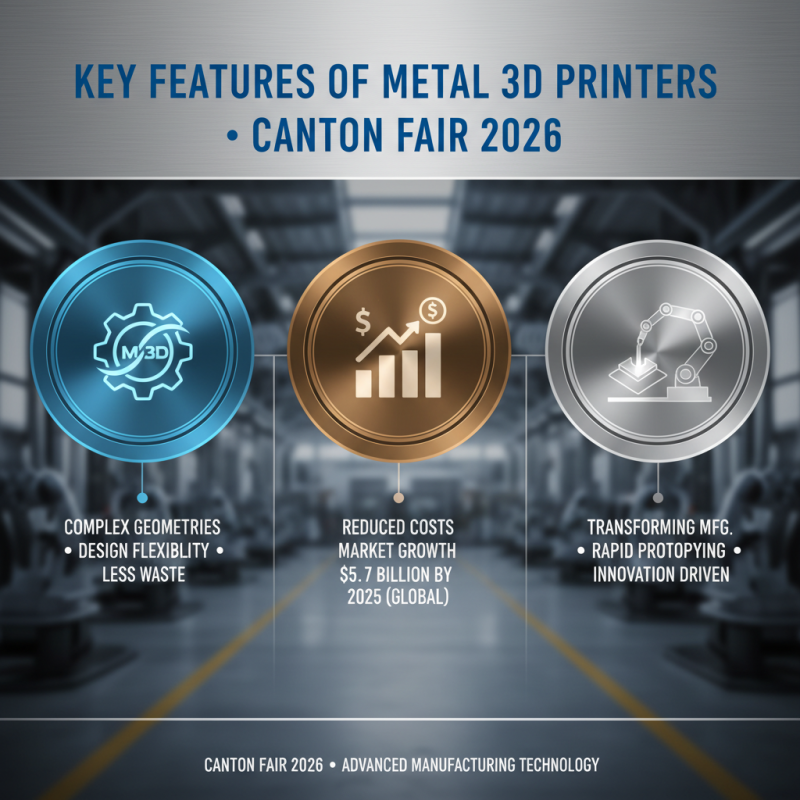
Metal 3D printers are transforming manufacturing at the 2026 Canton Fair. These machines offer unique capabilities that traditional methods simply cannot match. The flexibility in design allows engineers to create complex geometries, which means less waste and reduced costs. Reports show that the global metal 3D printing market is expected to reach $5.7 billion by 2025. This growth emphasizes the importance of innovation in metal printing technology.
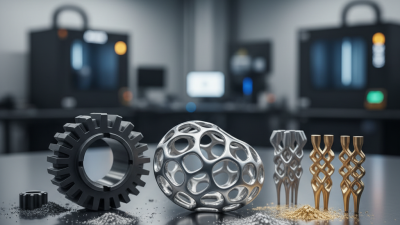
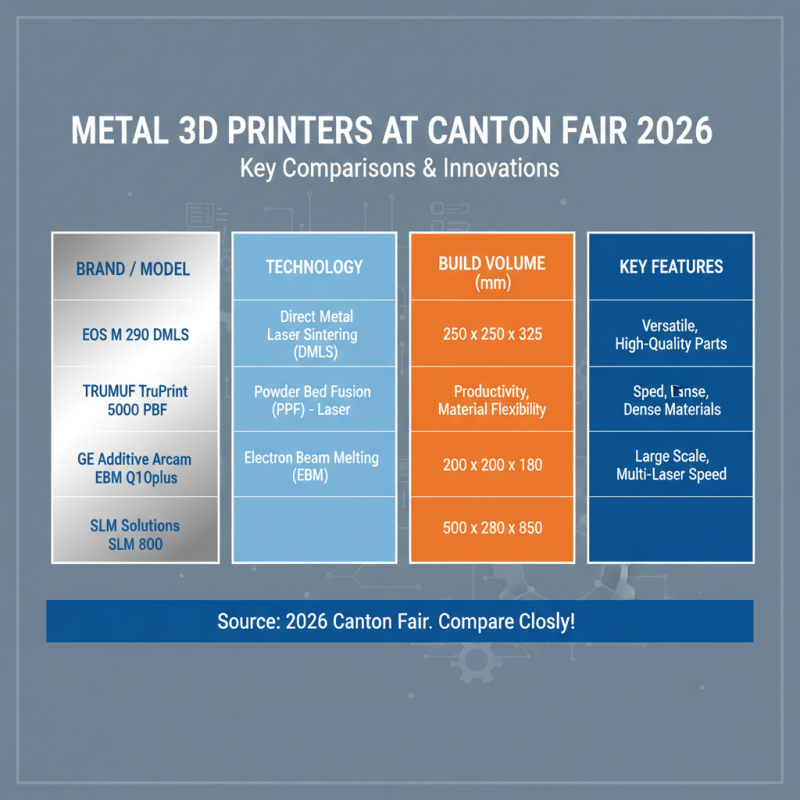
One key feature is the robust material compatibility. Many metal 3D printers can work with titanium, aluminum, and stainless steel. This versatility opens doors to various industries, including aerospace and healthcare. However, the high initial investment could deter smaller businesses. They might question if the benefits outweigh the costs in the early stages.
Another important aspect is speed. New technology has significantly reduced production time. For example, laser-based systems can complete intricate parts in hours rather than days. Yet, the learning curve can be steep. Achieving optimal settings requires experimentation. There’s always the challenge of achieving consistent quality for critical applications. While advancements are impressive, businesses must remain cautious. Embracing metal 3D printing requires reflection on long-term implications and operational challenges.
Innovative Applications of Metal 3D Printing in Industry
Metal 3D printing is transforming various industries. Its applications range from aerospace to medical devices. For example, component production in aerospace has greatly benefited from this technology. Metal 3D printers can create complex geometries that traditional processes can't achieve. This leads to lighter, stronger parts, which improve fuel efficiency in aircraft.
In the medical field, customized implants are gaining traction. Surgeons can design and print implants tailored to individual patients. This personalization enhances patient outcomes. However, challenges remain. The cost of metal 3D printers can be high, and there's a learning curve involved in mastering this technology. Many companies are still figuring out the best ways to integrate it into their production lines.
The 2026 Canton Fair will be an excellent opportunity to explore these innovations. Industry leaders will showcase their latest advancements. Attendees can learn about successful case studies and potential pitfalls. Understanding the limitations and benefits of metal 3D printing is crucial. This knowledge can help businesses make informed decisions. As the technology evolves, so too will its potential applications.
Networking Opportunities and Expert Insights at the Canton Fair
The Canton Fair in 2026 promises a wealth of networking opportunities for those in the metal 3D printing industry. Attendees will connect with experts, innovators, and potential partners. This creates a fertile ground for collaboration and idea exchange. Small discussions can lead to big breakthroughs.
Expert insights are invaluable at this event. They share knowledge on the latest technologies and trends in metal 3D printing. Attending workshops and panel discussions will enhance understanding. Some topics may feel overwhelming. It's essential to ask questions and engage actively.
This curiosity can spark new ideas and solutions.
The fair is not just about the machines. It's about people. Building relationships is crucial. A simple conversation can change the trajectory of a business. Yet, many hesitate to approach others. Overcoming this fear is a challenge. Yet, it can lead to unexpected opportunities. Embrace the discomfort. It can lead to invaluable connections and knowledge.