China Top Magnesite Refractory Bricks Overview and Applications?
Magnesite Refractory Bricks play a vital role in various industries, including steel, glass, and cement manufacturing. According to a report by Smith Research Group, the global market for Magnesite Refractory Bricks is projected to reach $1.2 billion by 2025, with an average annual growth rate of 5.5%. This significant demand underscores the importance of understanding their properties and applications.
Dr. Liu Wen, a renowned expert in refractory materials, emphasizes, "The performance of Magnesite Refractory Bricks directly affects the efficiency of high-temperature processes." His insights highlight the necessity for industries to prioritize quality and innovation in this field. While many manufacturers strive for excellence, inconsistencies in raw material quality often lead to inferior products. Addressing these challenges is crucial for meeting industry standards.
Moreover, the versatility of Magnesite Refractory Bricks makes them indispensable in extreme environments. Their ability to withstand high temperatures and corrosive conditions is unmatched. As industries evolve, the push for more sustainable and efficient solutions grows. There is a continual need for improvement in manufacturing processes to harness the full potential of Magnesite Refractory Bricks.
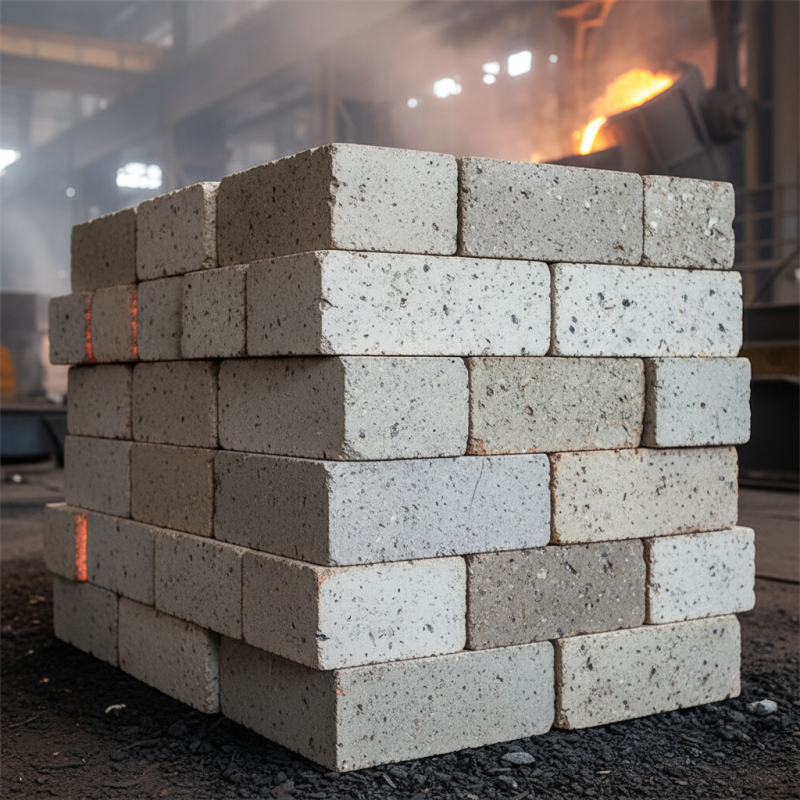
Overview of Magnesite and Its Properties
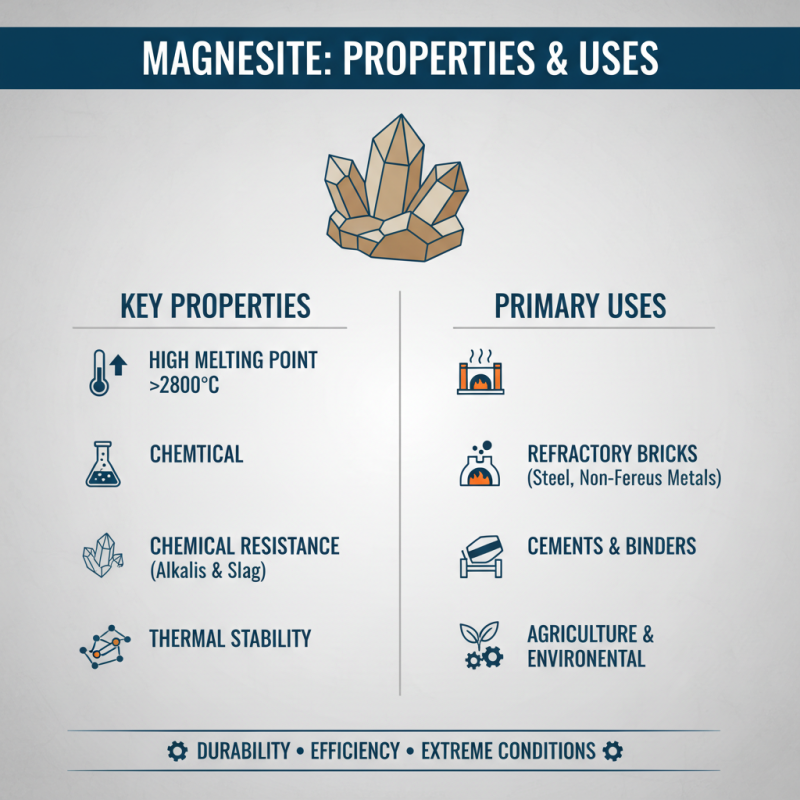
Magnesite, a key magnesium carbonate mineral, serves as an essential raw material in many industries. Its unique properties, including high melting point and excellent chemical resistance, make it popular in refractories. Magnesite bricks are often used in high-temperature applications, like steelmaking and non-ferrous metallurgy. These bricks withstand extreme conditions, ensuring durability and efficiency in heavy-duty furnaces.
The physical properties of magnesite enhance its applicability. For instance, its low thermal conductivity contributes to energy efficiency in kilns. However, sourcing high-quality magnesite remains a challenge. Variability in mineral purity can affect brick performance. Researchers continuously seek to improve processing methods and material blends. This quest for quality is crucial, especially as industries push the limits of temperature and performance.
Understanding magnesite requires both expertise and experience. Its role in refractory applications is critical. Yet, the path to optimizing its usage is not straightforward. Ongoing study and innovation remain necessary to unlock its full potential. This complexity in magnesite's properties makes it a fascinating subject for materials science.
Key Features of Magnesite Refractory Bricks
Magnesite refractory bricks are crucial in the steel and metallurgy industries. These bricks exhibit high melting points and excellent thermal stability. They are composed primarily of magnesium oxide, which ensures resistance to harsh environments. According to industry reports, the overall demand for magnesite refractory materials is projected to grow at a CAGR of 5% from 2021 to 2026. This growth is driven by their increasing application in high-temperature furnaces.
Key features of magnesite refractory bricks include their low thermal conductivity and ability to withstand corrosive environments. These bricks can endure temperatures exceeding 1600°C, making them ideal for use in electric arc furnaces. Furthermore, they display great chemical stability against slag and other reactive materials. However, sourcing consistent-quality magnesite can pose challenges. Variability in raw material quality may affect the final product's performance.
In terms of applications, magnesite refractory bricks find significant use in steelmaking and foundries. Their performance in such high-demand environments highlights their importance. Nevertheless, sustainability concerns and environmental impact must be addressed as industries evolve. Adopting eco-friendly practices in sourcing and production will be critical for the longevity of magnesite refractory brick usage.
Manufacturing Process of Magnesite Refractory Bricks
The manufacturing process of magnesite refractory bricks is vital for various industrial applications. From extraction to the final product, it includes several critical steps. Initially, high-purity magnesite ore is mined, typically from large deposits in China. In 2022, China produced over 4 million tons of magnesite, highlighting its significance in the global market.
After extraction, the ore is crushed, milled, and calcined at high temperatures. This step transforms the raw magnesite into a more stable form, known as periclase. It is crucial to control the heating process closely. Variations in temperature can affect the brick's final properties, such as density and durability. Reports suggest that precise temperature management can enhance resistance to thermal shock and abrasion, vital for high-stress environments.
Following calcination, the material is mixed with binders and additives. These enhance performance but can sometimes complicate the overall manufacturing process. This stage requires careful oversight to achieve a balanced mixture. Molding the bricks into shape comes next, followed by a second firing to improve strength. Ensuring consistent quality throughout this process proves challenging. Even minor deviations can lead to weak bricks, impacting their application in industries like steelmaking and glass production. Continuous improvement in methods and quality control is essential for the industry moving forward.
China Top Magnesite Refractory Bricks Overview and Applications
| Property |
Description |
| Chemical Composition |
High purity magnesite (MgO content ≥ 92%) |
| Applications |
Steel production, cement kilns, and non-ferrous metallurgy |
| Manufacturing Process |
Sintering method at high temperatures (1500°C to 1800°C) |
| Physical Properties |
High refractoriness, low thermal conductivity, excellent thermal stability |
| Market Demand |
Growing due to industrial expansion and infrastructure development |
| Advantages |
Durability, cost-effectiveness, and adaptability to harsh environments |
| Environmental Impact |
Requires sustainable mining practices to minimize ecological damage |
Applications of Magnesite Refractory Bricks in Industries
Magnesite refractory bricks play a crucial role in various industries. Their high melting point and chemical stability make them ideal for extreme environments. Steelmaking is one of the key applications. These bricks line furnaces, providing excellent insulation and heat retention. The ability to withstand high temperatures is vital here. Any failure can lead to costly downtime.
In the cement industry, magnesite bricks serve critical functions as well. They are integral to rotary kilns where limestone is heated. The longevity of these bricks ensures continuous production processes. Some industries report premature wear and tear, a concern worth noting. Regular maintenance and timely replacement can mitigate such issues.
Additionally, these bricks are used in the glass industry. They help maintain high temperatures while ensuring purity. However, the cost of magnesite bricks can be a barrier for small manufacturers. Exploring alternative materials might be worthwhile. Each industry faces unique challenges, and it's essential to adapt to the specific requirements.
Applications of Magnesite Refractory Bricks in Industries
Advantages and Challenges of Using Magnesite Refractory Bricks
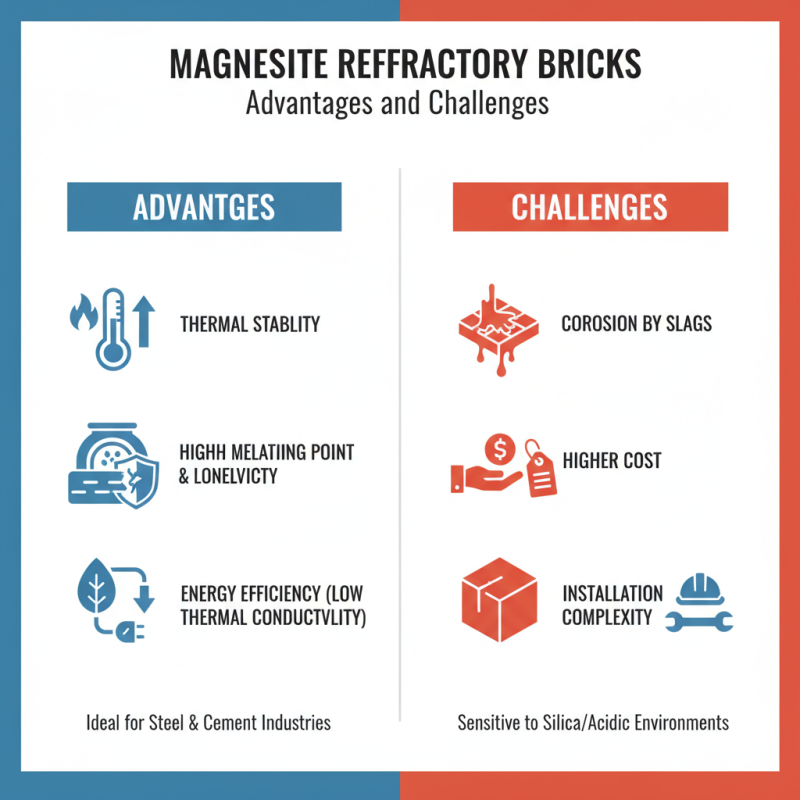
Magnesite refractory bricks offer unique advantages in various high-temperature applications. These bricks excel in thermal stability and resistance to thermal shock. They maintain structural integrity in extreme conditions, making them ideal for steel and cement industries. The high melting point of magnesite ensures longevity in furnaces and kilns. Users appreciate the lower thermal conductivity, contributing to energy efficiency.
However, challenges arise when using magnesite bricks. One concern is their susceptibility to chemical attack from certain slag compositions. This can lead to reduced lifespan and performance issues. Additionally, sourcing high-quality magnesite minerals poses logistical difficulties. Not all suppliers meet industry standards, which can affect the overall reliability of the bricks.
Installation and maintenance require specialized knowledge. Improper handling during installation may compromise effectiveness. These issues highlight the importance of thorough training for workers. Addressing these challenges involves ongoing research and development. Understanding the limitations while leveraging the benefits is crucial for achieving optimal results in high-performance environments.