Top Benefits of Using Metal 3D Printers for Manufacturing and Prototyping
In the rapidly evolving landscape of manufacturing and prototyping, the emergence of the Metal 3D Printer has revolutionized how industries approach design and production. As noted by Dr. Emily Johnson, a leading expert in additive manufacturing, "Metal 3D printing is not just a technological advancement; it's a paradigm shift that allows for unprecedented creativity and efficiency in production." This sentiment underscores the transformative potential of Metal 3D Printers, which enable manufacturers to produce complex geometries that traditional methods cannot replicate.
The advantages of utilizing Metal 3D Printers extend far beyond mere design flexibility. With capabilities that streamline prototyping processes and reduce material waste, companies are increasingly turning to this technology to enhance their operational efficiency and speed to market. By enabling rapid iteration and customization, Metal 3D Printers facilitate innovation, allowing businesses to stay competitive in an increasingly demanding marketplace. As we delve into the top benefits of using Metal 3D Printers, it becomes clear that embracing this technology is not merely a trend, but a strategic necessity for forward-thinking manufacturers.
Benefits of Metal 3D Printing in Modern Manufacturing Techniques
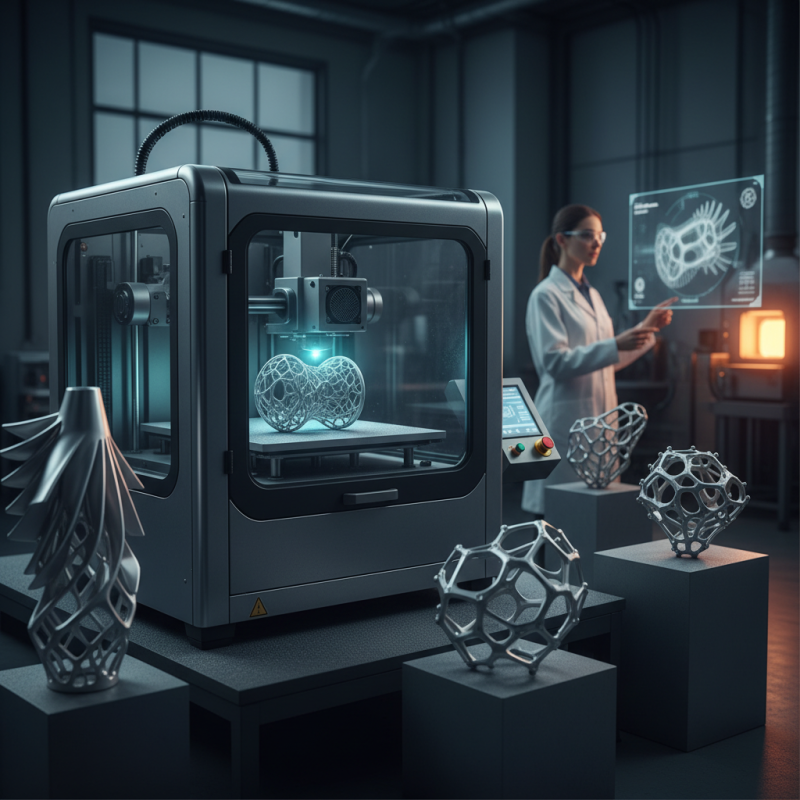
Metal 3D printing has revolutionized modern manufacturing techniques, offering significant advantages over traditional methods. One of the key benefits is the ability to create complex geometries that would be nearly impossible to achieve with conventional machining. This flexibility allows designers to innovate and optimize structures for performance and weight, ultimately leading to more efficient products. Furthermore, metal 3D printing reduces material waste, as the additive process only uses the necessary amount of material to create the part, making it a sustainable choice in production.
Tips for utilizing metal 3D printing effectively include understanding the design guidelines unique to additive manufacturing. Considerations such as wall thickness, support structures, and orientation can greatly influence the final outcome of the printed part. Additionally, selecting the right metal powder is crucial; different materials offer varied properties which can enhance the functionality of the final product. This informed approach allows engineers to push the boundaries of design while ensuring product integrity.
Another advantage of metal 3D printing is the speed of prototyping and production. The ability to quickly iterate designs based on testing feedback accelerates the development timeline and reduces costs associated with traditional tooling. To maximize these benefits, businesses should invest in training for their teams, focusing on the latest software and hardware techniques in 3D printing. This will empower them to fully leverage the potential of metal printing in both prototyping and full-scale manufacturing.
Top Benefits of Using Metal 3D Printers for Manufacturing and Prototyping
| Benefit |
Description |
Impact on Manufacturing |
| Rapid Prototyping |
Quickly produce prototypes with complex geometries. |
Accelerates product development cycles. |
| Material Efficiency |
Reduces waste compared to traditional manufacturing methods. |
Lower material costs and improved sustainability. |
| Design Freedom |
Allows for intricate designs not feasible with conventional methods. |
Enables innovative product designs. |
| Customization |
Facilitates easy customization for specific client needs. |
Improves customer satisfaction and opens new markets. |
| Reduced Lead Times |
Shortens production times significantly. |
Enhances competitiveness in the market. |
| Strong Mechanical Properties |
Produces parts with high strength and durability. |
Meets demanding functional requirements. |
Enhanced Design Flexibility with Metal 3D Printing
 Metal 3D printing has revolutionized the manufacturing and prototyping landscape, primarily due to its enhanced design flexibility. According to a report by the Wohlers Associates, the metal 3D printing market is projected to grow to $1.2 billion by 2028, indicating a rising trend among industries looking to capitalize on this technology. One significant advantage lies in the ability to create complex geometries that would be impossible or cost-prohibitive with traditional manufacturing methods. This capability allows engineers and designers to explore innovative designs that optimize functionality and reduce weight, particularly crucial in aerospace and automotive sectors.
Moreover, metal 3D printing facilitates rapid prototyping, enabling faster iteration cycles. This is particularly beneficial for industries where time-to-market is critical. Research by the International Journal of Advanced Manufacturing Technology highlights that companies utilizing metal additive manufacturing can reduce prototyping timelines by up to 75%. The ability to produce highly intricate parts on-demand minimizes inventory needs and reduces waste, aligning with lean manufacturing principles. The design freedom offered by metal 3D printers empowers manufacturers to fine-tune and customize products to meet specific client needs or evolving market demands, ensuring competitiveness in today’s fast-paced environment.
Cost Efficiency in Prototyping through Metal Additive Manufacturing
Metal additive manufacturing is rapidly transforming the landscape of prototyping, offering significant cost efficiencies compared to traditional manufacturing methods. According to a report by the International Society for Automation, metal 3D printing reduces material waste by up to 90%, a crucial factor in lowering overall production costs. This waste reduction is particularly beneficial in sectors where metal materials are expensive, allowing companies to allocate resources more effectively and improve their profit margins.
Moreover, metal 3D printers enable rapid production cycles, which is essential for prototyping. Traditional manufacturing processes can take weeks to produce a prototype, whereas metal additive manufacturing can produce intricate designs in a matter of days. A study conducted by Wohlers Associates indicates that companies utilizing metal 3D printing for prototyping have reduced their lead times by an average of 50%. This acceleration not only speeds up the product development timeline but also allows manufacturers to respond swiftly to market demands, thereby enhancing competitiveness in an ever-evolving industry landscape.
Cost Efficiency in Prototyping through Metal Additive Manufacturing
Metal additive manufacturing offers significant cost advantages in the prototyping phase. As shown in the chart, the average cost per prototype using traditional manufacturing methods is around $5,000, while metal 3D printing reduces that cost to approximately $3,000. This cost efficiency can lead to faster and more flexible development processes.
Improved Material Properties and Performance of Metal Parts
Metal 3D printing has revolutionized the manufacturing and prototyping landscape by significantly enhancing the material properties and performance of metal parts. One of the key advantages of using metal 3D printers is their ability to create intricate geometries that were previously impossible or extremely costly to achieve with traditional manufacturing methods. This technology allows for the production of lightweight yet strong components, which is crucial in industries like aerospace and automotive where every gram counts. Enhanced design flexibility leads to the realization of complex structures that optimize weight and functionality, showcasing the potential of advanced engineering.
Moreover, metal 3D printing often results in improved mechanical properties compared to conventionally manufactured parts. Parts produced through additive manufacturing techniques can exhibit superior strength, hardness, and fatigue resistance due to the unique microstructures formed during the printing process. Additionally, the ability to utilize a variety of metal alloys enables the tailoring of specific properties to meet the demands of distinct applications. This level of customization ensures that the final products not only meet stringent performance standards but can also withstand challenging operational environments. As a result, industries are increasingly adopting metal 3D printing to enhance product performance while streamlining their development cycles.
Faster Production Times and Reduced Lead Times with Metal 3D Printers
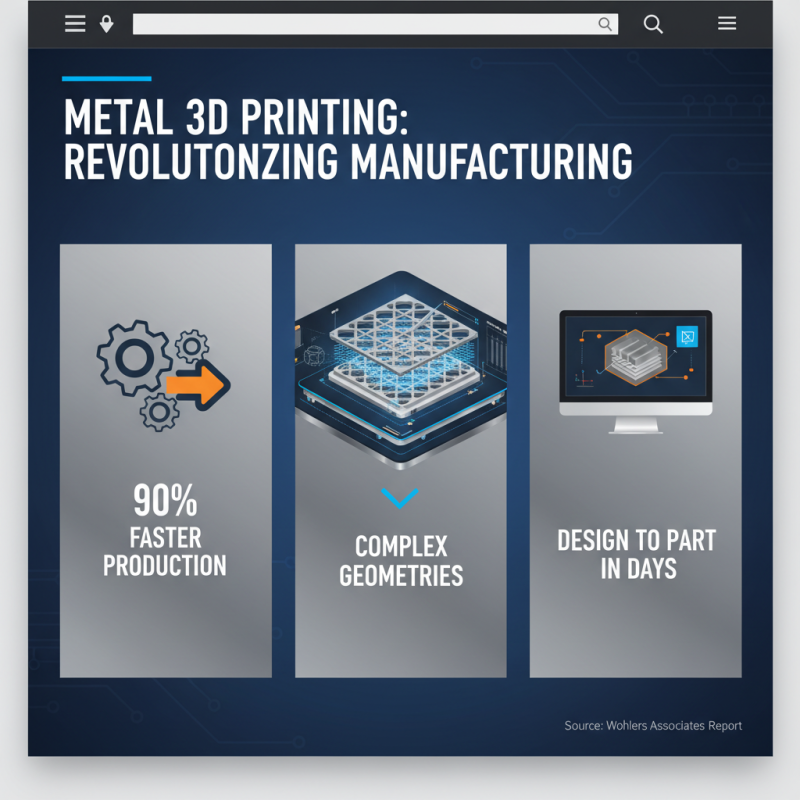
Metal 3D printing technology has revolutionized manufacturing and prototyping by significantly enhancing production speed and reducing lead times. According to a report by Wohlers Associates, the adoption of metal additive manufacturing has led to decreased production times by up to 90% in certain industries. This rapid production capability is largely attributed to the layer-by-layer construction process, which allows for complex geometries that traditional manufacturing methods often struggle to replicate efficiently. The ability to produce parts directly from digital files eliminates the need for extensive tooling, enabling manufacturers to move from design to final product in a matter of days instead of weeks.
Moreover, the reduction in lead times is not merely a function of speed but also of flexibility. Metal 3D printers enable manufacturers to implement design changes quickly without incurring significant downtime or costs associated with retooling. In a survey conducted by Gardner Intelligence, 67% of manufacturers reported that the ability to rapidly iterate on designs has become a critical driver in their adoption of additive manufacturing. This flexibility allows companies to respond swiftly to market demands, resulting in improved competitiveness. As industries seek to optimize their operations, the integration of metal 3D printing technology stands out as a strategic advantage in shortening the cycle from concept to product delivery.