2026 How to Use 3D Metal Powder for Advanced Printing Techniques?
The rise of 3D metal powder has transformed manufacturing. This material allows for intricate designs and advanced printing techniques. It promises greater efficiency and unique applications in various industries.
Using 3D metal powder requires careful consideration. It’s not just about the technology; it’s about understanding the materials. The powder must be precisely crafted to ensure optimal results. Factors like particle size and flowability play significant roles.
Experimentation is key in mastering this medium. Success may be unpredictable, presenting challenges along the way. However, overcoming these obstacles can lead to innovative solutions. As we navigate the future of 3D metal printing, we must reflect on our methods. Each detail matters in achieving excellence in this evolving field.
Understanding 3D Metal Powder: Composition and Types
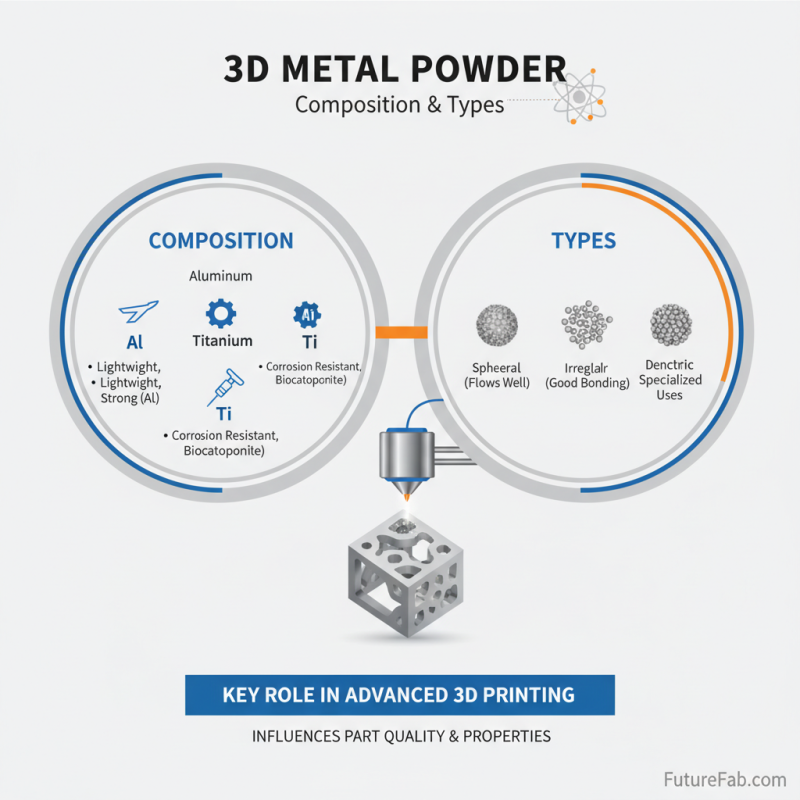
3D metal powder plays a crucial role in advanced printing techniques, influencing the quality of printed parts. The composition of metal powders varies significantly. Common materials include aluminum, titanium, and cobalt-chrome alloys. These different metals lend unique properties to finished products. Aluminum, for example, is lightweight yet strong, while titanium offers excellent corrosion resistance.
The particle size of 3D metal powders also affects their performance. Powders typically range from 10 to 50 microns. Larger particles can lead to rougher surfaces, while smaller particles enhance detail. According to a recent industry report, finer powder sizes can improve density by up to 25%. This creates denser parts, but processing becomes more challenging.
Not every 3D metal powder is suitable for all applications. Some may not adhere well during printing. Additionally, improper powder storage can lead to contamination. It's essential to understand these limitations. The right choice of metal powder can greatly impact the end product's success. Staying informed about advancements in metal powder technology is vital for manufacturers aiming for excellence in 3D printing.
Key Advantages of Using 3D Metal Powder in Printing
3D metal powder is revolutionizing the printing industry. This material offers unique advantages that elevate the capabilities of advanced printing techniques. For instance, it allows for intricate designs impossible with traditional methods. The fine particle size ensures precision in detail and accuracy in final products.
One major benefit is the ability to create lightweight components. These components retain strength while significantly reducing weight. Industries like aerospace and automotive highly value this feature. Additionally, 3D metal printing can reduce material waste, making it more environmentally friendly. However, the process can be complex. Understanding the right parameters can be a steep learning curve.
Another aspect is the versatility of 3D metal powder. It can be used in varied applications, from custom medical implants to innovative prototypes. Yet, not all metals behave the same in printers. Some may require specific settings or pre-treatments, which can complicate the process. Having a clear understanding of metal characteristics is crucial for optimal results.
Advanced Printing Techniques Utilizing 3D Metal Powder
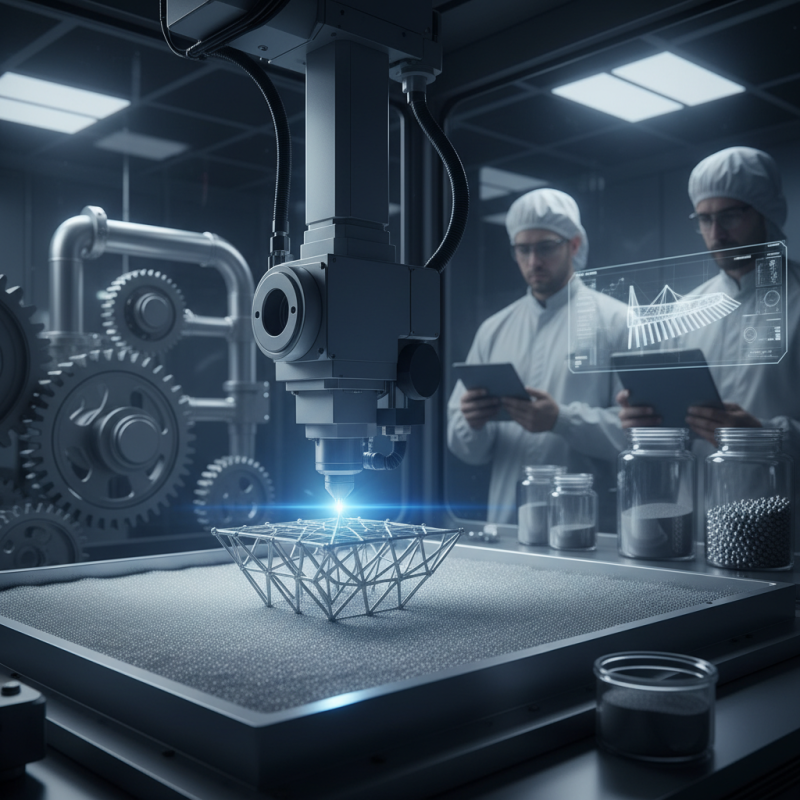
3D metal printing is revolutionizing the manufacturing industry. By utilizing metal powder, advanced printing techniques can create intricate parts and components. This process allows for high precision and reduced waste. Layers of metal powder are fused to form complex designs. These designs would be difficult or impossible to achieve with traditional methods.
Tips: Always ensure the quality of your metal powder. Contaminated powder can lead to defects in your prints. A clean workspace is essential. Monitor the temperature during printing. Too much heat can distort the final product.
Experimentation is key in mastering this technology. Adjusting various parameters can yield different results. However, not every attempt will be perfect. Some prints may fail, requiring reflection on your approach. Try to identify what went wrong. Each failure is a step towards improvement. The learning process is crucial for success in advanced 3D printing.
Best Practices for Handling and Storing Metal Powder
When working with 3D metal powder, proper handling and storage are crucial for success. Metal powders can be sensitive to moisture and contamination. Store them in a dry, cool environment to maintain their quality. Avoid placing them near any heat source or humidity. It's best to use airtight containers to prevent oxidation.
When handling the powder, always wear appropriate protective gear. This includes gloves and a mask. Fine metal particles can be hazardous. Even small amounts can pose risks if inhaled or ingested. It’s important to clean up any spills immediately. Use a vacuum designed to handle metal powders.
Periodically review your storage conditions. Sometimes, even the best practices can lead to dust accumulation. If you notice changes in the powder properties, such as clumping, it may indicate moisture exposure. Regular checks will help ensure that the metal powder maintains its performance integrity. Keeping a log of your storage conditions can also provide insights into any recurring issues.
2026 How to Use 3D Metal Powder for Advanced Printing Techniques? - Best Practices for Handling and Storing Metal Powder
| Material Type |
Ideal Particle Size (µm) |
Storage Temperature (°C) |
Recommended Humidity (%) |
Shelf Life (months) |
| Stainless Steel |
10-45 |
-20 to 25 |
< 50 |
12 |
| Titanium |
5-20 |
-10 to 20 |
< 40 |
6 |
| Aluminum |
15-45 |
-5 to 30 |
< 50 |
18 |
| Nickel Alloy |
20-60 |
-20 to 25 |
< 45 |
12 |
| Cobalt Chrome |
25-50 |
-15 to 20 |
< 50 |
9 |
Future Trends in 3D Metal Powder Printing Technologies
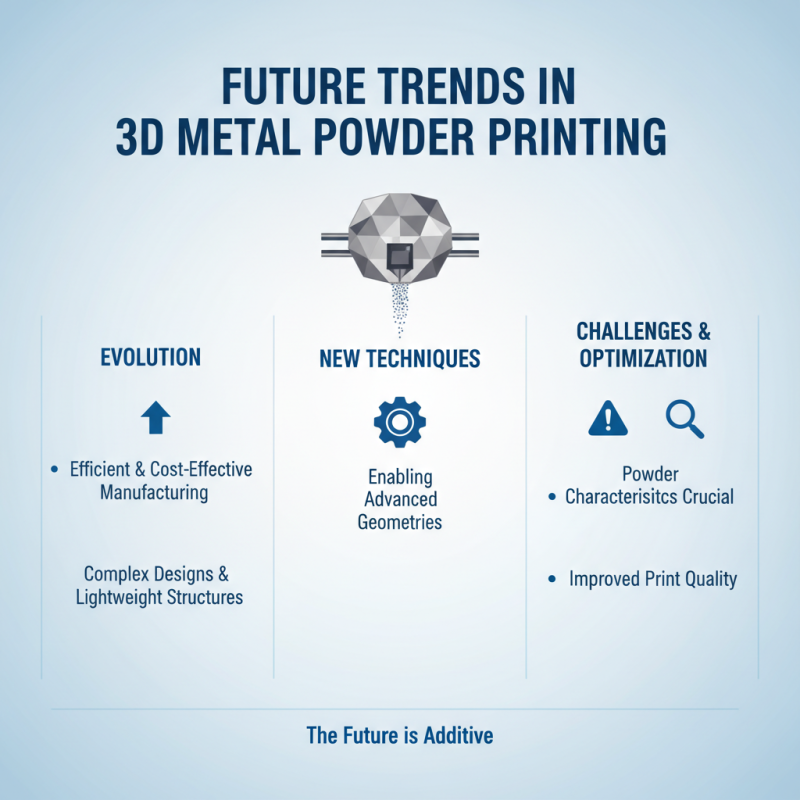
In recent years, the realm of 3D metal powder printing has evolved significantly. This growth reflects a shift toward more efficient and cost-effective manufacturing processes. New techniques are emerging, enabling complex designs and lightweight structures. However, the journey is not without challenges. The optimization of powder characteristics is crucial. The right powder can greatly improve print quality.
Future trends indicate a greater emphasis on sustainable materials. This shift aims to reduce waste and enhance recyclability. Metal powders are becoming more adaptable, enabling the printing of intricate geometries previously deemed impossible. Yet, there is a delicate balance to maintain in production quality and speed.
As the technology advances, the industry must address technical limitations. For example, controlling layer adhesion remains a critical factor in print durability. Researchers are exploring new methods to refine the sintering process. Although progress is evident, ongoing reflection and innovation are necessary. This dynamic field holds promise, but it’s essential to learn from each print failure to advance further.